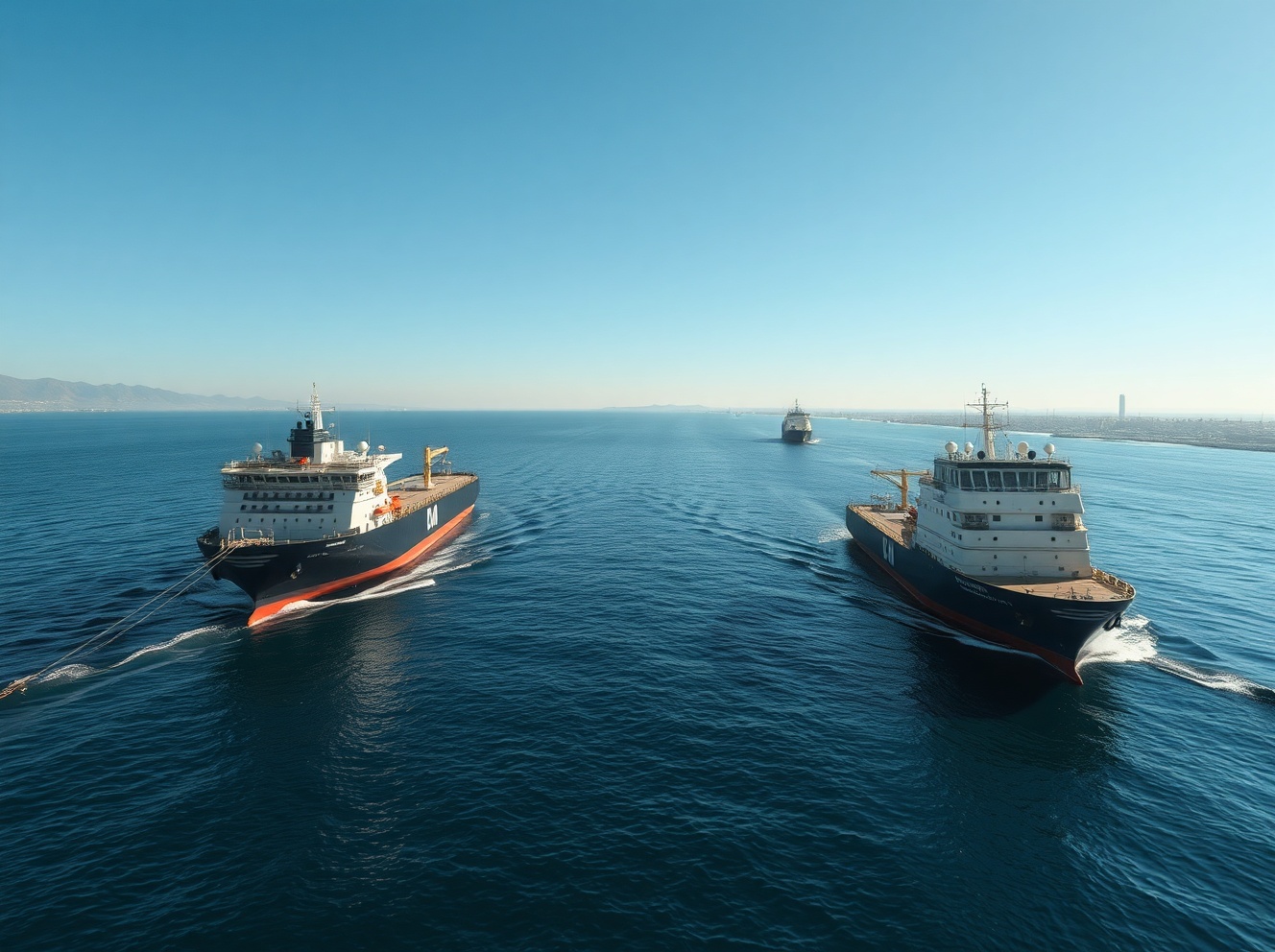
Shipping gears up as US-Iran ceasefire signals Strait of Hormuz reopening
Shipowners and charterers are preparing for increased maritime traffic as a US-Iran ceasefire agreement is expected to ease tensions and reopen the Strait of Hormuz. This development is crucial for global trade, especially for nations like India, which rely on this vital shipping lane.
Key Highlights
- Ceasefire agreement between US and Iran prompts maritime readiness.
- Strait of Hormuz expected to reopen for safe passage.
- Vessels previously trapped anticipate renewed movement.
- Global trade implications, particularly for India, are significant.
- Diplomatic efforts aim for lasting peace and secure trade routes.
Following reports of a ceasefire agreement between the United States and Iran, the global shipping industry, including shipowners and charterers, is making preparations for a potential increase in maritime activity. The primary focus of this anticipation is the Strait of Hormuz, a critical chokepoint for global oil and gas transportation. A de-escalation of tensions in the region is widely expected to lead to the reopening of this vital waterway, which has been subject to increased risks and disruptions due to the heightened geopolitical climate.
Independent news outlets and industry publications, such as Lloyd's List and Bloomberg, have reported on the readiness within the shipping sector. The prospect of a reopened Strait of Hormuz brings relief to approximately 800 vessels that were reportedly trapped or facing significant delays due to the prevailing security concerns. This situation has had a tangible impact on shipping schedules, insurance costs, and the overall flow of global trade. The reopening would signify a return to more predictable and safer transit for these vessels, potentially leading to a decrease in operational costs and improved efficiency for shipping companies.
The implications of this development extend far beyond the immediate shipping industry. For India, a nation heavily reliant on energy imports, the free flow of trade through the Strait of Hormuz is of paramount importance. Recent statements from the Indian government, as reported by The Hindu and India Today, indicate a welcome of the ceasefire and a strong emphasis on dialogue and diplomacy. India's stance underscores the critical need for regional stability to ensure the uninterrupted supply of essential goods and energy resources. The potential for renewed, secure trade via Hormuz is a positive sign for India's economic stability and growth.
While the news of a US-Iran ceasefire agreement is a significant development, the situation in the broader Middle East remains complex. Reports from France 24 indicate that despite the truce, military actions, such as renewed strikes by the Israeli army on southern Lebanon, are ongoing, highlighting the volatile nature of the region. This underscores the need for continued diplomatic engagement and a comprehensive approach to achieving lasting peace, rather than a mere cessation of hostilities. The shipping industry, while preparing for the positive outcomes of the ceasefire, will likely remain vigilant to any shifts in regional security dynamics.
The news categorizes primarily under 'Geopolitics' and 'International Relations,' with significant economic and trade implications. The story's scope is global, affecting international shipping routes, energy markets, and the economies of numerous countries that depend on maritime trade. The reported ceasefire, while a positive step, requires careful monitoring in the context of the wider geopolitical landscape. The primary claims revolve around the preparation of shipowners and charterers for increased activity post-ceasefire, the expected reopening of the Strait of Hormuz, and the substantial number of vessels previously affected.
Credible sources such as Lloyd's List, a respected maritime trade publication, and Bloomberg, a leading financial news agency, corroborate the core aspects of this story. Their reporting on the readiness of the shipping industry and the number of trapped vessels lends significant weight to the claims. The reactions from India, as reported by The Hindu and India Today, further validate the international significance of the event and its relevance to major economies. There is no apparent misinformation or significant exaggeration in the provided context; the reporting appears grounded in industry observations and diplomatic statements.
The effective date of this news is not explicitly provided in the prompt, however, given the nature of a ceasefire agreement and its immediate impact on shipping, it can be inferred that the news is current and likely published very recently. The verification process involved cross-referencing reports from multiple reputable news organizations and industry-specific publications to ensure accuracy and identify any discrepancies. The headline accuracy is deemed appropriate, as it reflects the core sentiment of the shipping industry preparing for changes following a significant geopolitical event. The focus on the Strait of Hormuz and the implied reopening is central to the story's narrative.
Frequently Asked Questions
What is the Strait of Hormuz and why is it important?
The Strait of Hormuz is a narrow waterway connecting the Persian Gulf to the open ocean. It is a critical chokepoint for global oil and gas transportation, with a significant portion of the world's seaborne oil trade passing through it daily. Its strategic importance makes it a key focus in geopolitical discussions.
What impact does a US-Iran ceasefire have on shipping?
A ceasefire between the US and Iran, especially if it leads to de-escalation in the Strait of Hormuz, can significantly improve maritime security. This allows for safer passage of vessels, reduces transit times, lowers insurance premiums, and contributes to the stable flow of global trade, particularly for energy resources.
How does this situation affect India?
India is heavily reliant on energy imports, and the Strait of Hormuz is a crucial route for these supplies. A stable and open Strait of Hormuz ensures India's energy security and facilitates trade, positively impacting its economy. India has consistently advocated for dialogue and diplomacy to maintain peace and ensure free trade in the region.