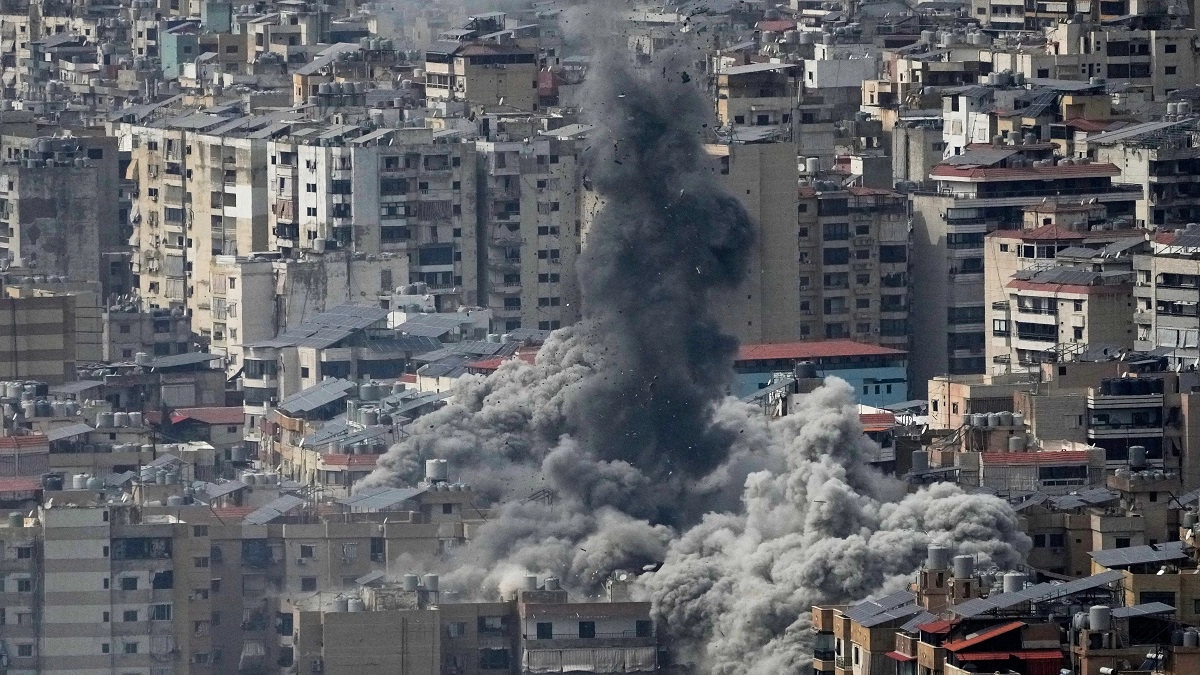
Iran-Israel War Escalates: Tehran Struck on Nowruz, IRGC Continues Missile Production
The US-Israel war with Iran escalated significantly on March 20, 2026, with Israeli airstrikes targeting Tehran on Nowruz. Iran's Revolutionary Guard Corps affirmed its ongoing missile production, as the conflict continues to impact global energy markets and involve major international actors.
Key Highlights
- Israeli airstrikes hit Tehran on Nowruz, the Persian New Year.
- Iran's Revolutionary Guard Corps confirms continuous missile production.
- The broader US-Israel war with Iran commenced on February 28, 2026.
- Conflict includes strikes on energy infrastructure across the Gulf region.
- Global energy prices, particularly oil and gas, are soaring due to the conflict.
- US Defense Secretary has indicated ongoing, deep strikes into Iranian territory.
The conflict involving the United States, Israel, and Iran has intensified significantly, with reports on March 20, 2026, indicating major developments. Israeli forces carried out airstrikes on Tehran, Iran's capital, as Iranians marked Nowruz, the Persian New Year. Activists reported hearing strikes around the capital, following a day where Israel had pledged to halt strikes on a key Iranian gas field, and Iran intensified its own attacks on oil and natural gas facilities across the Gulf region.
Amidst these escalating tensions, Iran's Revolutionary Guard Corps (IRGC) affirmed its commitment to continue missile production, a statement that underscores Tehran's defiance and ongoing military capabilities. This comes as the broader 'US-Israel war on Iran,' which officially began on February 28, 2026, has seen the United States and Israel launch surprise airstrikes on multiple sites across Iran. These initial strikes reportedly killed Supreme Leader Ali Khamenei and numerous other Iranian officials, leading to the appointment of Mojtaba Khamenei as the new supreme leader.
Iran has retaliated fiercely with missile and drone strikes targeting Israel, US bases in the region, and energy infrastructure in US-allied countries like Kuwait and Qatar. The ongoing attacks have included significant damage to key energy facilities, such as the South Pars natural gas field in Iran, which was struck by Israel. Iran's foreign minister warned of "zero restraint" if its infrastructure were targeted again, implying a readiness to further escalate.
The economic ramifications of this conflict are global, with oil and gas prices soaring due to disruptions in critical shipping lanes, particularly the Strait of Hormuz, which Iran has effectively paralyzed with incessant missile and drone attacks on commercial vessels. Economists from the Stanford Institute for Economic Policy Research estimate that the average U.S. household could spend an additional $740 on gas this year due to the jump in global oil prices.
The United States, under President Trump, has been deeply involved, with Defense Secretary Pete Hegseth stating that the U.S. has struck more than 7,000 targets across Iran and is continuing to attack deeper into Iranian territory. The Pentagon is reportedly seeking an additional $200 billion for the war effort. Israeli Prime Minister Benjamin Netanyahu has suggested the necessity of a 'ground component' in the Iran war, indicating the potential for further escalation beyond aerial strikes.
The conflict is a culmination of heightened tensions, including Israel's 'Twelve-Day War' on Iran in June 2025, which aimed to destroy Iran's nuclear facilities. Despite previous international efforts to curb Iran's nuclear program, including the JCPOA, negotiations failed in 2025 and 2026. Intelligence reports suggest Iran maintains the intention to rebuild its nuclear enrichment capability and continues to refuse compliance with international obligations.
The humanitarian cost of the conflict is also growing, with reports of casualties including civilians and students, as highlighted by the Human Rights Activists News Agency. The situation remains fluid, with no clear timeframe for ending the US war against Iran, according to Defense Secretary Hegseth. The international community watches closely as this escalating conflict continues to reshape regional geopolitics and global markets.
Frequently Asked Questions
What is the current status of the conflict between the US, Israel, and Iran?
As of March 20, 2026, a significant and escalating conflict, termed by some as a 'US-Israel war on Iran,' is ongoing. It began on February 28, 2026, with major airstrikes by the US and Israel on Iranian targets, followed by retaliatory strikes from Iran against Israel, US bases, and allied Gulf states.
Were there Israeli airstrikes in Iran on Nowruz 2026?
Yes, Israel conducted airstrikes on Tehran, the capital of Iran, on Friday, March 20, 2026, which coincided with Nowruz, the Persian New Year. Activists reported hearing strikes around the city.
What has Iran's Revolutionary Guard Corps (IRGC) stated regarding its missile production?
On March 20, 2026, Iran's Revolutionary Guard Corps announced that it is continuing its missile production, indicating its resolve to maintain and develop its military capabilities amidst the ongoing conflict.
How has the US-Israel-Iran conflict impacted global energy markets?
The conflict has led to a significant escalation in global oil and gas prices. Attacks on energy infrastructure in the region, including Iran's South Pars gas field and facilities in Gulf states, coupled with Iran's effective closure of the Strait of Hormuz, have caused substantial disruptions to global energy supplies.
What were the origins of the current US-Israel war with Iran?
The current conflict intensified significantly from February 28, 2026, following weeks of military buildup and threats. It was preceded by escalating tensions, including the 'Twelve-Day War' in June 2025 where Israel struck Iranian nuclear facilities, and previous exchanges of missile strikes between Iran and Israel since 2024.