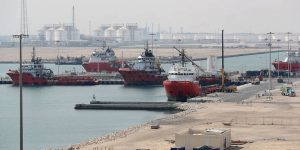
US eyes Iran's Kharg Island: A strategic oil hub and potential war flashpoint
The US is reportedly considering military actions against Iran's Kharg Island, a crucial oil export terminal. This move could significantly impact Iran's economy and global energy markets, while also risking wider escalation in the ongoing Middle East conflict.
Key Highlights
- Kharg Island is Iran's primary crude oil export terminal.
- It handles approximately 90% of Iran's oil exports.
- US considers striking or seizing Kharg Island to pressure Iran.
- Attacking Kharg could destabilize global oil prices.
- The island has been a strategic target in past conflicts.
- India's trade with Iran has significantly decreased due to sanctions.
The strategic importance of Kharg Island, Iran's principal crude oil export terminal, has placed it at the center of discussions regarding the escalating conflict in the Middle East. Reports indicate that the Trump administration is contemplating military operations, including potential strikes or even a raid to seize the island. This strategic focus on Kharg Island stems from its critical role in Iran's economy, handling approximately 90% of the nation's crude oil exports [3, 4, 5, 11, 16, 17, 23].
Kharg Island, a small coral island located about 25 km off Iran's coast in the Persian Gulf, has served as the country's main oil export hub since the 1960s. Its infrastructure, including extensive loading facilities and pipelines connected to mainland oilfields, allows it to process and ship up to roughly seven million barrels of oil per day [5, 7, 11, 15]. This concentration of energy infrastructure makes it a single-point vulnerability and a highly sensitive target in the global oil network [4, 5].
The consideration of military action against Kharg Island by the US is part of a broader strategy to exert maximum pressure on Tehran amid the ongoing war. Analysts suggest that disabling or seizing the island's oil infrastructure could cripple Iran's financial lifeline and weaken its ability to fund its military [3, 4, 7, 16]. However, such a move carries significant risks of escalation. Disrupting operations at Kharg could send international oil prices soaring, impacting global energy markets and potentially triggering retaliatory attacks on energy infrastructure across the Gulf [3, 4, 9, 10, 12, 13]. The Strait of Hormuz, a critical chokepoint for global oil shipments, is located nearby, adding to the region's volatility [4, 20, 26].
Historically, Kharg Island has been a strategic asset. During the Iran-Iraq War in the 1980s, the island was repeatedly targeted by Iraqi forces due to its vital role in oil exports [3, 4, 14, 15]. Even though heavily damaged, Iran rebuilt the facilities, underscoring its enduring importance. In the past, US President Jimmy Carter was advised about the island's potential leverage during the 1979 hostage crisis, but ultimately decided against action [3].
The current geopolitical climate has intensified the focus on Kharg Island. Reports suggest that the Trump administration is exploring various options, including special forces operations, as part of a campaign that could potentially extend to Iran's energy infrastructure [3, 8, 11, 16, 27]. Some officials have expressed a desire to control Iran's oil reserves, viewing it as a way to weaken the regime and remove resources from potential 'terrorist' hands [8, 16, 27].
For India, the conflict in the Middle East has significant economic implications. While India's direct oil imports from Iran have drastically reduced due to US sanctions since 2019, the disruption of global energy supplies impacts India, a major oil consumer [19, 20, 24, 25]. The rise in oil prices, insurance costs, and shipping fees jeopardizes India's energy purchases, which constitute a third of its import bill [25]. Furthermore, the safety of nine million Indian nationals residing in Gulf countries is also a concern [25]. Despite past trade ties, India's economic engagement with Iran has significantly declined, with countries like the UAE and Saudi Arabia becoming more important energy suppliers [20, 24].
The news concerning Kharg Island highlights the delicate balance of global energy security and the potential for significant economic and geopolitical repercussions stemming from the ongoing conflict. The strategic decisions made by the US and other international players regarding this critical oil hub will undoubtedly shape the future trajectory of the war and its impact on the world economy.
Frequently Asked Questions
What is Kharg Island and why is it important?
Kharg Island is Iran's primary crude oil export terminal, located in the Persian Gulf. It handles approximately 90% of Iran's oil exports and is crucial for the country's economy and global energy supply chains.
Why is the US considering action against Kharg Island?
The US is reportedly considering military options against Kharg Island as a strategy to exert pressure on Iran during the ongoing conflict, potentially crippling its economy by disrupting oil exports.
What are the potential consequences of striking Kharg Island?
Striking Kharg Island could lead to a significant increase in global oil prices, destabilize energy markets, and risk escalating the ongoing conflict into a wider regional war.
How does this conflict affect India?
While India has significantly reduced oil imports from Iran due to sanctions, the broader conflict impacts India through increased global oil prices, higher shipping costs, and potential risks to the large Indian diaspora in the Middle East.