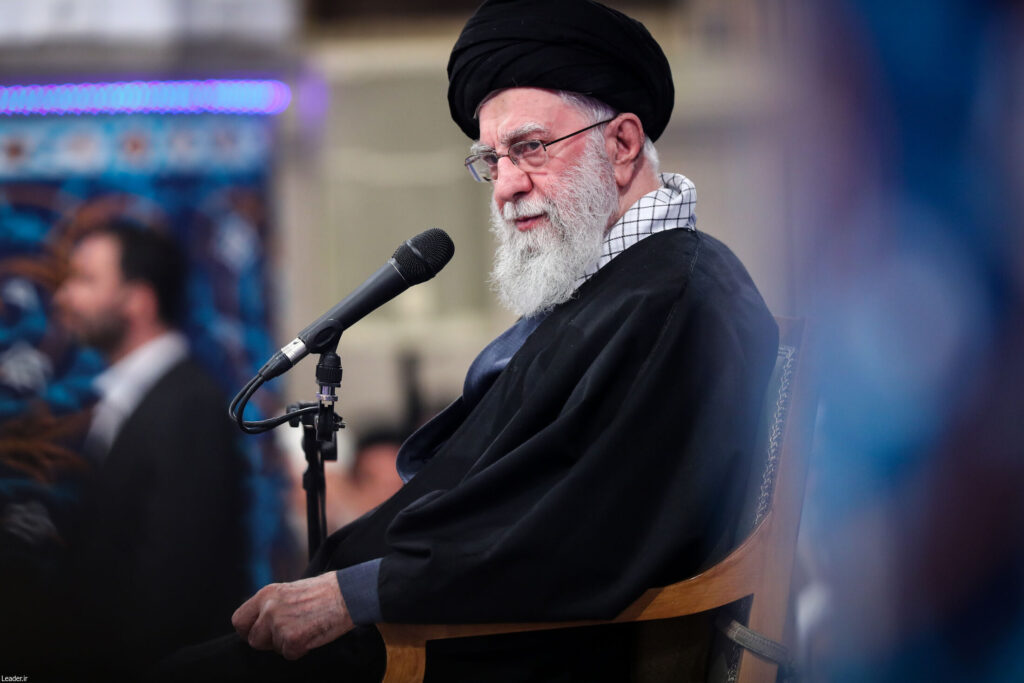
Trump Weighed Options for Targeted Iran Strikes, Including Khamenei
Former US President Donald Trump was reportedly presented with military options targeting Iran's Supreme Leader Ali Khamenei and his son, amidst ongoing US-Iran tensions and a significant military buildup. While also considering a 'token' nuclear deal, no final decision on strikes had been made.
Key Highlights
- Trump presented with military options targeting Iran's Supreme Leader.
- Options included eliminating Ali Khamenei and his son, Mojtaba Khamenei.
- Report from Axios cited senior administration sources for the claims.
- US military presence in the Middle East significantly increased.
- Trump simultaneously considered a 'token' nuclear deal with Iran.
- No final decision made on military action; strategic ambiguity maintained.
Former US President Donald Trump was reportedly presented with a range of military options concerning Iran, notably including the targeted killing or removal of its Supreme Leader, Ayatollah Ali Khamenei, and his son, Mojtaba Khamenei. This significant development was first reported by Axios, citing senior administration sources, and subsequently corroborated by multiple international news outlets, including India Today, Hindustan Times, News24, and The Times of India, all publishing around February 21, 2026.
The discussions surrounding these drastic military options emerged amidst a period of heightened tensions between Washington and Tehran. Sources indicated that scenarios debated by the Trump administration included a plan to 'take out the ayatollah and his son and the mullahs,' referring to Iran's top leadership. Mojtaba Khamenei is widely considered a potential successor to his father, adding a layer of strategic significance to any such potential action.
Simultaneously, the Trump administration was also exploring diplomatic avenues. Reports indicated that Trump was weighing a narrow nuclear agreement with Iran that could potentially allow 'token' uranium enrichment, provided it offered no pathway to developing a nuclear weapon. This suggested a dual-track approach, combining intense military pressure with a potential, albeit limited, diplomatic opening for negotiations.
The military posturing by the United States in the Middle East during this period was substantial. The US rapidly increased its military presence, deploying two aircraft carrier strike groups, including the USS Gerald R. Ford and USS Abraham Lincoln, to the region. This concentration of naval power, along with numerous missile-capable destroyers, advanced fighter jets (such as F-35s, F-22s, F-15s, and F-16s), and reinforced air defense systems, represented one of the largest concentrations of US air power in the Middle East since the 2003 Iraq War. Reports suggested that US forces could be prepared to act as early as the weekend, with all deployed forces expected to be in position by mid-March.
Despite the gravity of the options presented, news reports consistently emphasized that President Trump had not made a final decision on any strike. Senior advisors and White House spokespersons maintained a stance of strategic ambiguity, with White House spokesperson Anna Kelly stating that 'only President Trump knows what he may or may not do.' This uncertainty underscored the fluid nature of the deliberations and the high stakes involved in any potential military engagement.
The consideration of such targeted strikes highlighted a critical phase in US-Iran relations, where the possibility of direct military action against Iranian leadership was openly on the table. This followed past actions, such as the US drone strike that killed Iranian General Qasem Soleimani in January 2020, which demonstrated the Trump administration's willingness for targeted killings. The implications of any direct strike on Iran's top leadership would have been profound, marking a dramatic escalation of tensions and potentially leading to far-reaching consequences for regional stability across the Middle East and global geopolitics.
For an Indian audience, the news carries significant importance due to India's substantial economic interests in the Middle East, including energy imports and a large diaspora. Any escalation of conflict in the region would directly impact global oil prices and trade routes, affecting India's economy and its citizens abroad. The unfolding situation underscored the delicate balance between diplomatic efforts and military deterrence in a volatile region.
Frequently Asked Questions
What military options were reportedly presented to Donald Trump regarding Iran?
Reports indicate that former US President Donald Trump was presented with military options that included the targeted killing or removal of Iran's Supreme Leader Ali Khamenei and his son, Mojtaba Khamenei.
Was a decision made by President Trump to execute these strikes?
No, multiple reports emphasized that no final decision had been made by President Trump regarding any military strike. The administration maintained strategic ambiguity on the matter.
What was the broader context of these discussions?
These discussions occurred amidst heightened US-Iran tensions and a significant US military buildup in the Middle East, including the deployment of aircraft carrier strike groups. Simultaneously, Trump was reportedly also considering a 'token' nuclear deal with Iran.
How did the White House respond to these reports?
The White House, through spokespersons like Anna Kelly, declined to comment on specific military plans, stating that 'only President Trump knows what he may or may not do,' thereby maintaining strategic ambiguity.
What are the potential implications of such actions?
Any direct strike on Iran's top leadership would represent a dramatic escalation of US-Iran tensions, with potential far-reaching consequences for regional stability in the Middle East and global geopolitics, including impacts on oil prices and international trade.