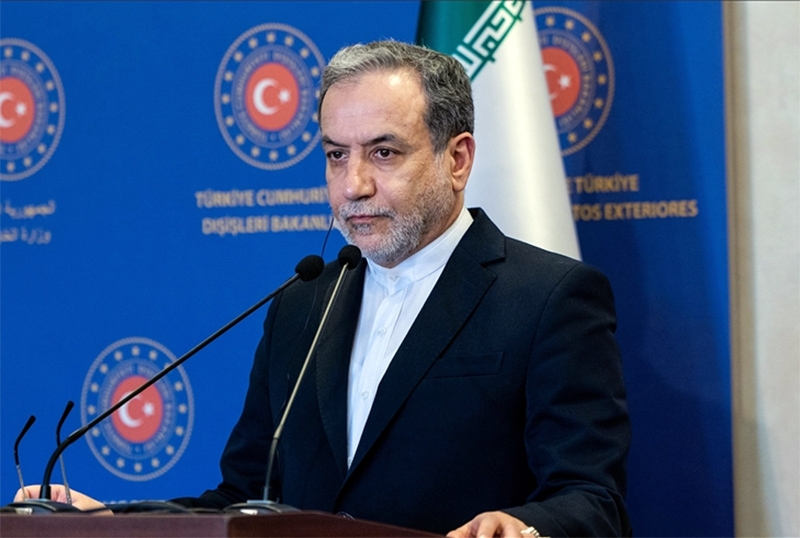
Iran FM Araghchi Reiterates Energy Cooperation with India Amid West Asia Tensions
Iranian Foreign Minister Seyed Abbas Araghchi affirmed Tehran's interest in continuing energy cooperation with India during the BRICS Foreign Ministers' meeting in New Delhi. His visit, amid an escalating US-Iran conflict, highlighted global concerns over energy security and West Asian stability, with India advocating for dialogue and unimpeded maritime passage.
Key Highlights
- Iran's FM Araghchi confirmed interest in energy trade with India.
- Statement made during BRICS Foreign Ministers' meeting in New Delhi.
- Visit coincides with ongoing 'US-Iran war' and regional crisis.
- India seeks stable energy supply amid Strait of Hormuz disruptions.
- BRICS meeting saw divisions on joint statement regarding Gulf crisis.
- India, as BRICS chair, emphasized dialogue for West Asia peace.
Iranian Foreign Minister Seyed Abbas Araghchi, during a critical visit to New Delhi for the BRICS Foreign Ministers' meeting, expressed Tehran's strong interest in continuing energy business with India. This affirmation came amidst heightened geopolitical tensions stemming from what various reports describe as an ongoing 'US-Israel war with Iran' that commenced on February 28, 2026. Araghchi's presence in India underscored the significant implications of the conflict on global energy markets and regional stability, placing India in a crucial diplomatic position as the current chair of the expanded BRICS bloc.
Araghchi arrived in New Delhi on May 12 or 13, 2026, for a two-day BRICS Foreign Ministers' meeting hosted by India on May 14 and 15. During his engagements, including bilateral talks with India's External Affairs Minister S. Jaishankar, the Iranian Foreign Minister reiterated that despite the complexities arising from Western sanctions, Iran is keen to maintain and expand its energy ties with India. This stance is particularly relevant given India's historical reliance on Iranian crude oil, which was significantly curtailed due to US sanctions, leading to India exploring alternative suppliers like Russia.
The backdrop to these discussions is a volatile situation in West Asia, characterized by the 'US-Iran war' — a term used by several news outlets to describe escalating hostilities and disruptions. The conflict has severely impacted global energy supplies, with the Strait of Hormuz, a vital shipping lane for nearly a fifth of the world's oil, experiencing significant disruptions for over 75 days. These disruptions have led to a surge in crude oil prices, compelling India to petition the United States for an extension of the sanctions waiver on Russian oil imports to manage its energy bill and domestic fuel inflation.
The BRICS Foreign Ministers' meeting itself was a focal point for international diplomacy regarding these issues. India, holding the BRICS chairmanship in 2026, aimed to foster dialogue on global and regional issues, including energy security, the Middle East crisis, and reforms of global governance. The bloc, which expanded in 2024 to include Iran, the UAE, Egypt, and Ethiopia, and Indonesia in 2025, represents a significant portion of the global population and economy, making its discussions critical for emerging economies.
Despite India's efforts to build consensus, the BRICS meeting exposed divisions among member states regarding a unified position on the West Asia conflict. Consequently, India issued a chair's statement at the conclusion of the meeting instead of a joint communiqué, acknowledging differing views, particularly between Iran and the UAE, who are reportedly on opposing sides in the conflict. External Affairs Minister S. Jaishankar emphasized India's consistent stand for dialogue and diplomacy as the optimal path forward to resolve the crisis and called for safe and unimpeded maritime flows through international waterways, including the Strait of Hormuz.
From Iran's perspective, Foreign Minister Araghchi utilized the BRICS platform to voice Tehran's grievances. He asserted that Iran has 'no trust' in the United States and would only engage in negotiations if Washington demonstrated seriousness. Furthermore, Araghchi urged BRICS nations to condemn what he termed as 'unlawful aggression' by the US and Israel against Tehran, portraying Iran as a 'victim of illegal expansionism and warmongering'. He also accused the United Arab Emirates of being an 'active partner' in the US-Israeli operations against Iran, highlighting the deep regional divisions. These statements underscore Iran's desire for international support against perceived Western hegemony and its call for BRICS members to take practical steps to end 'warmongering'.
India's diplomatic balancing act involves maintaining its strategic autonomy and energy security while navigating complex relationships with both the US and Iran. The potential for continued energy cooperation with Iran remains a crucial aspect of India's foreign policy, despite the challenges posed by US sanctions. India's emphasis on multilateralism and its role as BRICS chair reflect its commitment to finding peaceful resolutions and ensuring global economic stability amidst ongoing geopolitical turmoil in the Middle East. The visit of Foreign Minister Araghchi and the discussions at the BRICS forum collectively highlight the intricate web of international relations and the pressing need for diplomatic solutions to avert further escalation of conflicts impacting global energy supplies and economic stability.
Frequently Asked Questions
What was the main purpose of Iranian Foreign Minister Araghchi's visit to India?
Iranian Foreign Minister Seyed Abbas Araghchi visited India primarily to attend the BRICS Foreign Ministers' Meeting in New Delhi and to hold bilateral discussions with Indian counterparts, focusing on energy cooperation, regional connectivity, and the escalating crisis in West Asia.
What is the 'US-Iran war' mentioned in the context of the article, and what are its implications?
The 'US-Iran war' refers to an ongoing period of heightened tensions and hostilities between the US, Israel, and Iran, reportedly commencing on February 28, 2026. Its implications include significant disruptions to global energy supplies, particularly through the Strait of Hormuz, leading to increased oil prices and concerns for energy-importing nations like India.
How has India responded to the energy security challenges posed by the US-Iran conflict?
India has expressed concerns over the disruptions in the Strait of Hormuz, calling for unimpeded maritime passage. It has also sought an extension of the sanctions waiver on Russian oil imports from the US to secure its energy needs and mitigate the economic impact of the Middle East crisis.
Why did the BRICS Foreign Ministers' meeting not issue a joint statement on the Middle East crisis?
The BRICS Foreign Ministers' meeting, chaired by India, did not issue a joint statement on the Middle East crisis due to differing views among some member states, particularly between Iran and the UAE, regarding the conflict. India instead issued a chair's statement acknowledging these differences.
What was Iran's message to the BRICS nations regarding the US-Israel conflict?
Iran's Foreign Minister Araghchi urged BRICS nations to condemn what he described as 'unlawful aggression' by the US and Israel against Tehran. He also stated Iran's 'no trust' in the US for negotiations and called on the bloc to resist 'Western hegemony' and take practical steps to end 'warmongering'.