Delhi's Air Quality Plunges to 'Severe', Health Emergency Warned
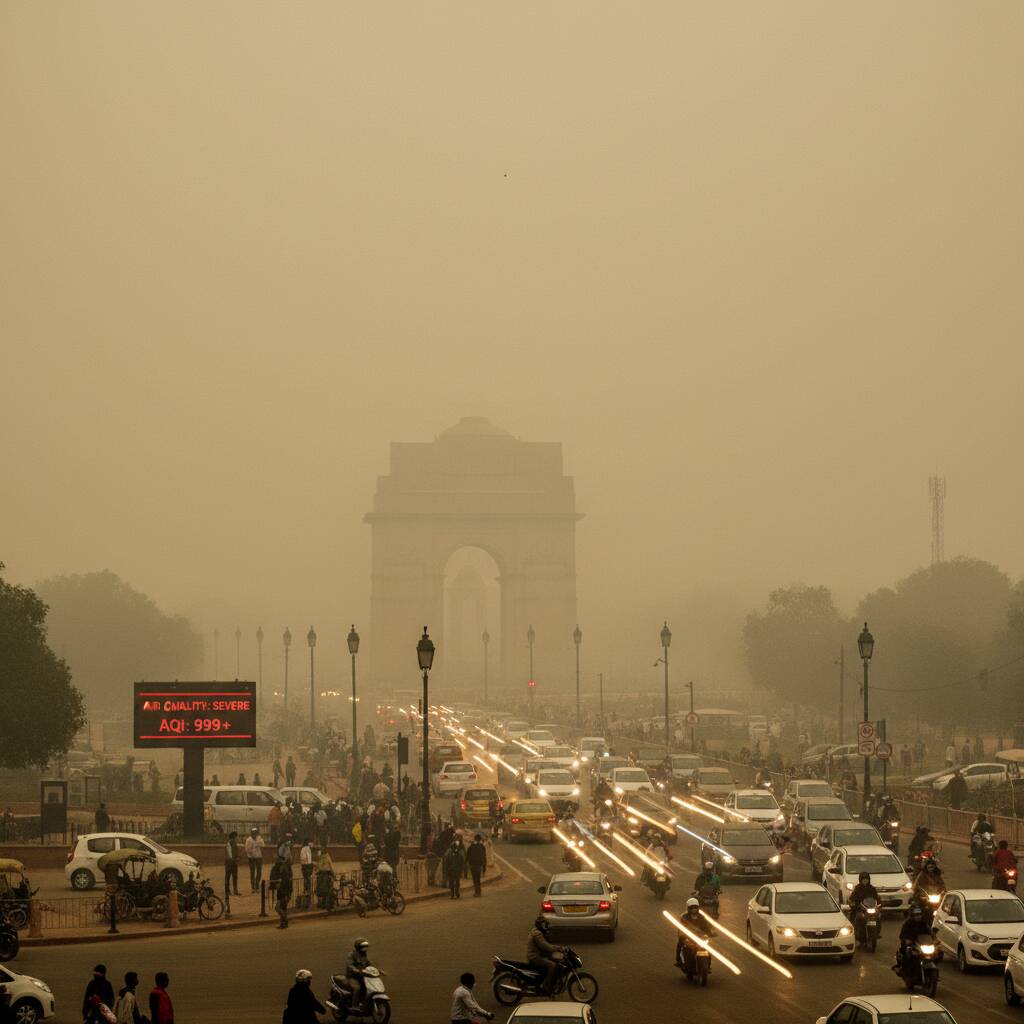
Delhi is experiencing alarmingly high levels of air pollution, with overall Air Quality Index (AQI) frequently entering the 'very poor' to 'severe' categories, and many individual monitoring stations reporting 'severe' or 'hazardous' conditions. Medical experts from AIIMS have declared the situation a public health emergency, citing a significant surge in respiratory illnesses and long-term health risks across all age groups. Authorities have implemented Stage III of the Graded Response Action Plan to curb pollution.
Key Highlights
- Delhi's Air Quality Index (AQI) reaches 'severe' levels.
- Concerns about a potential public health emergency.
- Smog and reduced wind speed contribute to worsening pollution.
- Urgent measures are being demanded to address the recurring crisis.
Delhi is currently grappling with critical levels of air pollution, with real-time data from various sources indicating a severe public health crisis. As of November 19, 2025, the average Air Quality Index (AQI) in Delhi is predominantly in the 'very poor' category, ranging from 386 to 392 according to the Central Pollution Control Board (CPCB). However, multiple monitoring stations across Delhi-NCR are registering AQI levels well above 400, falling into the 'severe' or 'hazardous' classifications. Some reports indicate an overall AQI reaching 543 on November 19, equivalent to inhaling the smoke from over 12 cigarettes daily.
The fear of a public health emergency is not sensationalized; rather, it is directly corroborated by medical professionals. Doctors at the All India Institute of Medical Sciences (AIIMS) have explicitly stated that Delhi's air has deteriorated to 'medical emergency' levels, and the city has plunged into a public health emergency. They report a 10-30% surge in patients suffering from respiratory illnesses, heart disease, and other pollution-related health complications, affecting people from before birth to old age. Authorities have responded by implementing Stage III restrictions of the Graded Response Action Plan (GRAP), which came into force on November 11 when Delhi's AQI first touched 'severe' this season. Forecasters predict that the air quality is likely to worsen further, potentially reaching 'severe' levels across the city by November 22. The situation is particularly grim in neighboring NCR cities such as Greater Noida, Ghaziabad, Noida, Faridabad, and Meerut, which are also recording 'severe' or 'hazardous' air quality.