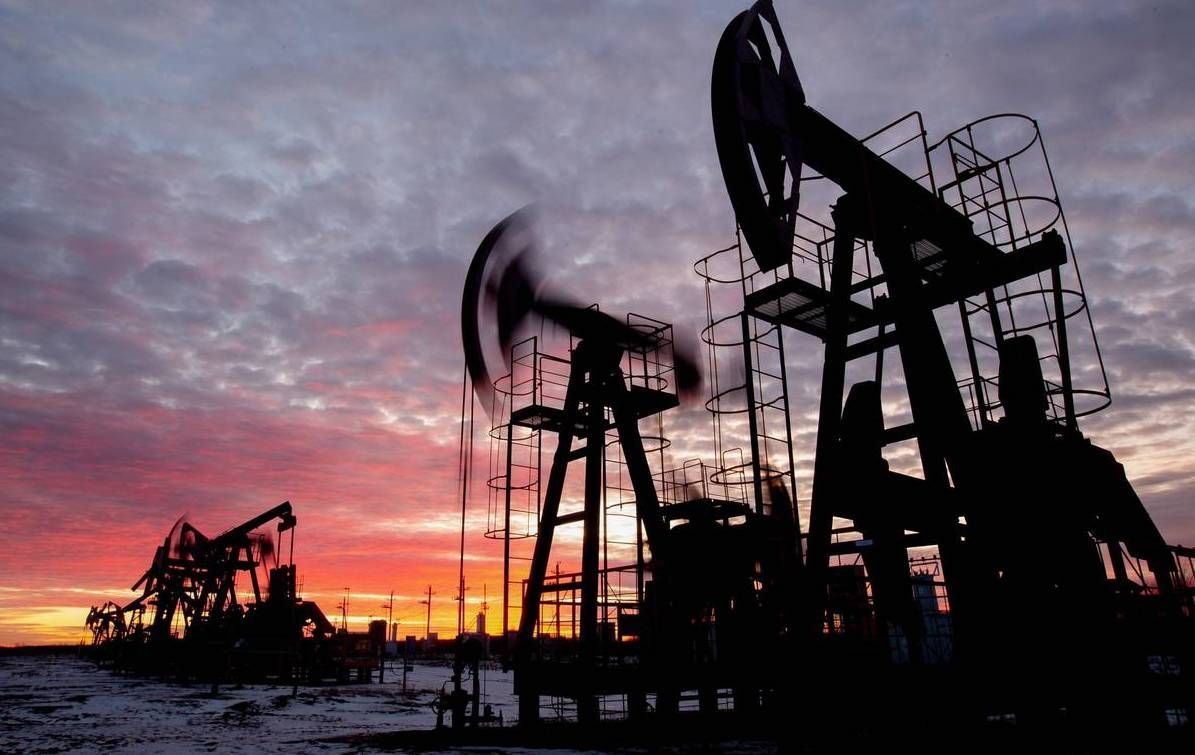
Global Oil Market Braces for Record Surplus, WTI Drops Below $63
The global oil market is facing significant pressure following the IEA's warning of a record 3.7 million barrels per day surplus in 2026, driving WTI crude prices below $63. High US inventories and a lowered demand forecast are amplifying the selloff, despite lingering geopolitical tensions.
Key Highlights
- IEA forecasts record 3.7M bpd oil surplus for 2026.
- WTI crude drops below $63, with $60 as next potential target.
- US crude inventories surge by 8.5 million barrels, exceeding forecasts.
- IEA lowers global oil demand growth outlook for 2026.
- Geopolitical tensions between US-Iran now weigh less on prices.
- Indian OMCs face margin pressure from rising crude costs.
The global oil market is currently experiencing a significant selloff, primarily triggered by a stark warning from the International Energy Agency (IEA) about an impending, record-breaking supply surplus. The IEA's February 2026 Oil Market Report projects a massive 3.7 million barrels per day (bpd) surplus in 2026, which it identifies as the largest one-year surplus in history. This forecast has sent bearish shockwaves across energy markets, exerting downward pressure on crude oil prices globally.
As of February 13, 2026, West Texas Intermediate (WTI) crude oil was observed drifting down to approximately $62.68 to $62.75 per barrel, extending a second week of losses. Analysts are now eyeing $60.50, and potentially the psychological floor of $60.00, as the next critical support levels. Brent crude, the international benchmark, also saw declines, trading around $67.46 to $68.14 per barrel after dipping below $70 earlier in the week.
Further amplifying the bearish sentiment is the latest data from the US Energy Information Administration (EIA), which reported a substantial 8.5 million barrel build in US crude inventories. This increase far exceeded market expectations and contributed significantly to the selling pressure across energy markets. Simultaneously, the IEA revised down its global oil demand growth forecast for 2026 to 850,000 bpd, a reduction from its previous estimate of 930,000 bpd. This downgrade is attributed to economic uncertainties and the dampening effect of higher oil prices on consumption, signaling a weaker demand outlook.
On the supply side, while global oil supply had initially plunged by 1.2 million bpd in January due to severe winter weather disrupting North American operations and export constraints in Kazakhstan, Russia, and Venezuela, the IEA expects a rebound in the coming months. Global supply is projected to rise by 2.4 million bpd in 2026, with growth roughly evenly split between OPEC+ and non-OPEC+ producers. Notably, Venezuelan oil production is forecast to increase, with exports in January reaching 800,000 bpd and projections for 1.4 million bpd by 2027, following Washington's authorization for US-incorporated companies to export Venezuelan oil.
Geopolitical tensions, particularly between the United States and Iran, had earlier in the week pushed oil prices to five-month highs, introducing a 'geopolitical risk premium' due to fears of supply disruptions in the Strait of Hormuz. However, these tensions appear to be waning as US President Donald Trump indicated a preference for negotiating a new nuclear deal, thereby reducing the immediate risk of military escalation and its associated impact on oil supply. This shift in diplomatic tone has contributed to the easing of oil prices.
The implications for India's audience are significant. Indian Oil Marketing Companies (OMCs) such as Bharat Petroleum Corporation Limited (BPCL), Indian Oil Corporation Limited (IOCL), and Hindustan Petroleum Corporation Limited (HPCL) are facing considerable pressure. A rise in global crude oil prices directly increases their input costs, squeezing their marketing margins if retail fuel prices in India are not adjusted commensurately. This sensitivity to crude price fluctuations means that even minor increases can impact OMC profitability, leading to selling pressure on their stocks. There are also concerns regarding India's potential sourcing of heavier, more complex Venezuelan crude, which could entail higher processing costs for refiners.
Beyond crude oil, natural gas markets also saw a downturn, with futures taking a hit of approximately 2.2% to $3.14-$3.15, influenced by mild weather forecasts. The overall market sentiment is overwhelmingly bearish, driven by the formidable projected surplus, robust inventory builds, and a re-evaluated outlook for demand growth amidst global economic uncertainties and a broader risk-off environment in financial markets.
Frequently Asked Questions
What is the IEA's main warning about the global oil market?
The International Energy Agency (IEA) has warned of a record 3.7 million barrels per day (bpd) oil surplus in 2026, marking the largest one-year surplus in history, which is significantly impacting global oil prices.
How are WTI crude oil prices currently performing?
WTI crude oil prices have dropped below $63 per barrel, hovering around $62.68-$62.75, extending a second week of losses. Analysts are now suggesting that prices could target the $60.50 or even the $60.00 psychological floor next.
What role do US crude inventories play in the current market selloff?
A substantial 8.5 million barrel surge in US crude inventories, as reported by the EIA, significantly amplified the bearish momentum in the energy markets, indicating an oversupplied market.
How do geopolitical tensions between the US and Iran affect oil prices now?
While US-Iran tensions previously caused oil prices to rise, President Trump's recent indication of a preference for diplomatic negotiations over military action has reduced the immediate geopolitical risk premium, contributing to the current decline in prices.
What are the implications of the global oil market situation for India?
For India, the falling crude prices could offer some relief on the import bill. However, for Indian Oil Marketing Companies (OMCs) like BPCL, IOCL, and HPCL, the volatility and potential for sustained higher input costs (if retail prices don't adjust) can squeeze marketing margins and put pressure on their stock performance.