Asteroid 2005 UK1: Mile-Wide 'Planet Killer' Safely Skips Earth Today | Quick Digest
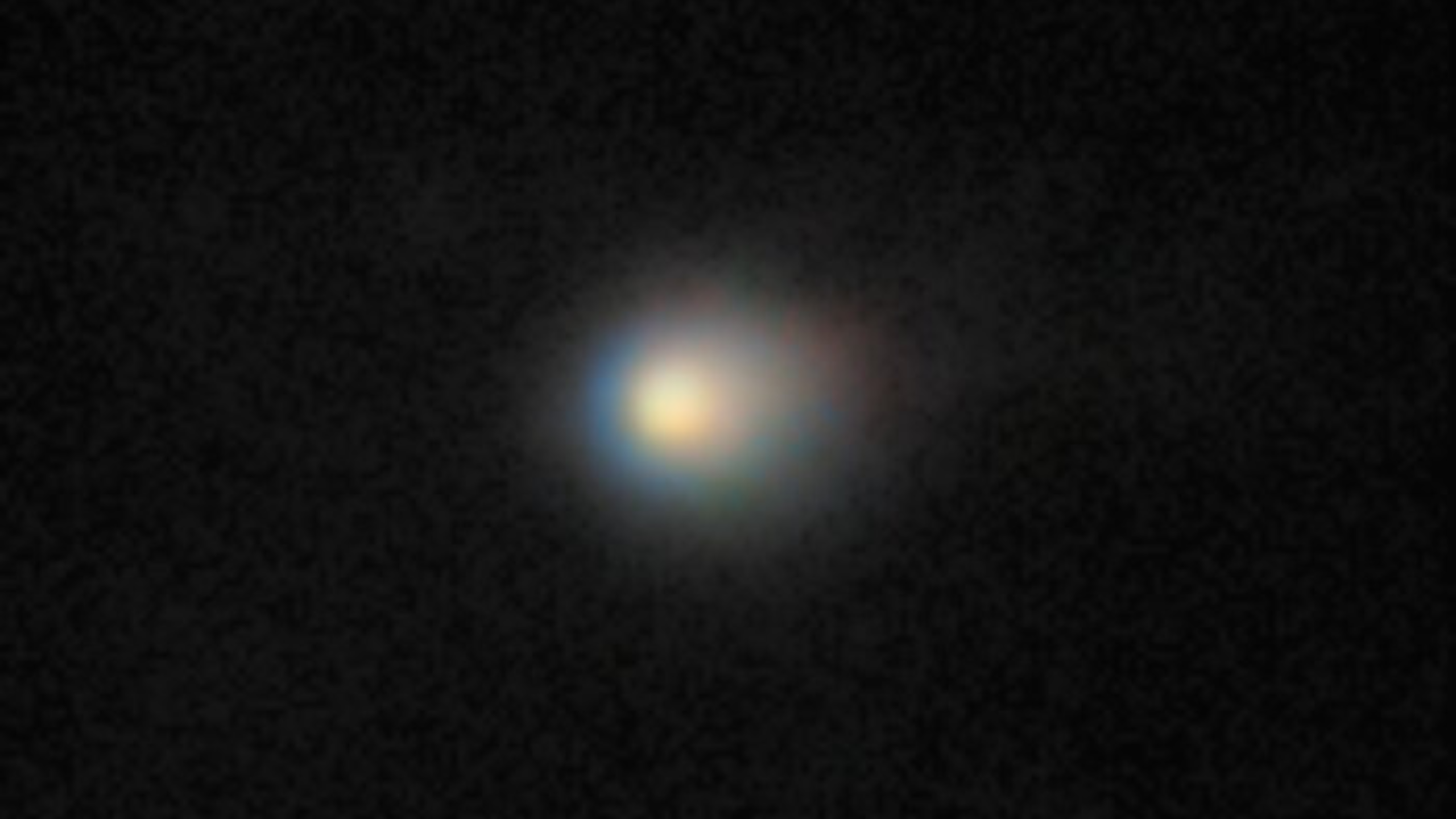
A mile-wide asteroid, 2005 UK1, informally dubbed a "planet killer" due to its size, is making a safe, distant flyby of Earth today, January 12, 2026. This Potentially Hazardous Asteroid poses no impact risk, passing at 12.4 million kilometers, or 32 times the Earth-Moon distance.
Asteroid 2005 UK1, sized 0.6-1.4 km, is flying past Earth today.
It's classified as a 'Potentially Hazardous Asteroid' due to its orbit.
The asteroid will pass Earth at a safe distance of 12.4 million km.
The informal 'planet killer' term refers to its potential impact if it ever hit Earth.
No risk of impact or gravitational effect on Earth is predicted.
Today, January 12, 2026, a significant celestial event is occurring as the asteroid 2005 UK1 makes a distant but noteworthy flyby of Earth. This near-Earth asteroid is estimated to be between 0.6 and 1.4 kilometers (0.4 to 0.85 miles) in diameter, classifying it as 'mile-wide'. Due to its substantial size, it has been informally nicknamed a 'planet killer', a term used for asteroids capable of causing widespread devastation if they were to impact our planet.
However, there is no cause for alarm, as 2005 UK1 is passing at a perfectly safe distance of approximately 12.4 million kilometers (7.7 million miles), which is about 32 times the average distance between the Earth and the Moon. NASA's Jet Propulsion Laboratory confirms its closest approach occurs today, January 12, 2026, at 13:21 UTC. Discovered by the Mt. Lemmon Survey in October 2005, 2005 UK1 is designated as a 'Potentially Hazardous Asteroid' (PHA) because its orbital path can, at times, bring it within a specific proximity to Earth's orbit. Despite this classification, astronomers have precisely calculated its trajectory, assuring that it poses no risk of impact or any gravitational effect on Earth during this flyby. This event offers a valuable opportunity for professional observatories to study such large objects, though it is far too faint to be seen with the naked eye or typical backyard telescopes.
Read the full story on Quick Digest