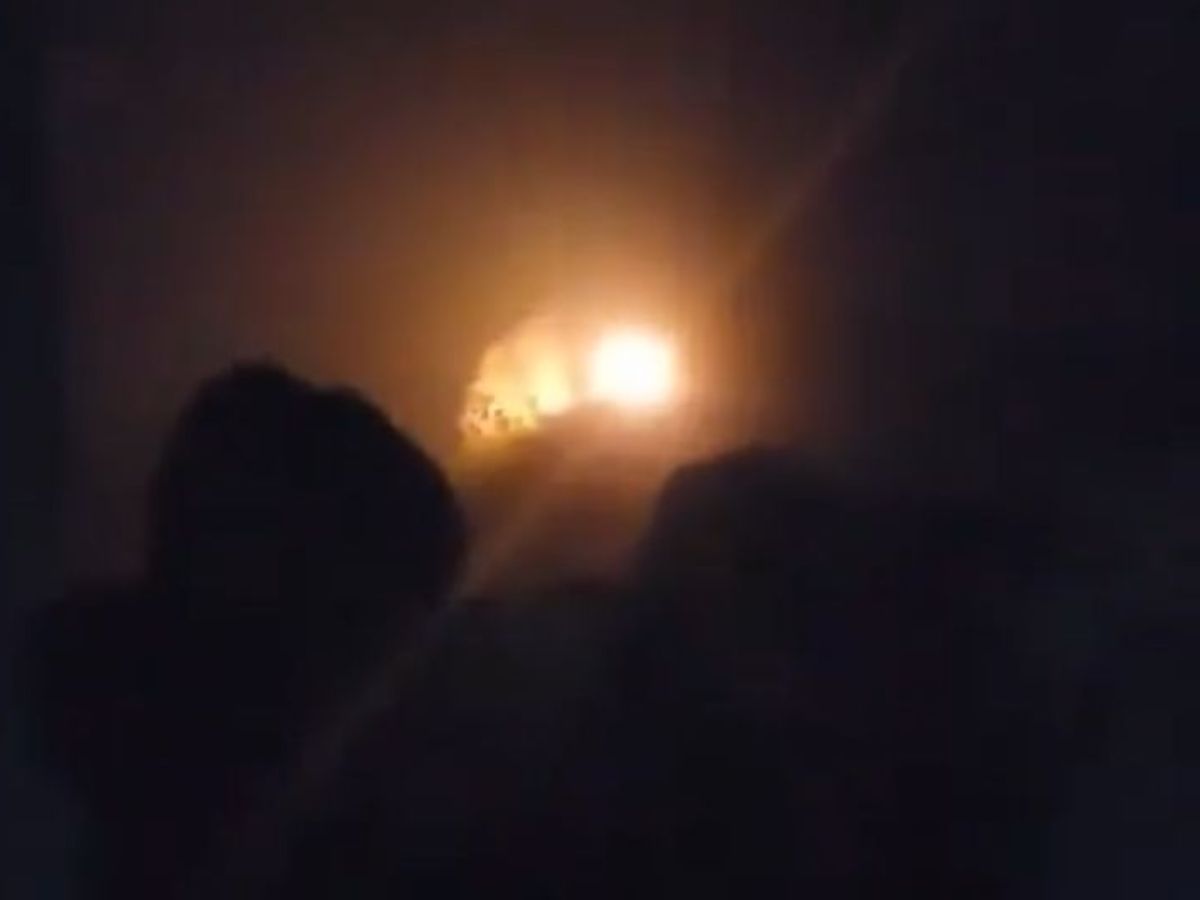
Pakistan Declares 'Open War' on Afghanistan Amid Escalating Border Conflict
Pakistan has declared 'open war' on Afghanistan following a critical escalation in border hostilities, launching airstrikes on Kabul, Kandahar, and Paktia. Islamabad claims over 130 Afghan Taliban fighters were killed in 'Operation Ghazab lil Haq,' a retaliatory action for alleged cross-border attacks, while Afghanistan disputes these figures and reports its own casualties. The conflict has heightened regional tensions.
Key Highlights
- Pakistan declares 'open war' on Afghan Taliban government.
- Airstrikes conducted in Kabul, Kandahar, and Paktia by Pakistan.
- Pakistan claims 133 Afghan Taliban fighters killed in 'Operation Ghazab lil Haq'.
- Afghanistan disputes casualty figures, reports Pakistani soldier deaths.
- Escalation follows months of border clashes and terror accusations.
- India, China, and Iran express concern over the deepening conflict.
Pakistan's Defence Minister, Khawaja Asif, officially declared 'open war' on the Afghan Taliban government on Friday, February 27, 2026, marking a significant and critical escalation in the already tense relations between the two neighboring nations. This declaration came after Pakistan launched extensive airstrikes in Afghanistan, targeting areas in the capital Kabul, as well as Kandahar and Paktia provinces.
The Pakistani military operation, dubbed 'Operation Ghazab lil Haq' (Wrath for the Truth), commenced late on Thursday, February 26, 2026. Islamabad stated that these strikes were a direct response to alleged cross-border attacks by Afghan forces against Pakistani border troops. Pakistan's Information Minister, Attaullah Tarar, claimed that at least 133 Afghan Taliban fighters were killed and more than 200 injured in the retaliatory operation. Tarar further asserted that 27 Afghan Taliban regime posts were destroyed and nine were captured, alongside significant destruction of military assets like tanks and ammunition depots.
However, the Afghan Taliban government swiftly disputed Pakistan's casualty figures. Taliban spokesperson Zabihullah Mujahid confirmed that Pakistani forces carried out airstrikes in Kabul, Kandahar, and Paktia, but denied any significant casualties on their side, stating that only eight Taliban fighters were killed and 13 civilians injured in Nangarhar province. In a counter-claim, Afghanistan's Ministry of National Defence stated that their forces had renewed attacks along the border and claimed to have killed 55 Pakistani soldiers, captured several posts, and seized weapons and vehicles during a four-hour operation on February 26. These conflicting reports highlight the severe lack of independent verification in the immediate aftermath of such intense hostilities.
The escalation follows months of heightened tensions and tit-for-tat clashes along the disputed Durand Line, the border between the two countries. Relations had notably plunged in recent months, with land border crossings largely shut since deadly fighting in October 2025 that resulted in over 70 casualties on both sides. Pakistan consistently accuses the Taliban government of failing to act against militant groups, particularly the Tehreek-e-Taliban Pakistan (TTP) and its affiliates, which Islamabad alleges use Afghan soil as a safe haven to launch terror attacks inside Pakistan. The Taliban government, in turn, denies these accusations. Despite several rounds of negotiations, including a fragile ceasefire mediated by Qatar and Turkey in October 2025, efforts to achieve a lasting agreement have failed.
The international community has reacted with concern. China's Foreign Ministry spokesperson Mao Ning expressed deep concern over the escalating situation and offered to play a constructive role in de-escalating the conflict. Iran also offered to help facilitate dialogue between Afghanistan and Pakistan. For India, a close neighbor and regional power, the conflict holds significant relevance. India has condemned Pakistan's airstrikes on Afghan territory. Furthermore, Pakistan's Defence Minister Khawaja Asif's accusation that the Taliban had turned Afghanistan into a "colony of India" and was exporting terrorism, albeit denied by New Delhi, adds another layer of geopolitical complexity and directly impacts India's regional standing and security concerns. The ongoing conflict poses serious risks to regional stability, trade routes, and humanitarian efforts, making it a critical geopolitical event with far-reaching implications for South Asia and beyond.
Frequently Asked Questions
Why has Pakistan declared 'open war' on Afghanistan?
Pakistan declared 'open war' due to escalating cross-border attacks allegedly launched by Afghan forces and the Afghan Taliban. Islamabad accuses the Taliban government of harboring militant groups like the Tehreek-e-Taliban Pakistan (TTP), which it blames for terror attacks inside Pakistan, claims the Taliban denies.
What military actions did Pakistan take?
Pakistan launched extensive airstrikes on Friday, February 27, 2026, targeting locations in Kabul, Kandahar, and Paktia provinces in Afghanistan. This retaliatory operation was named 'Operation Ghazab lil Haq'.
What are the claimed casualty figures from both sides?
Pakistan's Information Minister claimed at least 133 Afghan Taliban fighters were killed and over 200 injured. In contrast, the Afghan Taliban spokesperson reported only 8 Taliban fighters killed and 13 civilians injured, while claiming their forces killed 55 Pakistani soldiers.
How has the international community reacted?
China has expressed deep concern and offered to mediate the conflict. Iran has also offered to facilitate dialogue between the two nations. India has condemned Pakistan's airstrikes on Afghan territory.
What is the historical context of this conflict?
Tensions between Pakistan and Afghanistan have been long-standing, particularly regarding the disputed Durand Line border and Pakistan's accusations of Afghanistan harboring militants. Relations significantly deteriorated since the Taliban's return to power in 2021, with deadly clashes and border closures occurring in months prior to this escalation.