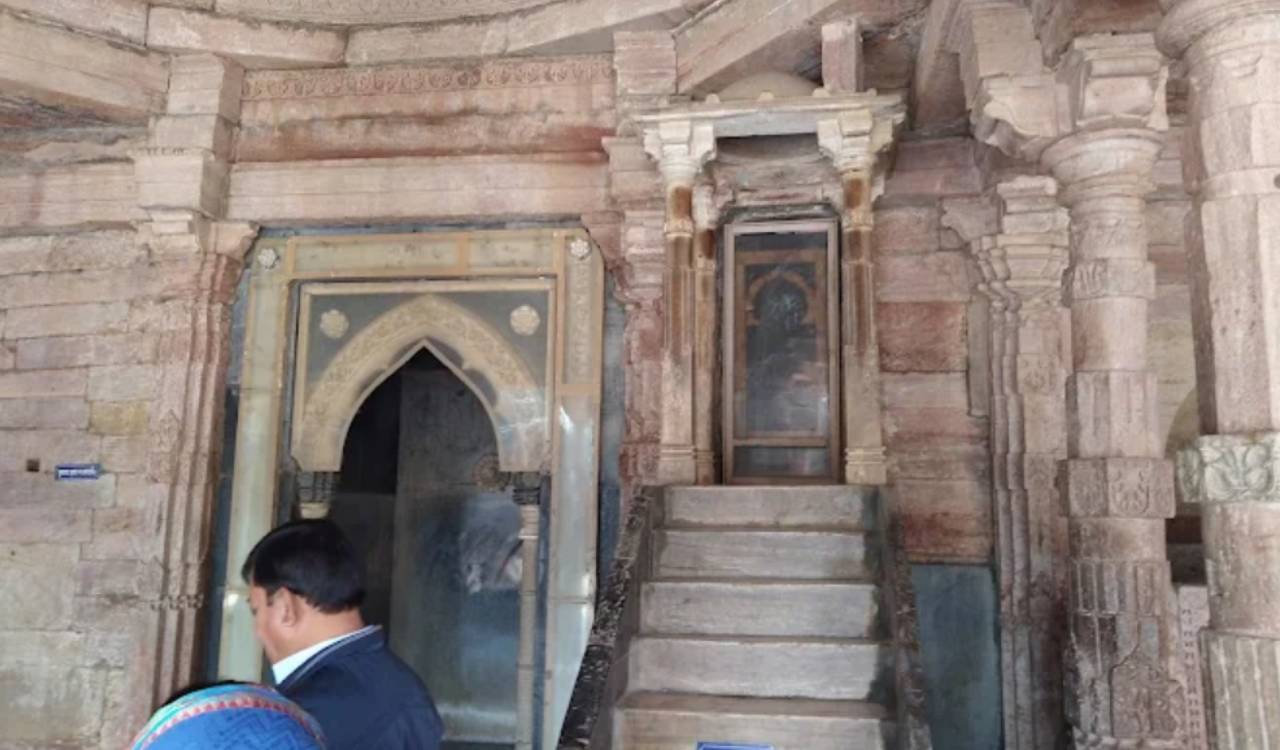
MP High Court Declares Bhojshala a Saraswati Temple in Dhar
The Madhya Pradesh High Court has declared the disputed Bhojshala complex in Dhar a temple of Goddess Vagdevi Saraswati, quashing an earlier Archaeological Survey of India (ASI) order that permitted Muslim prayers. The court's verdict, delivered on May 15, 2026, allows the Muslim community to seek alternative land for a mosque, while the ASI will maintain administration of the site.
Key Highlights
- MP High Court declared Bhojshala a Saraswati temple on May 15, 2026.
- Court quashed 2003 ASI order allowing Muslim prayers at the site.
- Muslim community advised to seek alternative land for a mosque.
- Verdict follows an ASI scientific survey that found temple remains.
- Archaeological Survey of India (ASI) retains administration of Bhojshala.
- The ruling impacts a long-standing Hindu-Muslim dispute over the Dhar complex.
In a significant ruling, the Madhya Pradesh High Court's Indore Bench on Friday, May 15, 2026, declared the disputed Bhojshala-Kamal Maula Mosque complex in Dhar district to be a temple of Goddess Vagdevi Saraswati. The two-judge bench, comprising Justices Vijay Kumar Shukla and Alok Awasthi, pronounced that the religious character of the 11th-century monument is that of Bhojshala, a temple dedicated to the goddess of learning.
This landmark judgment overturned the Archaeological Survey of India's (ASI) 2003 arrangement, which had allowed Hindus to worship at the site on Tuesdays and Muslims to offer namaz on Fridays. The High Court explicitly quashed the part of the 2003 ASI order that restricted the rights of Hindus to worship within the complex and permitted prayers by the Muslim community. While upholding the overall administration of the property by the ASI, the court suggested that the Muslim community could apply to the State government for the allotment of suitable alternative land within Dhar district for the construction of a mosque.
The Bhojshala complex in Dhar has been a focal point of contention for decades, with both Hindu and Muslim communities asserting their rights over the historical structure. Hindus revere the site as a temple dedicated to Goddess Vagdevi (Saraswati), believed to have been established by the Paramara King Bhoj in the 11th century as a centre for Sanskrit learning. Conversely, the Muslim community identifies the monument as the Kamal Maula Mosque, named after a Sufi saint.
The court's decision was heavily influenced by the findings of a comprehensive scientific survey conducted by the Archaeological Survey of India. The MP High Court had ordered this survey on March 11, 2024, to ascertain the true character of the complex. The ASI subsequently carried out a 98-day investigation, submitting a detailed report exceeding 2,000 pages in July 2024. According to various reports citing the ASI's findings, the survey revealed substantial evidence supporting the Hindu claim, including architectural remains, Sanskrit inscriptions, and defaced Hindu deities indicating the existence of a pre-existing temple structure dating back to the Paramara period.
During the legal proceedings, the Muslim side, represented by the Maulana Kamaluddin Welfare Society, raised strong objections to the ASI's report. They contended that the report was 'biased' and lacked legal basis, asserting that the ASI consistently used the term 'Bhojshala Temple' without sufficient historical evidence to prove its existence as such. They further claimed that the ASI ignored its own historical records and did not provide complete videography or colour photographs of the survey process. The Muslim petitioners also cited a purported 1935 declaration by the then-Dhar State court recognizing the monument as a mosque.
Despite these objections, the High Court emphasized that historical literature and records, coupled with the continuity of Hindu worship at the site, established its character as a centre of Sanskrit learning associated with Raja Bhoj and a temple dedicated to Goddess Saraswati. The court also made a notable observation that the Government of India might consider the repatriation of the idol of Goddess Vagdevi, currently believed to be in the British Museum in London.
The verdict has been widely hailed as a 'historic judgment' by Hindu organizations and political figures in India, sparking renewed discussions on historical religious sites. Security measures were heightened across the Dhar district in anticipation of the ruling to ensure peace and prevent any untoward incidents. While the judgment resolves a significant aspect of the long-standing dispute, it is expected that the Muslim side may appeal the decision in the Supreme Court. The Supreme Court had previously intervened in January 2026, allowing both communities to offer prayers under strict regulations when the Basant Panchami festival coincided with Friday prayers, urging mutual respect and tolerance.
This ruling underscores the complexities surrounding historical monuments in India, particularly those with dual religious claims, and is likely to have lasting implications for similar disputes across the country.
Frequently Asked Questions
What is the Bhojshala-Kamal Maula Mosque complex?
The Bhojshala-Kamal Maula Mosque complex is an 11th-century monument located in Dhar, Madhya Pradesh, India. Hindus consider it a temple dedicated to Goddess Vagdevi (Saraswati), built by King Bhoj, while Muslims identify it as the Kamal Maula Mosque. It has been a site of long-standing religious dispute.
What was the Madhya Pradesh High Court's recent verdict regarding Bhojshala?
On May 15, 2026, the Madhya Pradesh High Court declared the disputed Bhojshala complex as a temple of Goddess Vagdevi Saraswati. The court quashed the 2003 ASI order that restricted Hindu worship and allowed Muslim prayers, suggesting that the Muslim community can seek alternative land for a mosque.
What role did the ASI survey play in the High Court's decision?
The High Court's verdict was significantly based on a scientific survey conducted by the Archaeological Survey of India (ASI) between March and July 2024. The ASI's extensive report reportedly found evidence of a pre-existing temple structure, including Sanskrit inscriptions and architectural remains, supporting the Hindu claims.
What happens to Muslim prayers at Bhojshala after this verdict?
The Madhya Pradesh High Court quashed the 2003 ASI order that permitted Muslims to offer prayers at the Bhojshala complex. The court stated that the Muslim community may apply to the State government for the allotment of suitable alternative land within Dhar district for the construction of a mosque.
What are the immediate implications of this ruling?
The ruling is considered a significant victory for the Hindu community and is expected to lead to further discussions and potential legal challenges from the Muslim side in the Supreme Court. Security has been heightened in the Dhar district, and the Archaeological Survey of India will continue to administer the site.