Hezbollah's Missile Threat: Over 1,000 Long-Range Missiles Aimed at Israel
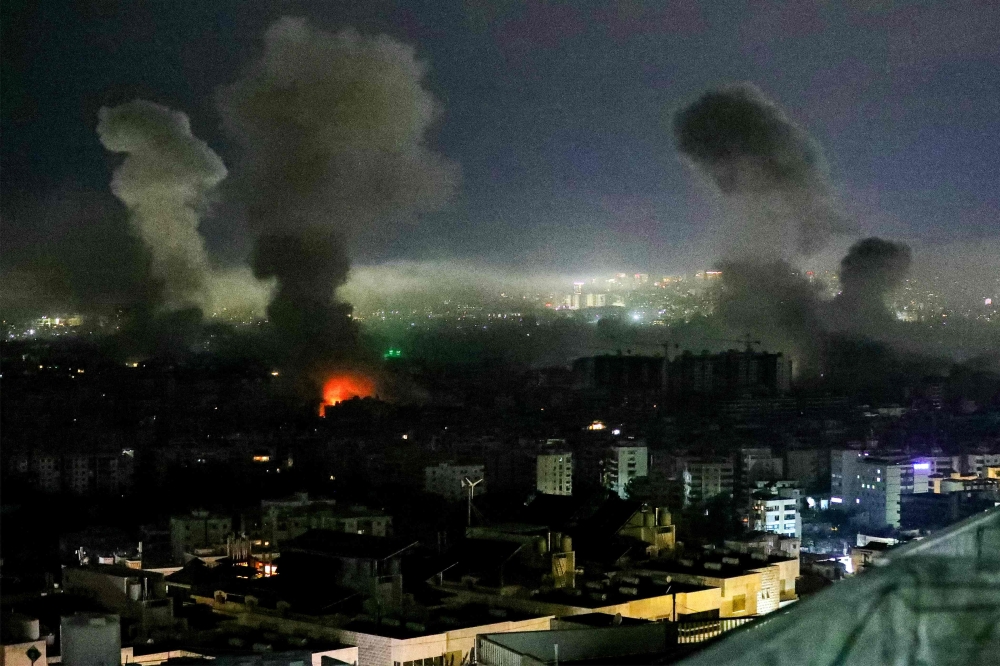
Hezbollah possesses over 1,000 long-range missiles and tens of thousands of shorter-range ones, posing a significant threat to Israel. The IDF has reinforced its northern command in anticipation of potential ground operations, while ongoing cross-border exchanges continue.
Key Highlights
- Hezbollah maintains a substantial arsenal of over 1,000 long-range missiles.
- Tens of thousands of shorter-range rockets are also part of Hezbollah's arsenal.
- The IDF is reinforcing its northern command due to escalating tensions.
- Cross-border exchanges between Hezbollah and Israel are ongoing.
- The conflict impacts regional stability and global trade routes.
Hezbollah continues to pose a significant missile threat to Israel, possessing over 1,000 long-range missiles and potentially tens of thousands of shorter-range rockets. This arsenal allows for sustained bombardment of Israel's home front. In response to the intensifying situation, the Israeli Defense Forces (IDF) Chief of Staff Lt.-Gen. Eyal Zamir has ordered substantial reinforcements to the Northern Command, indicating a potential increase in ground forces' involvement in Lebanon. The Golani Brigade has been moved from southern Gaza to the northern sector as part of these preparations.
The conflict between Hezbollah and Israel has seen a continuous exchange of fire. While Wednesday marked a day with no reported casualties or significant property damage, the potential for hits in northern towns remains, especially given limited mobility and reporting efforts to control information. Unlike previous conflicts, most residents in northern Israel have remained in their homes during the current hostilities.
Hezbollah's missile capabilities include various types of rockets and missiles, with ranges extending up to 350 km for ballistic missiles like the Fateh-110. Their arsenal also includes anti-tank missiles such as Kornet and Almas, with ranges up to 10 km and 16 km respectively. Estimates suggest that Hezbollah's total rocket and missile count was around 25,000 prior to the current conflict, primarily short- and medium-range, but with a significant number of long-range options.
However, recent reports indicate that Hezbollah's arsenal has been severely depleted due to sustained Israeli strikes, with tens of thousands of projectiles and weapons caches destroyed. Some estimates suggest that short-range rockets have fallen below 10,000, and medium-range missiles below 1,000. Despite these losses, Hezbollah has been rearming and preparing for a long-term military campaign, drawing on Iranian support and its own weapon factories. The group is reportedly focused on maintaining its image as a resistance movement, especially with legislative elections scheduled for 2026.
The conflict has wider implications for regional stability and global trade. India, in particular, faces concerns regarding energy security, as it relies heavily on Middle Eastern oil and gas imports. Disruptions to key shipping routes like the Strait of Hormuz and the Red Sea could severely affect India's energy flows and increase shipping rates, impacting the India-Middle East-Europe Economic Corridor. Experts suggest that while the direct economic impact on India might be manageable, the situation in Lebanon, Iraq, and Iran could have different implications. India advocates for peace and stability in the region, emphasizing its commitment to supporting efforts for an early restoration of peace.
The Jerusalem Post, the source of the article, is generally rated as having a "Mostly Factual" reporting record and a "Center" or "Right-Center" bias. While it is considered a credible source for information, some past fact-checks have been disputed or corrected.
As of March 2026, airstrikes have resumed between Hezbollah and Israel following the 2026 Iran war and the assassination of Ali Khamenei. Hezbollah has claimed responsibility for rocket fire, framing it as revenge, and targeting missile defense sites as a warning. The IDF is actively targeting Hezbollah operatives and infrastructure in response.
The overall situation indicates a high level of tension and ongoing military activity, with Hezbollah retaining a significant, albeit potentially depleted, missile capability and Israel maintaining a strong defensive and offensive posture. The conflict's reach extends beyond the immediate participants, impacting global trade and India's strategic interests.
Frequently Asked Questions
How many long-range missiles does Hezbollah possess?
Hezbollah is estimated to possess over 1,000 long-range missiles, in addition to tens of thousands of shorter-range rockets.
What is the IDF's response to Hezbollah's missile capabilities?
The IDF has ordered significant reinforcements to its Northern Command and is preparing for potential ground operations in Lebanon.
Has Hezbollah's missile arsenal been affected by recent conflicts?
Yes, recent reports indicate that Hezbollah's arsenal has been severely depleted due to sustained Israeli strikes, although the group is actively rearming.
What are the potential impacts of the Israel-Hezbollah conflict on India?
The conflict raises concerns for India's energy security due to its reliance on Middle Eastern oil and gas, and could disrupt trade routes, impacting global supply chains and inflation.