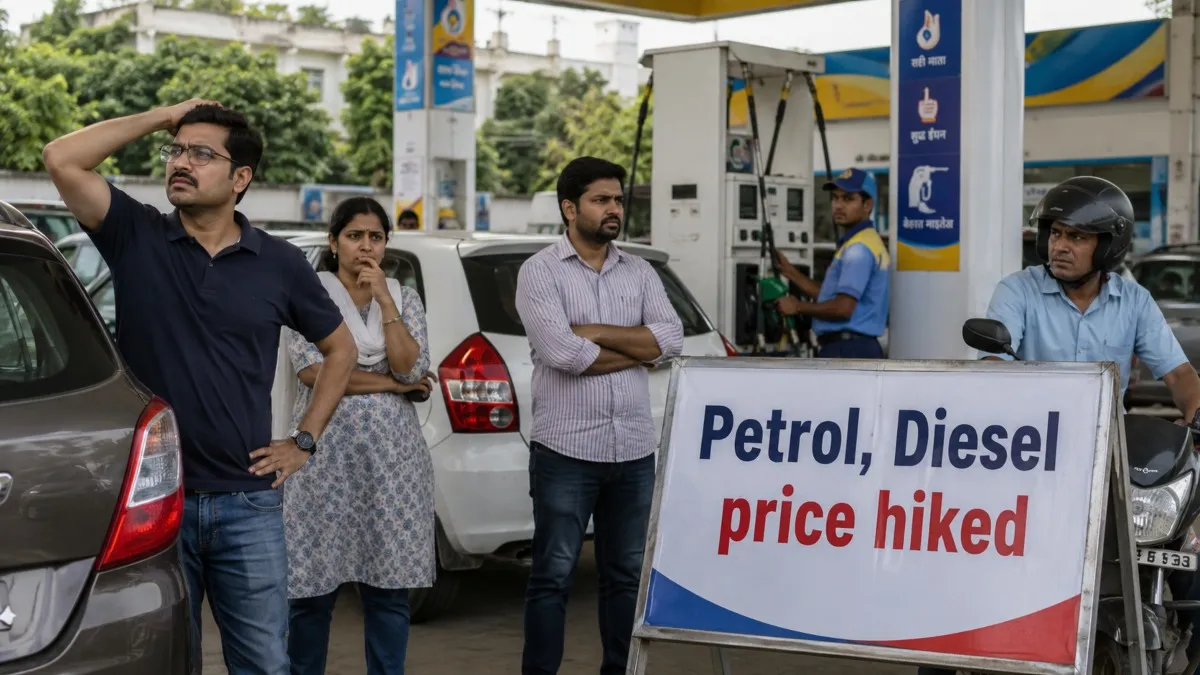
India: Fuel Price Hike Imminent as OMCs Face ₹1 Lakh Cr Losses
State-run oil firms in India have reportedly lost over ₹1 lakh crore in 10 weeks due to soaring global crude prices amid the Middle East conflict, compelling them to sell petrol and diesel below cost. This unsustainable financial strain makes a fuel price hike increasingly likely to protect the companies' stability and energy security.
Key Highlights
- OMCs report over ₹1 lakh crore losses in 10 weeks.
- Daily under-recoveries hit ₹1,600-1,700 crore for state-run firms.
- Middle East conflict driving global crude oil prices higher.
- Retail fuel prices in India unchanged for nearly two years.
- Fuel price hike deemed 'inevitable' due to financial strain.
- Government contemplating options to ease OMCs' burden.
India's state-owned oil marketing companies (OMCs), including Indian Oil Corporation (IOC), Bharat Petroleum Corporation Limited (BPCL), and Hindustan Petroleum Corporation Limited (HPCL), are facing severe financial strain, having incurred losses exceeding ₹1 lakh crore over the past 10 weeks. These massive under-recoveries stem from the OMCs continuing to absorb the brunt of elevated global crude oil prices, which have surged dramatically, while keeping retail petrol and diesel prices unchanged for Indian consumers for nearly two years.
The ongoing conflict and heightened tensions in the Middle East are identified as the primary catalyst for the escalating global energy prices. Disruptions in critical shipping routes like the Strait of Hormuz have significantly impacted global crude oil supplies, leading to a sharp increase in international benchmarks. India, being a major energy importer, is particularly vulnerable to such geopolitical events.
Sources indicate that the three state-run fuel retailers are currently suffering combined under-recoveries of approximately ₹1,600 crore to ₹1,700 crore per day. This daily loss, accumulated over 10 weeks, has pushed their total losses beyond ₹1 lakh crore. Separate reports also mention monthly losses for OMCs amounting to around ₹30,000 crore on the sale of petrol, diesel, and domestic LPG.
Despite a significant surge in input crude oil prices – with some reports noting an increase from around $70 to $120-$126 per barrel – retail prices for petrol (around ₹94.77 per litre) and diesel (around ₹87.67 per litre) have remained static. While domestic LPG prices saw a hike of ₹60 per cylinder in March, they are still considered below actual cost levels. Commercial LPG cylinder prices, industrial diesel, and aviation turbine fuel supplied to international airlines have, however, seen price adjustments in line with higher input costs.
The OMCs' revenues from fuel sales are crucial for funding crude oil purchases, developing refining infrastructure, and expanding distribution networks. The prolonged period of selling below cost is impacting their financial health, raising concerns about their ability to sustain operations without higher working capital borrowings or a reprioritization of capital expenditure. Officials have indicated that these losses cannot be sustained indefinitely, making a fuel price hike increasingly likely and a political decision for the government.
Maintaining stable fuel prices has been a conscious decision by the Indian government and OMCs to shield consumers from the global energy shock. However, this strategy is now creating significant economic challenges, with potential implications for the OMCs' balance sheets, future investments, the nation's current account deficit, and the value of the Indian Rupee. While the government had previously cut excise duties on petrol and diesel to ease the burden, there is reportedly little room for further such reductions. The situation underscores India's vulnerability as a major energy importer and the delicate balance between consumer protection and the financial viability of state-run enterprises. The financial pressure has intensified, and the possibility of a price revision is being widely discussed among industry experts and government sources.
Frequently Asked Questions
Why are Indian state-run oil companies incurring such large losses?
State-run oil marketing companies (OMCs) are incurring significant losses because they are purchasing crude oil at high international market prices, largely driven by the Middle East conflict, but are selling petrol and diesel at retail prices that have remained unchanged in India for nearly two years. This gap between cost and selling price, known as under-recovery, amounts to billions of rupees daily.
How much have the OMCs lost in total and over what period?
The OMCs have reportedly lost over ₹1 lakh crore (100 billion rupees) in the past 10 weeks, with daily under-recoveries estimated at ₹1,600-1,700 crore. Some reports also specify monthly losses around ₹30,000 crore.
What is the reason for the surge in global crude oil prices?
The primary reason for the surge in global crude oil prices is the ongoing conflict and geopolitical tensions in the Middle East. This has led to disruptions in critical shipping routes like the Strait of Hormuz, affecting global energy supplies and pushing international oil benchmarks significantly higher.
Are fuel prices in India expected to increase soon?
Yes, a fuel price hike is considered highly likely, with some sources terming it 'inevitable.' The unsustainable financial strain on OMCs and the acknowledgment by government officials that losses cannot continue indefinitely suggest that a decision on increasing petrol and diesel prices may be a political call that the government will soon have to make.
How do these losses impact India's economy?
The OMCs' losses impact India's economy in several ways. They strain the financial health of these vital state-run enterprises, potentially requiring higher borrowings or affecting their investment plans. Prolonged high crude prices also threaten to widen India's current account deficit and exert downward pressure on the Indian Rupee, contributing to overall inflation.