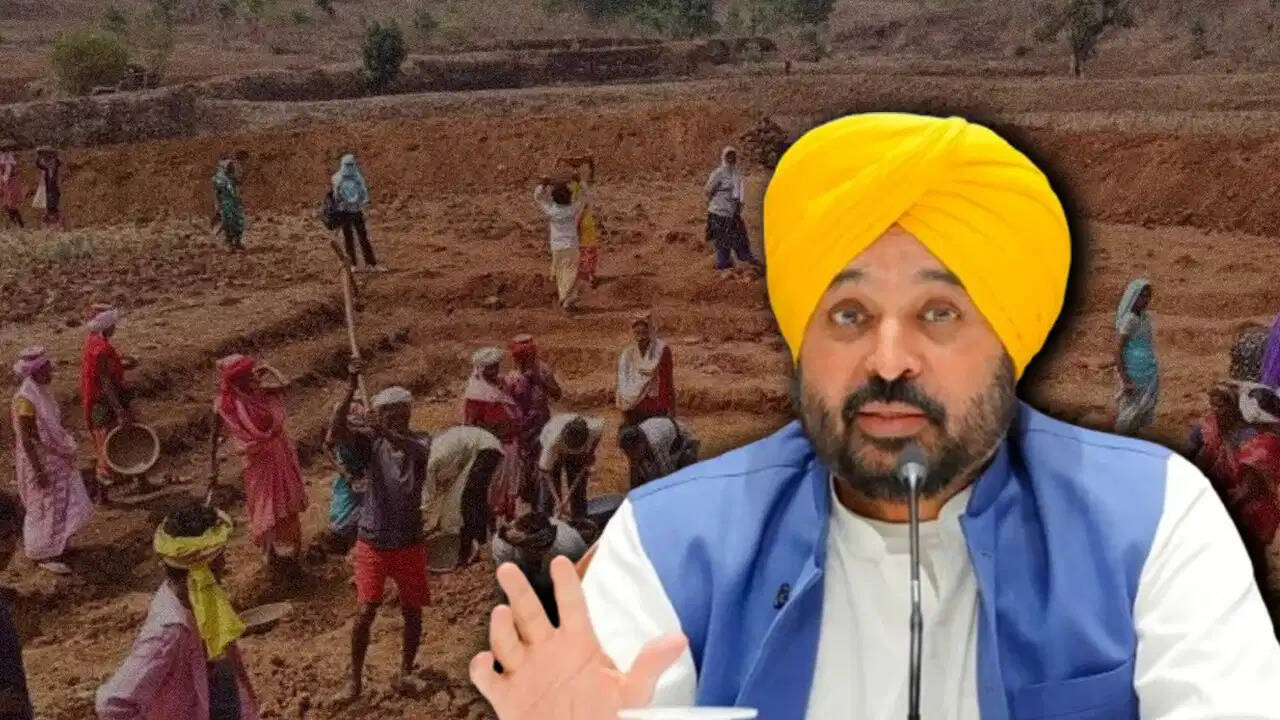
States Question Wage Burden of New Rural Employment Scheme VB-G RAM G
Two BJP-led states, Bihar and Madhya Pradesh, alongside Jharkhand, have raised concerns over the increased financial burden imposed by the new Viksit Bharat-Guarantee for Rozgar and Aajeevika Mission (Gramin) (VB-G RAM G) scheme, which replaces MGNREGA. The shift in funding from the Centre bearing 100% of wage bills under MGNREGA to a 60:40 Centre-State sharing pattern under VB-G RAM G has sparked significant opposition and calls for reconsideration of the scheme's financial structure.
Key Highlights
- New rural employment scheme VB-G RAM G faces state government concerns.
- Funding pattern shift from MGNREGA to VB-G RAM G increases state financial burden.
- Bihar and Madhya Pradesh are among states questioning the wage burden.
- Several states also seek revision of wage rates and flag concerns over non-working days.
- Farm worker unions plan nationwide protests against the new scheme.
The recently introduced Viksit Bharat-Guarantee for Rozgar and Aajeevika Mission (Gramin) (VB-G RAM G) scheme, set to replace the Mahatma Gandhi National Rural Employment Guarantee Act (MGNREGA) from July 1, 2026, is facing significant criticism and questions from various state governments, particularly regarding the increased financial burden on states. At least three states, including two led by the Bharatiya Janata Party (BJP) – Bihar and Madhya Pradesh – along with Jharkhand, have voiced strong concerns about the new funding pattern. Under the VB-G RAM G, a majority of states are now required to bear 40% of the total expenditure, a stark contrast to MGNREGA, where the Centre bore 100% of the wage bill, and states were responsible for only a portion of the material costs, which constituted about 10% of the total budget.
Bihar, for instance, has been allocated ₹4,477 crore under the interim allocation for VB-G RAM G. However, an analysis by the NREGA Sangharsh Morcha suggests this amount is insufficient to meet the promise of 125 days of work, with the state's actual liability estimated to be around ₹15,939 crore for this goal. Similarly, Madhya Pradesh faces a state burden of ₹4,168 crore, which would reportedly only suffice for 43 days of work. Jharkhand also explicitly stated that bearing the 40% share would be difficult for the state, requiring ₹1,804 crore for its share of the current allocation, which is only enough for 41 days of work. To meet a 125-day commitment, Jharkhand would need to pay ₹9,293 crore.
Beyond the funding pattern, several states have also raised other critical issues. Five states have requested a revision of wage rates, arguing that MGNREGA wages were below market rates. Punjab and Jharkhand, for example, believe wages should be competitive and aligned with market conditions, while Bihar sought an increase from ₹255 to ₹413, and Jammu & Kashmir requested an increase from ₹272 to ₹311. Uttarakhand highlighted the challenging work landscape and sought a compensatory wage hike.
Furthermore, four states have expressed reservations about the provision of a 60-day 'blackout' period, proposed to occur during the peak agricultural season. This has been criticized as unscientific and harmful, particularly by states like Punjab, which are heavily reliant on agriculture. Karnataka and Telangana, governed by Congress, also sought reconsideration of this clause, arguing that mechanization has reduced farm jobs, making this period restrictive.
Almost all states have flagged concerns about delays in wage and related payments, demanding that such issues be avoided under VB-G RAM G and seeking early clearance of dues. The Union Rural Development Ministry shared this information based on a Right to Information (RTI) application filed by Chakradhar Buddha of the National Campaign for People's Right to Information (NCPRI).
In a notable development, Punjab, which had previously passed a unanimous assembly resolution against the VB-G RAM G Act in December 2025, has now notified the scheme's implementation from July 1, 2026. This U-turn has drawn sharp criticism from the opposition Congress, which has questioned the Aam Aadmi Party (AAP) government's motives and alleged an 'opportunistic deal' with the BJP. Similarly, Karnataka, after initially opposing the VB-G RAM G Act and challenging it in court, has decided to roll out the scheme from July 1, citing the need to protect rural livelihoods, despite the increased financial burden and continuing its legal challenge.
Trade unions and activists are also preparing for nationwide protests on July 1, 2026, against the VB-G RAM G, advocating for the repeal of the scheme and the strengthening of MGNREGA. The Centre of Indian Trade Unions (CITU) has pledged full support to these protests, terming the replacement of MGNREGA with VB-G RAM G as an attack on the statutory guarantee of employment. Unions argue that despite the promise of 125 days of work, the budgetary allocations would, in reality, only provide about 42 days of work.
The VB-G RAM G Act, 2025, which replaced MGNREGA, aims to provide a statutory guarantee of 125 days of unskilled wage employment to rural households and promote the creation of productive rural assets, aligning with the vision of Viksit Bharat @ 2047. However, the shift in the funding pattern, from a 90:10 Centre-state ratio under MGNREGA to a 60:40 ratio under VB-G RAM G (with a 90:10 ratio for North-Eastern and Himalayan states and 100% central funding for Union Territories without legislatures), is the primary source of contention. This change significantly increases the financial liability for most states, many of which are already facing fiscal constraints. The implementation of VB-G RAM G on July 1, 2026, thus marks a significant policy shift with substantial implications for rural employment and state finances across India.
Frequently Asked Questions
What is the VB-G RAM G scheme and what does it replace?
VB-G RAM G (Viksit Bharat-Guarantee for Rozgar and Aajeevika Mission - Gramin) is a new rural employment scheme in India that replaces the Mahatma Gandhi National Rural Employment Guarantee Act (MGNREGA) and comes into effect from July 1, 2026. It aims to provide a statutory guarantee of 125 days of wage employment per rural household annually.
What are the main concerns raised by states regarding the VB-G RAM G scheme?
The primary concern is the increased financial burden on states due to a shift in the funding pattern. Under MGNREGA, the Centre bore 100% of wage costs, but VB-G RAM G mandates a 60:40 Centre-State cost-sharing ratio for most states. Other concerns include demands for wage revisions, issues with the proposed 60-day non-working period during peak agricultural seasons, and delays in payments.
Which states have raised objections to the VB-G RAM G scheme?
States like Bihar, Madhya Pradesh, and Jharkhand have explicitly questioned the increased financial burden. Other states have sought wage revisions and raised concerns about non-working days. Punjab and Karnataka have also had their own significant stances, with Punjab reversing its earlier opposition and Karnataka implementing the scheme while continuing legal challenges.
What is the significance of the change in funding pattern from MGNREGA to VB-G RAM G?
Under MGNREGA, the Centre bore the majority of the cost (effectively 100% of wages), making it a centrally sponsored scheme with minimal fiscal commitment for states on wages. The new 60:40 Centre-State sharing ratio for VB-G RAM G significantly increases the financial responsibility of state governments, potentially impacting their budgets, especially for states with existing fiscal constraints.