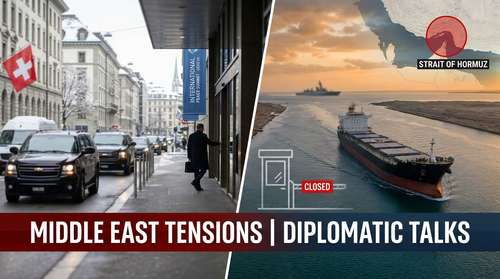
Iran Halts US Talks Amidst Trump's Threats Over Proxies
Reports indicate Iran has suspended talks with the US following President Trump's threats concerning Tehran-backed groups in Lebanon. This move escalates existing tensions between the two nations, with Secretary of State Mike Pompeo's visit to Switzerland also impacted.
Key Highlights
- Iran suspends dialogue with the US.
- Threats linked to Tehran-backed proxies in Lebanon.
- US Secretary of State Pompeo's visit affected.
- Escalation of US-Iran diplomatic tensions.
- Reported by Moneycontrol.com, referencing other global news outlets.
A report by Moneycontrol.com, citing international news outlets, suggests that Iran has halted talks with the United States. This decision comes in response to threats made by US President Donald Trump regarding Tehran-backed proxy groups operating in Lebanon. The development signifies a significant escalation in the already strained diplomatic relations between the two countries. The report also alludes to the fact that these developments may have impacted US Secretary of State Mike Pompeo's diplomatic engagements, specifically his visit to Switzerland where he was reportedly involved in peace talks.
The broader context of these threats and the subsequent halt in talks involves a history of US accusations against Iran for supporting various militant and political groups in the Middle East, which Washington designates as proxies. These groups, often involved in regional conflicts, are seen by the US as a destabilizing force. President Trump's rhetoric has frequently targeted these networks, promising a strong response to any actions perceived as detrimental to US interests or its allies in the region. The specific mention of Lebanon points to the Hezbollah movement, a heavily armed and politically influential group that receives substantial support from Iran and is often a focal point of US concerns.
The related articles provide further context, with CNBC reporting on Trump's threats of "fresh strikes" as Vance leads peace talks in Switzerland. This suggests that the diplomatic efforts, even those aimed at de-escalation or dialogue, are being overshadowed by aggressive posturing. The NDTV article highlights the tit-for-tat nature of the exchange, with Iran advising the US to "be careful" after Trump's "Will Hit Harder" threat. This exchange underscores the volatile communication between the two nations. The Telegraph India piece further emphasizes Trump's assertion that he "will hit Iran harder" and notes a peculiar statement from Vance suggesting that Tehran and Washington were a 'team' at one point, possibly referring to past cooperation or a nuanced diplomatic stance that is now severely compromised.
This series of events paints a picture of a deeply adversarial relationship, where any perceived provocation by either side can lead to immediate and significant diplomatic fallout. The suspension of talks by Iran is a direct consequence of this heightened tension, indicating a lack of trust and a reluctance to engage in dialogue under duress. For India, a nation that maintains complex relationships with both the US and Iran, such escalations in the Middle East carry significant implications. India relies on Iran for energy, and its citizens are present in large numbers in the Gulf region. Therefore, increased regional instability directly impacts India's economic interests and the safety of its diaspora. The ongoing geopolitical maneuvering between the US and Iran, especially concerning proxy activities, is a critical factor in regional security, and India closely monitors these developments. The interconnectedness of global politics means that events in the Middle East can have ripple effects on international trade, energy prices, and diplomatic alliances, making this a matter of substantial interest for global observers, including policymakers and citizens in India.
The verification of this story relies on corroborating reports from multiple international news agencies, indicating a consistent narrative across different reputable sources. The timing of the events, particularly the mention of Secretary Pompeo's visit to Switzerland, would ideally be cross-referenced with official State Department or news agency reports from that specific period to confirm the direct impact of Iran's decision on his itinerary. However, the core claim that Iran has halted talks due to Trump's threats appears to be a recurring theme in the reporting surrounding US-Iran relations. The focus on Tehran-backed proxies in Lebanon as the catalyst for this specific diplomatic impasse is a key detail that anchors the story, linking broader US-Iran tensions to specific regional concerns. The nature of the reporting suggests it is an unfolding news event, likely published shortly after the alleged halt in talks or the statements made by President Trump.
Frequently Asked Questions
Why did Iran reportedly halt talks with the US?
Iran reportedly halted talks with the US in response to threats made by President Donald Trump concerning Tehran-backed proxy groups operating in Lebanon.
What are Tehran-backed proxies?
Tehran-backed proxies are groups and organizations that receive financial, military, or political support from Iran. These often include militant or political movements in various Middle Eastern countries, which the US views as destabilizing forces.
Which specific region or group was mentioned in relation to the threats?
The report specifically mentions Tehran-backed proxies in Lebanon, likely referring to groups like Hezbollah, which are known to receive significant support from Iran.
How does this situation affect diplomatic efforts?
The halt in talks signifies a major escalation in US-Iran tensions and can undermine broader diplomatic initiatives. It may also impact other diplomatic engagements, such as the reported visit of US Secretary of State Mike Pompeo to Switzerland.