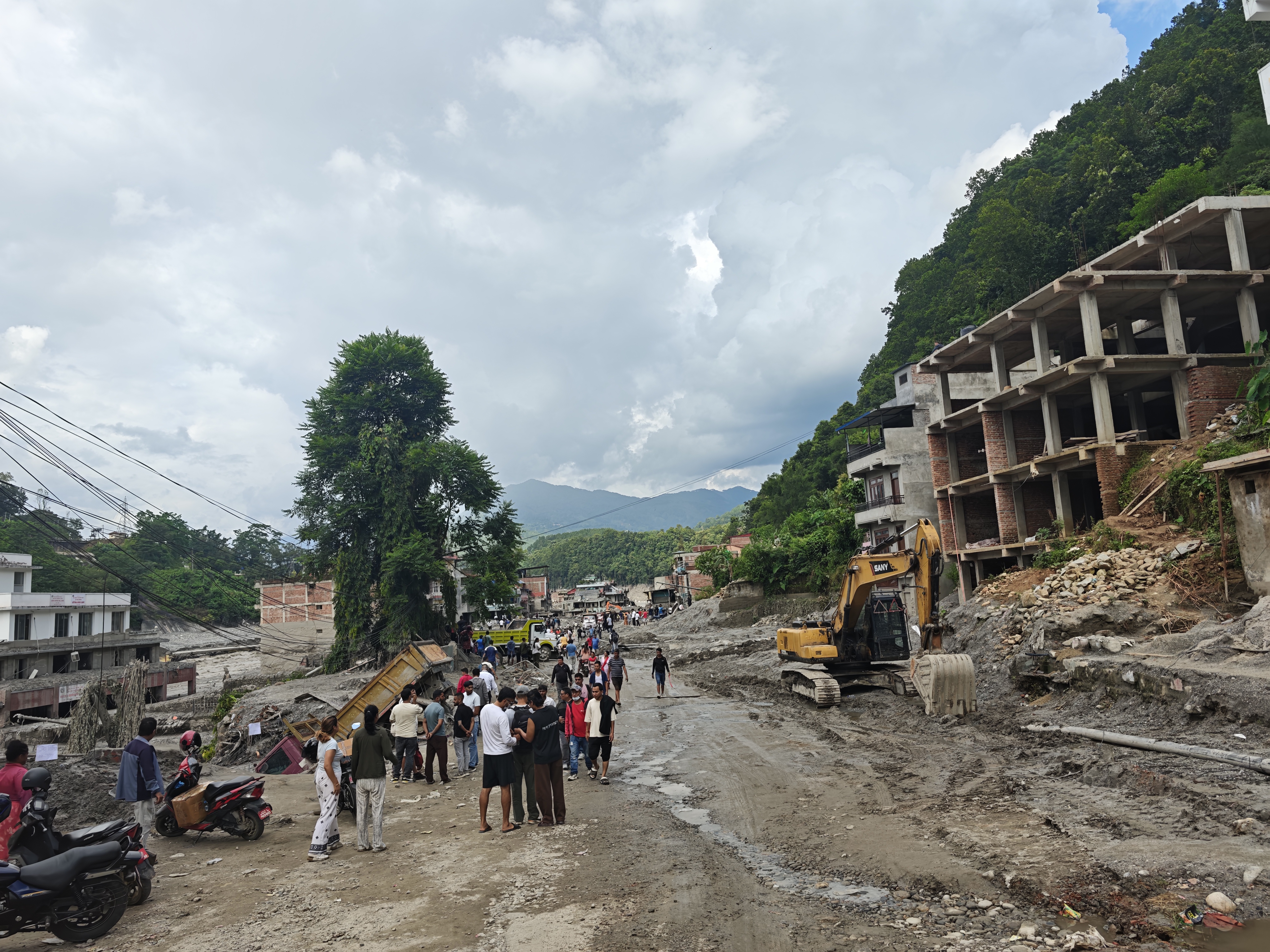
Nepal Flood Survivor Recounts 'Second Life' Amidst Devastation
A family in Nepal's Nuwakot district survived a devastating flood by taking refuge in their 40-year-old 'Green House'. The owners shared their harrowing experience, emphasizing their 'second life' and the robust construction that helped their home withstand the torrents while surrounding buildings were destroyed. The event highlights the scale of the disaster and individual resilience.
Key Highlights
- Family survived devastating Nepal floods in a 40-year-old Green House.
- Owners described the experience as receiving a 'second life'.
- The house's strong foundation and older construction contributed to its survival.
- Surrounding buildings were destroyed by the powerful floodwaters.
- The incident occurred in Nepal's Nuwakot district on August 26.
In the wake of the catastrophic floods that ravaged Nepal, the survival story of a family from their 40-year-old 'Green House' in Nuwakot district has emerged as a poignant symbol of resilience. The devastating event, which occurred on August 26, saw floodwaters from the swollen Trishuli River sweep away vehicles, buildings, and belongings, leaving a trail of destruction in its path. Amidst this widespread devastation, the Green House, painted a distinctive green, remained standing, a stark contrast to the submerged and destroyed structures surrounding it.
Prakash and Laxmi Pandey, the owners of the Green House, recounted their terrifying ordeal, describing how they moved to higher floors of their home as the water levels rapidly rose. They feared for their lives, but their 40-year-old home, built with a strong emphasis on its foundation due to its proximity to the river, withstood the immense force of the floodwaters. Prakash Pandey noted that the house was built during a time when construction materials and quality were superior, which he believes played a significant role in its survival. The family, comprising six members, was eventually rescued by local residents who risked their lives to place a pipe between buildings and use a rope to reach them.
Upon their rescue, the family expressed profound gratitude, considering their survival a 'second life'. They later moved to Kathmandu, but the flood left their home in ruins, buried under mud and debris, necessitating a complete rebuild. The 'miracle' survival of the Green House has garnered significant attention, with videos circulating widely and sparking discussions about its construction and the family's resilience.
The floods themselves were triggered by an ice-rock avalanche near the Nepal-Tibet border on August 26, causing widespread destruction across northern and central Nepal. As of September 3, 2026, the death toll had risen to 1,259, with over 5,000 people still missing. The disaster significantly impacted critical infrastructure, including roads, bridges, telecommunications, and hydropower facilities, complicating rescue and relief efforts. The United Nations and various humanitarian organizations, including UNICEF and the World Health Organization, are providing aid and support to the affected populations. UNICEF has highlighted the urgent need for safe drinking water, sanitation, and hygiene support for children, estimating that at least 22,000 children require these essential services. The floods have also damaged numerous schools, leaving children in need of psychosocial support and safe learning spaces.
The disaster has also underscored the vulnerability of hydropower projects in the Himalayas, with significant damage reported to plants and those under construction. The economic impact is substantial, with estimates suggesting reconstruction could cost billions of dollars. The situation in Nepal is compounded by ongoing rainfall in some areas, raising concerns about further downstream flooding and secondary disasters like landslides. The scale of the disaster has prompted symbolic funerals for those who remain missing, as families grapple with the immense loss and uncertainty. The international community, including China and India, has offered aid and support for the rescue and relief operations. This event serves as a stark reminder of the increasing frequency and intensity of environmental disasters in the region, influenced by climate change and human development in fragile mountain ecosystems.
Frequently Asked Questions
What caused the devastating floods in Nepal?
The floods in Nepal were primarily triggered by an ice-rock avalanche near the Nepal-Tibet border on August 26, 2026. This event caused a massive surge of water, ice, and debris into river systems, leading to widespread flash floods.
How did the 'Green House' survive the Nepal floods?
The owners of the 'Green House', Prakash and Laxmi Pandey, attribute its survival to its robust construction, particularly its strong foundation, and the fact that it was built around 40 years ago with high-quality materials. The house's strategic location and older, sturdier build are believed to have helped it withstand the powerful floodwaters that destroyed surrounding structures.
What was the impact of the floods on Nepal?
The floods caused immense destruction across northern and central Nepal, leading to a significant loss of life, with over 1,200 deaths reported and thousands missing. Critical infrastructure like roads, bridges, and hydropower plants were severely damaged. Millions of people were affected, with many displaced and facing shortages of essential supplies like clean water and food. The disaster also had a significant economic impact on the country.