Trump’s Campaign Against Venezuela And Global Fallout | Quick Digest
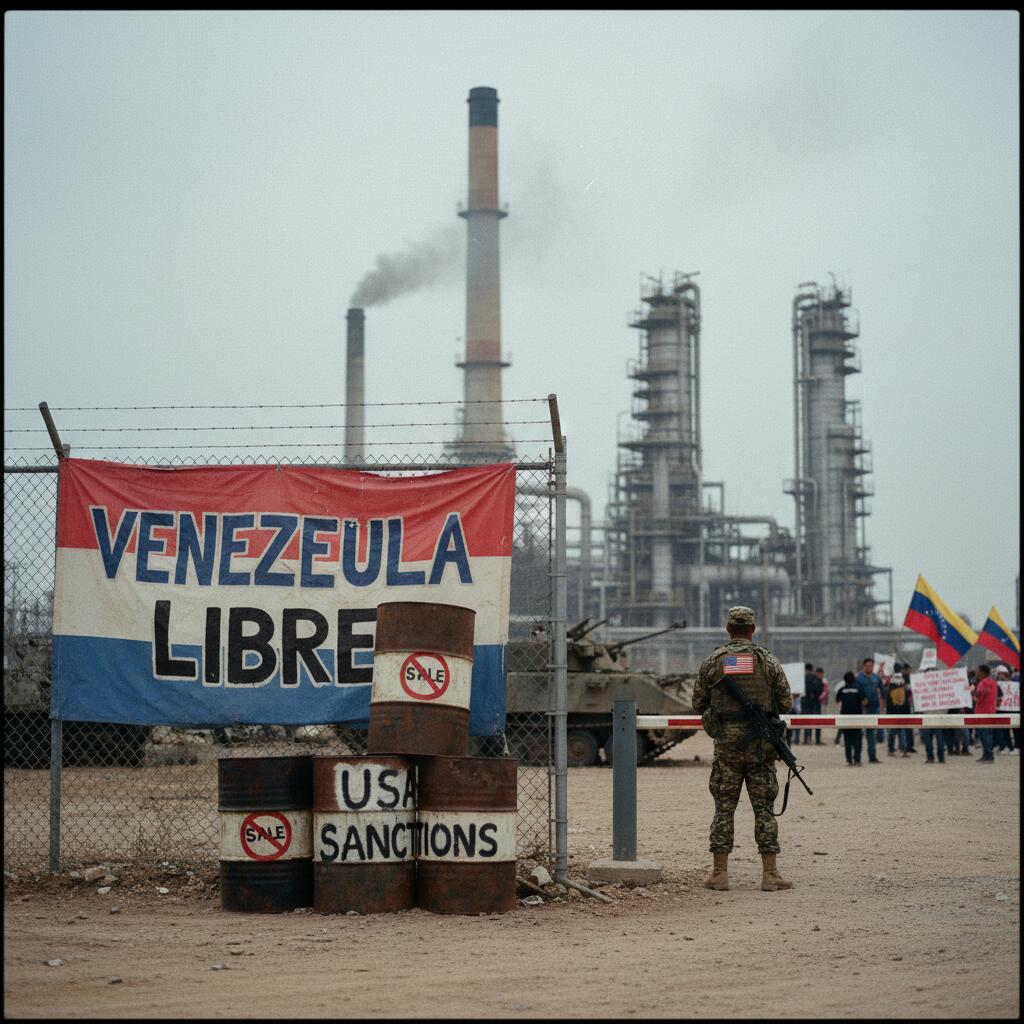
This topic explores why Donald Trump escalated pressure and military action against Venezuela, including sanctions, oil embargoes, and the 2026 operation to capture Nicolás Maduro. It also examines how these moves reshaped global energy markets, U.S.-Latin America relations, great-power rivalry, and international norms on sovereignty and intervention.
Trump’s Venezuela strategy mixed democracy rhetoric with hard-edged goals around oil, regional control, and competition with China and Russia.
Sweeping sanctions and an oil tanker blockade devastated Venezuela’s economy, contributing to hyperinflation, revenue collapse, and mass migration.
U.S. actions reshaped global oil flows, increased market volatility, and pushed more trade into opaque shadow fleets and alternative payment channels.
Rather than isolating Venezuela entirely, the campaign deepened its ties with China, Russia, Iran, and Cuba, illustrating how aggressive sanctions can accelerate the formation of rival blocs.
## Trump’s Campaign Against Venezuela And Global Fallout
When Donald Trump turned Venezuela into a central target of U.S. foreign policy, he did not send in tanks at first.
He used **sanctions, oil blockades, and diplomatic pressure** as his primary weapons, while openly flirting with the idea of military action and regime change.[2][5]
Over time, this campaign reshaped Venezuela’s economy, global oil flows, and the broader balance of power between the United States, China, Russia, and other actors.[1][2][6][7]
This article unpacks **why Trump went after Venezuela** and how that campaign has affected **world politics and energy markets**, plus what it means for governments, businesses, and everyday people.
---
## The Roots: Why Venezuela Became a Trump Target
### A Crisis-Ridden State With Huge Oil Reserves
By the time Trump took office in 2017, Venezuela was already in deep crisis.
- The country faced **hyperinflation, collapsing public services, and mass migration**, driven by years of economic mismanagement, falling oil prices, and corruption.[1][6]
- Venezuela holds some of the **world’s largest proven oil reserves**, making it strategically important for any global power locked in energy competition.[2][3][7]
Trump inherited a policy environment where Washington already viewed Venezuela’s government—under President Nicolás Maduro—as **authoritarian and destabilizing**, but he dramatically escalated pressure.
### Regime Change and the “Maximum Pressure” Doctrine
Trump’s first term (2017–2021) applied what officials openly called **“maximum pressure”** on Maduro’s government.[2][7]
This strategy had several motives:
1. **Democracy and human rights framing**
The administration accused Maduro of **rigging elections, jailing opponents, and committing human rights abuses**.[2][6][7]
Publicly, the U.S. said sanctions and diplomatic isolation were meant to push Venezuela back toward democracy and free elections.
2. **Strategic competition with China, Russia, and Iran**
Venezuela had deepened cooperation with **Russia, China, Iran, and Cuba**, including energy, military, and intelligence ties.[1][3][4]
For U.S. strategists, this turned Venezuela into a **geopolitical foothold for rival powers in the Western Hemisphere**, something Washington has historically tried to prevent.[3][4]
3. **Domestic U.S. politics**
Venezuelan exile communities and anti-socialist voters in U.S. states like Florida were important to Trump’s political coalition.[4][7]
Taking a hard line against Maduro played well with voters who saw Venezuela as proof of the failures of socialism.
4. **Oil and leverage over global energy flows**
By targeting Venezuela’s state oil company, PDVSA, Trump could both **punish Maduro** and **reshape global oil markets**.[2][7]
This meshed with a broader push to strengthen U.S. energy dominance.
> **Key insight:** Trump’s Venezuela strategy blended **ideological messaging about democracy** with **hard-edged realpolitik** aimed at oil, regional dominance, and competition with China and Russia.[2][3][4][7]
---
## The Tools of the Campaign: Sanctions, Blockades, and Threats
### Financial and Oil Sanctions
U.S. sanctions on Venezuela began under earlier administrations, but **Trump’s years saw the most sweeping measures yet**.[1][2][6][7]
- In **August 2017**, Executive Order 13808 restricted access to U.S. financial markets, blocking many transactions involving the Venezuelan government and PDVSA.[2]
- By **2018**, the U.S. had tightened limits on Venezuelan debt and new financing, choking off key revenue streams.[2][6]
- In **January 2019**, Executive Order 13850 expanded sanctions to **PDVSA’s oil, gold, and banking operations**, and imposed asset freezes and visa limits on Maduro allies.[2][7]
These moves effectively **cut Venezuela off from U.S. and much of European finance**, severely limiting its ability to sell oil in mainstream markets.[2][6][7]
According to economic studies and human rights reports, sanctions compounded pre-existing economic problems, contributing to **tens of billions of dollars in lost revenue between 2016 and 2019** and worsening the humanitarian crisis.[1][6]
### The Oil Tanker Blockade
Sanctions were followed by a more aggressive step: a **blockade of sanctioned oil tankers**.
- Trump ordered a **full blockade of sanctioned oil tankers entering or leaving Venezuela**, aiming to cut off what he saw as a financial lifeline of the Maduro government.[5]
- This forced Venezuela to **offload oil through discounted “shadow fleet” shipments** using obscure tankers, ship-to-ship transfers, and more opaque trading routes, particularly to China, India, and a few other buyers.[2]
This strategy did not remove Maduro from power, but it did **reshape global oil flows** and pushed Venezuela even deeper into informal and gray-market networks.[2]
### Diplomatic and Legal Pressure
The Trump administration also:
- Recognized opposition leader **Juan Guaidó** as Venezuela’s legitimate interim president, pressuring other countries to do the same.[3][7]
- Backed resolutions in regional bodies and the UN accusing the Maduro government of **anti-democratic behavior and abuses**.[6][7]
- Announced or considered **rewards, indictments, and terrorism designations** linked to Maduro and his allies over alleged drug trafficking and corruption.[4]
This combination isolated Venezuela diplomatically while legitimizing a harder line.
### Military Signaling and Threats
Although Trump did not launch an open war during his first term, he repeatedly **signaled the possibility of military action**:
- U.S. forces conducted **air and naval operations near Venezuelan territory**, including bomber flights and naval patrols close to the coast.[4]
- Senior officials floated the option of a **military intervention**, and Trump himself mentioned “military solutions” when asked about Venezuela.[4]
> **Key insight:** Even without a full-scale invasion, **sanctions plus blockades plus military signaling** functioned as a kind of hybrid offensive that devastated Venezuela’s economy and heightened regional tensions.[1][2][4][6]
---
## Economic Shockwaves: How the Campaign Hit Venezuela
### Collapse of Oil Revenues and Public Services
Oil is the lifeblood of Venezuela’s economy.
Sanctions and blockades delivered a crushing blow:
- U.S. imports of Venezuelan crude—once averaging around **500,000 barrels per day**—fell to essentially zero by 2019.[2]
- PDVSA’s access to capital, equipment, and markets was severely reduced, leading to **production declines and infrastructure deterioration**.[2][7]
- Combined with years of mismanagement, the sanctions helped drive **hyperinflation, currency collapse, and shortages of fuel, medicine, and basic goods**.[1][6]
Independent estimates suggest Venezuela lost **tens of billions of dollars in oil revenues** in the space of a few years, worsening poverty and driving mass migration.[1][6]
### Humanitarian and Social Impact
The human consequences were stark:
- Millions of Venezuelans left the country, creating one of the largest displacement crises in the Americas.[1][6]
- Hospitals and schools struggled, and **basic services like electricity and water became unreliable** in many regions.[1][6]
Human rights groups and some economists argue that **broad sectoral sanctions contributed to civilian suffering**, even if they were officially framed as “targeted” at the regime.[1][6]
> **Key insight:** Trump’s Venezuela policy shows how **financial and energy sanctions can function like economic warfare**, with long-lasting social costs even when they fall short of regime change.[1][2][6]
---
## Global Oil Markets: Winners, Losers, and New Risks
### Reshaping Supply and Price Volatility
By choking off Venezuelan oil exports to the U.S. and Europe, Trump’s policy forced markets to adjust.
Analysts highlight several effects:[2]
- A **sudden gap** opened where Venezuelan heavy crude once supplied U.S. refineries, particularly along the Gulf Coast.[2]
- Traders and refiners turned to **alternative suppliers** like Canada, Mexico, and Middle Eastern producers to fill that gap.[2]
- The overall effect was to increase **geopolitical risk premiums** in oil markets: traders had to constantly price in policy moves from Washington, adding to volatility.[2]
At the same time, Venezuela tried to survive by turning to **discounted sales via shadow fleets**, often to China and a handful of other buyers.
These transactions were:
- Less transparent, complicating market data.
- Heavily discounted, which meant **less revenue per barrel** for Venezuela.[2]
### Shadow Fleets, Crypto, and Evasion Tactics
Faced with intense U.S. scrutiny, Caracas and its partners innovated:
- They used **“shadow fleets”**—tankers that frequently changed names, flags, or turned off transponders—to move oil outside normal monitoring systems.[2]
- Some reports indicate growing use of **cryptocurrencies or digital payment systems**, such as stablecoins, to evade U.S. financial oversight.[2]
This pushed more of the global oil trade into **gray or semi-legal channels**, complicating enforcement and contributing to a more fragmented financial landscape.
> **Key insight:** For investors and energy companies, Trump’s Venezuela campaign was a warning that **U.S. sanctions can rapidly rewire trade flows**, forcing firms to diversify suppliers and hedge against policy shocks.[2]
---
## Geopolitical Fallout: U.S. vs. China, Russia, and Regional Players
### Pushing Venezuela Deeper Toward U.S. Rivals
Instead of isolating Caracas across the board, the campaign often **pushed Venezuela into tighter alignment with U.S. rivals**.
- **China** expanded its role as a key buyer of Venezuelan oil (often at a discount) and as a provider of loans and technical support.[2][3]
- **Russia** deepened military and energy cooperation, providing political backing and some financial channels.[3][4]
- **Iran and Cuba** continued to offer intelligence, security, and energy assistance.[3][4]
From a global standpoint, Venezuela became an important **node in an emerging sanctions-resistant network**, where states outside the U.S.-led order coordinate to bypass Western controls.
### Latin America’s Political Map
Trump’s hard-line stance also affected politics across Latin America:
- Some conservative governments aligned with Washington’s position, recognizing Guaidó and supporting sanctions.[7]
- Others, especially left-wing or nationalist governments, framed U.S. actions as **imperialist interference**, strengthening anti-U.S. narratives.[4]
The result was a **deeper polarization** in regional diplomacy, with Venezuela acting as a litmus test of where governments stood in the broader ideological and geopolitical divide.
### The Second-Phase Pivot: From Regime Change to Resource Extraction
Analysts of Trump’s later approach argue there has been a **shift from democracy rhetoric toward open economic and strategic bargaining**.[1][3][4]
Reports describe a new posture in which Washington’s core demands include:[3][4]
- Cutting Venezuela’s ties with **China, Russia, Iran, and Cuba**.
- **Granting preferential access to U.S. firms** over oil, gas, and mining projects.
- Reversing energy export flows away from Asia and back toward the U.S. and its allies.
This evolution suggests that, over time, the campaign against Venezuela has become **less about regime change per se and more about controlling strategic resources and limiting rival influence**.[3][4][7]
> **Key insight:** Venezuela turned into a front line of a wider contest: **Will the U.S. still be able to dictate the rules of the hemispheric order, or will a multipolar, sanctions-resistant bloc emerge?**[3][4][7]
---
## Lessons and Actionable Takeaways
Beyond the headlines, Trump’s campaign against Venezuela offers **practical lessons** for policymakers, investors, and citizens trying to understand a more volatile world.
### 1. For Policymakers: Sanctions Need Clear Endgames
- **Define realistic objectives.** Regime change via economic pressure is rare and costly; policy should consider whether goals are attainable and what trade-offs are acceptable.[1][2][6]
- **Plan for humanitarian fallout.** Smart sanctions design should include **carve-outs for food, medicine, and essential imports**, plus monitoring to ensure civilians are not the main victims.[1][6]
- **Think beyond binaries.** Treating countries as either allies or enemies can backfire by pushing them into rival blocs; more flexible engagement can sometimes better serve long-term strategic interests.[3][4]
### 2. For Businesses and Investors: Political Risk Is Now Core Business Risk
- **Stress-test exposure to sanctions.** Companies with operations or dependencies in sanctioned or sanction-prone countries must map out alternative suppliers, routes, and financial channels.[2]
- **Diversify portfolios geographically.** Relying heavily on one region or one political environment exposes firms to abrupt policy shocks like those seen in the Venezuela case.[2]
- **Monitor geopolitical signals.** Energy, shipping, and commodities markets now move not only on supply-demand data but also on **executive orders, sanctions lists, and diplomatic announcements**.[2]
### 3. For Regional Governments: Balance Between Great Powers
- **Avoid overdependence on a single external patron.** Whether the U.S., China, or Russia, placing too many strategic eggs in one basket reduces bargaining power and resilience when policies shift.[3][4]
- **Invest in regional cooperation.** Latin American states can blunt the worst spillovers from crises like Venezuela’s—such as migration and crime—through joint policies rather than fragmented responses.[1][4][6]
### 4. For Citizens and Civil Society: Follow the Money, Not Just the Rhetoric
- When leaders talk about democracy, human rights, or national security abroad, it is useful to **ask how policy aligns with energy, trade, and corporate interests at home**.[1][3][7]
- Public scrutiny can push governments to **pair punitive tools like sanctions with humanitarian safeguards**, and to be transparent about goals and metrics for success.[1][6]
> **Key insight:** Trump’s Venezuela campaign is a case study in how **economic tools of statecraft—sanctions, blockades, financial pressure—can be as disruptive as traditional warfare**, with ripple effects that reshape markets and alliances worldwide.[1][2][6][7]
---
## The Bigger Picture: Venezuela as a Warning Sign
In many ways, Venezuela has become a **warning sign for a new era of geopolitics**.
As major powers rely more on **sanctions, energy leverage, and financial controls**, we are likely to see:
- More countries experimenting with **alternative payment systems, digital currencies, and shadow logistics** to evade pressure.[2]
- Tighter links among sanctioned or semi-isolated states, as they **band together to survive and negotiate with bigger blocs**.[3][4]
- Higher volatility in commodities markets, with prices reacting not only to physical disruptions, but to **policy announcements and enforcement campaigns**.[2]
For global politics, Trump’s confrontation with Venezuela underlines a simple but uneasy truth:
**Who controls oil and financial access controls a great deal of modern power.**
And when that power is used aggressively, the effects do not stop at any one country’s borders—they cascade through economies, alliances, and the daily lives of millions.[1][2][3][6][7]
Understanding what happened in Venezuela is not just about one leader’s choices. It is about recognizing the tools and risks that will increasingly define world politics in the years ahead.
Read the full story on Quick Digest