Trump Orders Major SPR Release Amid Iran War, IEA Coordinates Global Action
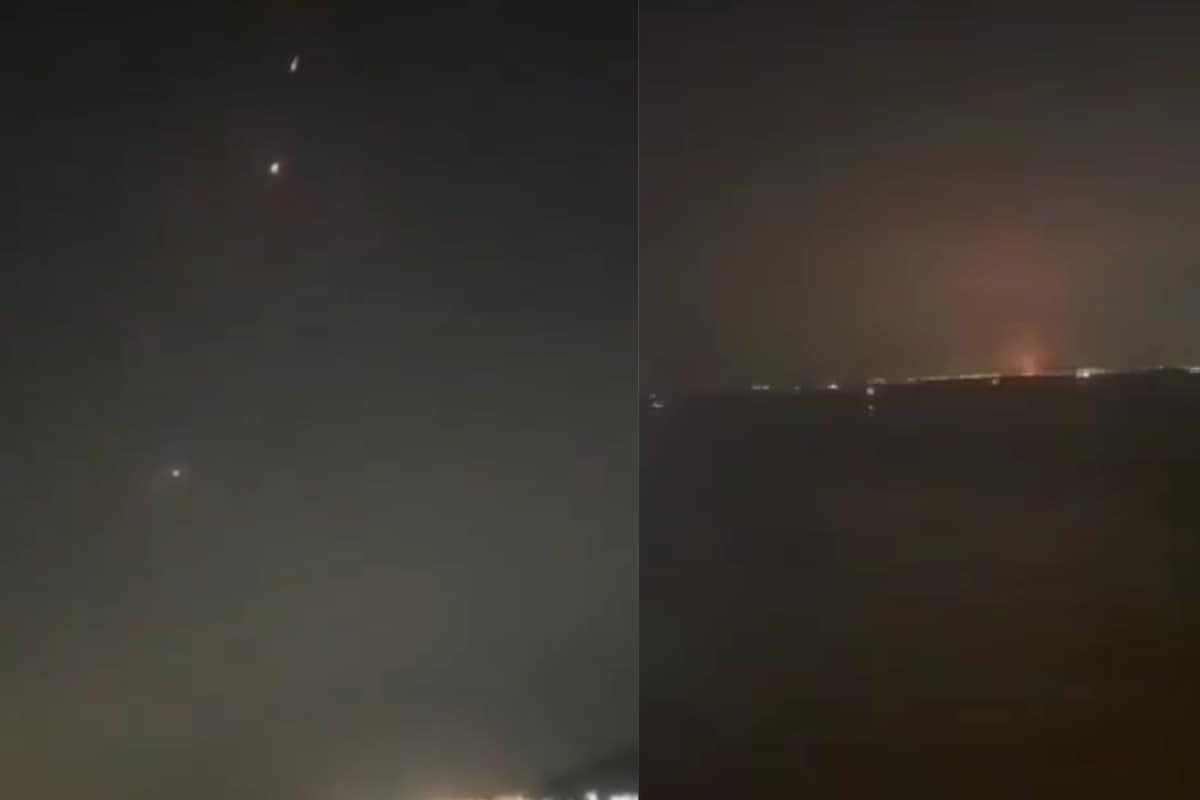
President Donald Trump has authorized a 172 million barrel release from the U.S. Strategic Petroleum Reserve, as the International Energy Agency coordinates a record 400 million barrel global release. This unprecedented move aims to stabilize oil markets amidst the escalating U.S.-Israeli war with Iran and severe disruptions to shipping in the Strait of Hormuz.
Key Highlights
- President Trump ordered a 172 million barrel Strategic Petroleum Reserve release.
- IEA members collectively agreed to release 400 million barrels of emergency oil.
- Action taken in response to US-Israel war with Iran and shipping attacks.
- Strait of Hormuz disruptions causing historic oil supply shock.
- India welcomed IEA's decision, monitoring global energy markets.
- Oil prices surged globally amidst the escalating Middle East conflict.
In a significant development impacting global energy markets, U.S. President Donald Trump has authorized the release of 172 million barrels of crude oil from the nation's Strategic Petroleum Reserve (SPR) in response to the escalating U.S.-Israeli war with Iran and subsequent attacks on shipping in the critical Strait of Hormuz. This action is part of a larger, coordinated effort by the International Energy Agency (IEA), whose 32 member countries unanimously agreed to release a record 400 million barrels from their emergency oil stocks.
The decision comes amidst what the IEA has termed the 'largest supply disruption in the history of the global oil market,' triggered by the ongoing conflict in the Middle East. The war, which began with a joint U.S. and Israeli assault on Iran in late February 2026, has led to a dramatic increase in oil prices, with Brent crude briefly soaring above $100 per barrel, reaching nearly $120 a barrel earlier in the week before some retreat. These price hikes are a direct consequence of the severe disruption to oil flows, particularly through the Strait of Hormuz.
Reports indicate that Iran has ramped up attacks on commercial vessels in and around the Strait of Hormuz, a vital chokepoint through which approximately one-fifth of the world's oil supply normally transits. The United Kingdom Maritime Trade Operations (UKMTO) reported multiple incidents, including three commercial vessels struck by projectiles in a single day, one of which caught fire and forced crew evacuation. Iranian military authorities have reportedly claimed 'complete control' over the Strait and warned that vessels attempting passage could be targeted, effectively halting cargo traffic. The IEA noted that crude and oil product flows through the Strait of Hormuz have plunged from around 20 million barrels per day to a mere trickle.
U.S. Energy Secretary Chris Wright confirmed the U.S. contribution of 172 million barrels to the coordinated IEA release, stating that the drawdown would commence next week and take approximately 120 days for delivery. President Trump, who had previously downplayed the need to tap the reserve, confirmed his administration would proceed to 'reduce it a little bit' to bring prices down, with plans to refill the reserve later. This release is nearly as substantial as the 180 million barrel sale approved by former President Joe Biden in 2022 in response to Russia's invasion of Ukraine.
India, a major global energy consumer and an associate member of the IEA, has welcomed the agency's decision to release emergency oil stocks. The Indian Ministry of Petroleum and Natural Gas stated that India is closely monitoring the evolving situation in global energy markets, especially in the Middle East, and stands ready to take appropriate measures to support global market stability in alignment with IEA efforts. India imports about 40% of its oil from the Middle East through the Strait of Hormuz and is the world's second-largest importer of liquefied petroleum gas (LPG), making it particularly vulnerable to disruptions in the region. The Indian government has already asked consumers to conserve energy and invoked emergency powers for refiners to maximize LPG production. India also maintains its own strategic petroleum reserves, with facilities in Visakhapatnam, Mangaluru, and Padur, holding approximately 36.92 million barrels (5.33 million metric tons) to provide a buffer against external supply disruptions.
The IEA's coordinated release marks the sixth time the agency has deployed emergency reserves since its establishment in 1974, with previous actions taken during major geopolitical shocks such as the 1991 Gulf War, the 2011 Libyan civil war, and the 2022 Ukraine invasion. The scale of the current release, totaling 400 million barrels, is more than double the 182 million barrels released in 2022, underscoring the severity of the current crisis. The widespread flight cancellations in the Middle East and large-scale disruptions to LPG supplies are also expected to curb global oil demand, further exacerbating the complex energy landscape. This geopolitical turmoil not only affects energy security but also has significant economic ramifications, raising concerns about inflationary pressures and broader global economic growth.
Frequently Asked Questions
Why is the U.S. Strategic Petroleum Reserve (SPR) being tapped?
The U.S. Strategic Petroleum Reserve is being tapped by President Donald Trump as part of a coordinated international effort to stabilize global oil markets. This action is a direct response to the ongoing U.S.-Israeli war with Iran and the severe disruptions to oil shipping caused by attacks in the Strait of Hormuz, which have led to soaring crude oil prices.
What is the role of the International Energy Agency (IEA) in this oil release?
The International Energy Agency (IEA), an organization of 32 member countries, has unanimously agreed to the largest emergency oil stock release in its history, totaling 400 million barrels. The U.S. contribution of 172 million barrels is part of this coordinated global action, aimed at mitigating supply disruptions and extreme price volatility caused by the Middle East conflict.
How is the conflict in the Strait of Hormuz affecting global oil supplies?
The conflict has led to severe disruptions in the Strait of Hormuz, a crucial chokepoint for global oil trade. Reports indicate numerous attacks on commercial vessels by Iran, effectively halting cargo traffic and reducing crude and oil product flows from approximately 20 million barrels per day to a trickle. The IEA has labeled this as the 'largest supply disruption in the history of the global oil market.'
What is India's stance and vulnerability regarding this energy crisis?
India, an associate member of the IEA and the world's third-largest oil importer, has welcomed the IEA's decision to release emergency oil stocks. India is highly vulnerable to Middle East disruptions, importing about 40% of its oil through the Strait of Hormuz. The country is closely monitoring the situation and is prepared to take measures to support global market stability, having already urged energy conservation and maximized domestic LPG production.
When did these events occur?
The events surrounding President Trump's authorization to tap the SPR and the IEA's coordinated release are unfolding in mid-March 2026, specifically around March 11-12, 2026, in direct response to the ongoing U.S.-Israeli war with Iran that began in late February 2026.