Uganda confirms new Ebola cases linked to Congo outbreak
Uganda has confirmed new Ebola cases, all linked to the ongoing outbreak in the neighboring Democratic Republic of Congo. The cases involve both Ugandan nationals and individuals who traveled from the DRC, raising concerns about cross-border transmission. Health authorities are implementing containment measures and contact tracing.
Key Highlights
- New Ebola cases confirmed in Uganda, linked to DRC outbreak.
- Cases include Ugandan nationals and travelers from DRC.
- Health authorities are enhancing surveillance and contact tracing.
- WHO has raised the risk assessment for the region.
- Measures include travel restrictions and public health advisories.
Uganda has reported new cases of the Ebola virus disease, with all confirmed instances directly linked to the ongoing outbreak in the neighboring Democratic Republic of Congo (DRC). This development has heightened concerns about cross-border transmission, prompting intensified surveillance and containment efforts by Ugandan health authorities. The confirmed cases include both Ugandan citizens and individuals who recently traveled from the DRC.
Multiple sources indicate that the initial cases in Uganda involved Congolese nationals who sought medical care in the country. A 59-year-old Congolese man was admitted to a hospital in Kampala on May 11 and passed away three days later before his diagnosis was confirmed. Subsequently, two other Congolese nationals who received medical attention in Uganda also tested positive for Ebola. Following these initial imported cases, local transmission was identified. Ugandan health authorities confirmed the first local infections: a driver who had transported an infected Congolese national and a healthcare worker who had been exposed while treating a patient. Further investigation revealed two additional health workers at a private hospital in Kampala testing positive. This brought the total number of confirmed infections in Uganda to seven, as reported by the Ministry of Health on Monday, May 25, 2026 [3, 4, 9].
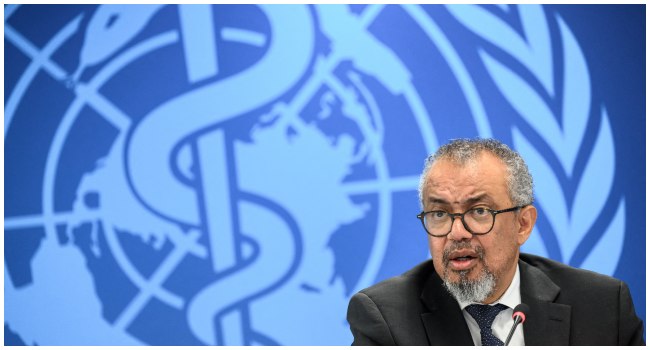
The World Health Organization (WHO) has responded to the evolving situation by revising its disease risk assessment. The organization warned of a rapid spread of the virus, which has claimed numerous lives in the DRC. The WHO has raised the risk level for the outbreak in the DRC to "very high" at the national level and "high" at the regional level in central Africa, while maintaining that the global risk remains low [6, 11]. The outbreak is caused by the Bundibugyo strain of the Ebola virus, a less common variant for which there are no approved vaccines or specific treatments. This poses significant challenges to containment efforts [4, 12].
In response to the confirmed cases and the potential for further spread, Ugandan authorities have implemented several public health measures. President Yoweri Museveni urged citizens to avoid shaking hands as a preventative measure and ordered the postponement of a large annual religious event that attracts international pilgrims. Additionally, there have been temporary suspensions of public transportation and flights between Uganda and the DRC [3, 4]. Contact tracing and isolation of infected individuals are considered critical to stopping the spread of the disease [3, 4, 9].
Globally, the Ebola outbreak in the DRC has seen a significant number of cases and deaths. As of May 24, 2026, the DRC reported a total of 904 suspected cases, 101 confirmed cases, 119 suspected deaths, and 10 confirmed deaths. The WHO chief noted that suspected deaths from the ongoing Ebola outbreak had reached at least 220. The delay in detecting cases has made containment efforts a challenging "catch-up" operation for health workers [1, 9].
It is important to distinguish this current outbreak from a previous one in Uganda caused by the Sudan ebolavirus, which was declared over on January 11, 2023. That outbreak, which began in September 2022, affected nine districts and resulted in 142 confirmed cases and 55 deaths [5, 14, 16]. The current outbreak is linked to the Bundibugyo strain and originates from the DRC, highlighting the persistent threat of Ebola in the region and the importance of cross-border collaboration and vigilance in public health surveillance.
The news is specific to Uganda and the Democratic Republic of Congo, but given the nature of infectious disease outbreaks and WHO alerts, it has broader international health security implications.
Frequently Asked Questions
What type of Ebola virus is causing the current outbreak in Uganda and DRC?
The current outbreak is caused by the Bundibugyo strain of the Ebola virus. There are no approved vaccines or specific treatments for this strain.
How are the new Ebola cases in Uganda linked to the outbreak in the Democratic Republic of Congo?
The Ugandan cases are linked because they involve individuals who traveled from the DRC to Uganda, indicating cross-border transmission. This includes Congolese nationals seeking treatment in Uganda and potentially subsequent local infections among those who came into contact with them.
What measures are being taken to control the spread of Ebola in Uganda?
Measures include enhanced surveillance, rigorous contact tracing, isolation of infected individuals, public health advisories (like avoiding handshakes), and temporary suspension of public transport and flights between Uganda and the DRC.
What is the overall risk of Ebola transmission?
The World Health Organization has assessed the risk as 'very high' at the national level in DRC and 'high' at the regional level in central Africa. The global risk is considered 'low,' but vigilance is maintained due to the potential for international spread.