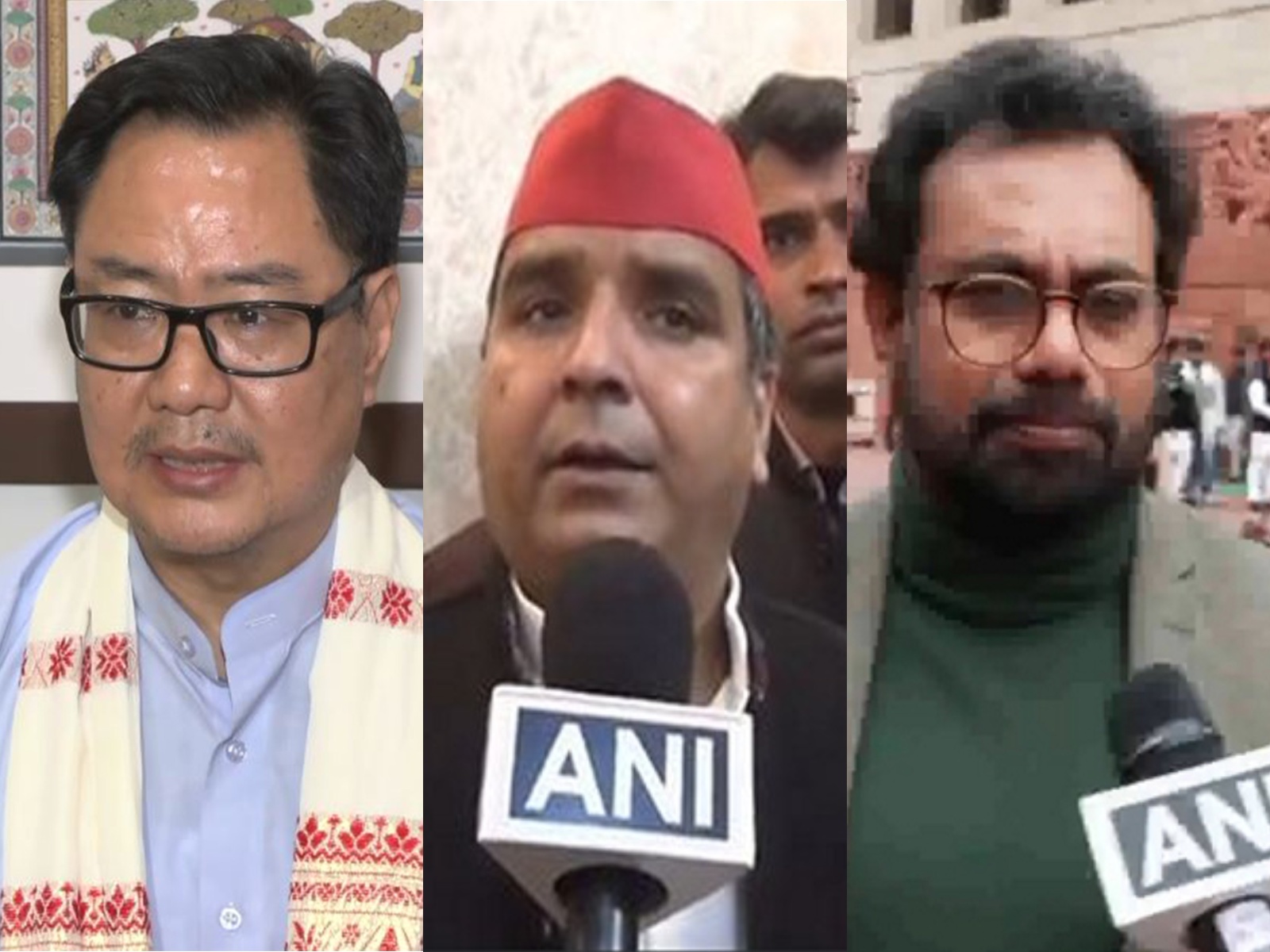
Jaishankar: India Not a Broker Nation Amid West Asia Crisis
External Affairs Minister S. Jaishankar asserted India's independent foreign policy at an all-party meet, stating the nation "cannot be a broker nation" in the West Asia crisis. He dismissed suggestions of Pakistan mediating between the US and Iran, while assuring opposition leaders on India's energy security and diaspora safety.
Key Highlights
- EAM Jaishankar declared India is not a 'broker nation' at an all-party meet.
- Statement was in context of West Asia crisis and Pakistan's mediation claims.
- Government assured opposition on energy security and safety of Indian diaspora.
- Opposition raised concerns over India's foreign policy and demanded parliamentary debate.
- PM Modi communicated to US President Trump the need for swift conflict resolution.
India's External Affairs Minister S. Jaishankar unequivocally declared at an all-party meeting that India 'cannot be a broker nation' amid the escalating West Asia crisis. This strong assertion came on March 25, 2026, during a crucial gathering in the Parliament complex, convened by the government to brief political parties on the geopolitical developments and their implications for India.
The meeting, chaired by Defence Minister Rajnath Singh, saw participation from key government figures including Home Minister Amit Shah, External Affairs Minister S. Jaishankar, Petroleum Minister Hardeep Puri, and Parliamentary Affairs Minister Kiren Rijiju. Several opposition leaders were also present, seeking clarity on India's foreign policy stance and preparedness regarding the volatile situation in West Asia.
Jaishankar's statement, where he reportedly termed Pakistan a 'dalal' (broker) nation, was a direct response to concerns raised by opposition parties regarding reports of Pakistan attempting to mediate between the United States and Iran. He emphasized that India maintains a strategic, independent approach to global conflicts and would not reduce its foreign policy to 'transactional brokerage'. Recalling Pakistan's historical involvement, Jaishankar noted that Islamabad had served as an intermediary between the US and China in 1971 and again between the US and Iran in 1981, suggesting that Pakistan had been 'used' by the US in the past.
The minister also informed the attendees that Prime Minister Narendra Modi had conveyed to US President Donald Trump the urgency of ending the West Asia conflict, highlighting its detrimental impact on everyone. This communication underscored India's commitment to de-escalation and peace in the region.
Opposition parties, however, voiced several criticisms and concerns. They questioned the government's perceived 'silence' on the West Asia conflict and demanded a dedicated debate on the issue in both the Lok Sabha and Rajya Sabha. Congress MP Tariq Anwar, for instance, described the meeting as 'unsatisfactory' and stressed that India risked appearing passive. Concerns were also raised about India's diplomatic strategies, particularly the perceived paradox of maintaining friendly relations with Iran while seemingly aligning with US interests. Some opposition members also pointed out the timing of the meeting, stating it was long overdue, and questioned the Prime Minister's absence, noting that such critical discussions traditionally involve the PM. Rahul Gandhi, the Leader of Opposition in the Lok Sabha, was notably absent, citing a pre-scheduled program, while the Trinamool Congress (TMC) boycotted the meeting.
In response to these concerns, the government provided assurances on two primary fronts: energy security and the safety of the Indian diaspora. Petroleum Minister Hardeep Puri informed the participants that India possessed sufficient reserves of crude oil, diesel, and liquefied petroleum gas (LPG). Furthermore, the government highlighted its proactive measures in tying up new sources of supply and successfully securing passage through the Strait of Hormuz for four Indian ships, a crucial maritime corridor for global oil shipments. The government also reiterated its paramount concern for the security and well-being of the Indian diaspora residing in the Gulf region.
Addressing the charge of 'silence', the government clarified that it was actively 'commenting and responding' to the situation. As an example, it cited the Foreign Secretary's immediate visit to the Iranian embassy to sign the condolence book following a significant event, countering the opposition's perception of moral weakness in India's diplomatic response.
While Parliamentary Affairs Minister Kiren Rijiju stated that all questions and concerns raised by opposition leaders were addressed and that all opposition parties had assured their support to the government, the differing statements from opposition members suggested ongoing dissatisfaction and a continued demand for a more comprehensive parliamentary discussion on India's foreign policy in the context of the West Asia crisis. The meeting underscored the gravity of the ongoing military tensions in West Asia, which threaten global supply chains, energy markets, maritime trade routes, and humanitarian realities, necessitating a careful balancing act of national interests and global peace efforts by India.
Frequently Asked Questions
What was the main purpose of the all-party meeting?
The all-party meeting was convened by the Indian government to brief political parties on the escalating West Asia crisis, its potential implications for India's security and economy, and to discuss India's foreign policy approach to the conflict.
What did EAM Jaishankar mean by 'cannot be a broker nation'?
EAM Jaishankar meant that India would not act as a mere intermediary or 'dalal' (broker) between conflicting powers like the US and Iran. He emphasized India's independent and strategic foreign policy, rejecting transactional brokerage, especially in light of reports suggesting Pakistan's attempts at mediation.
What were the opposition's main concerns regarding India's foreign policy?
The opposition primarily questioned the government's perceived 'silence' on the West Asia conflict, demanded a parliamentary debate, and raised concerns about India's diplomatic strategy, including Prime Minister Modi's visit to Israel and maintaining relations with Iran while aligning with US interests.
How did the government address concerns about energy security and Indian diaspora safety?
The government assured that India has sufficient crude oil, diesel, and LPG reserves, with new supply sources secured. It also highlighted efforts to ensure safe passage for Indian ships through the Strait of Hormuz and prioritized the security of the Indian diaspora in the Gulf region.
What was the outcome of the all-party meeting?
According to the government, all opposition concerns were addressed, and parties assured support for the government's measures. However, some opposition leaders expressed dissatisfaction, reiterating their demand for a full parliamentary debate on the West Asia crisis.