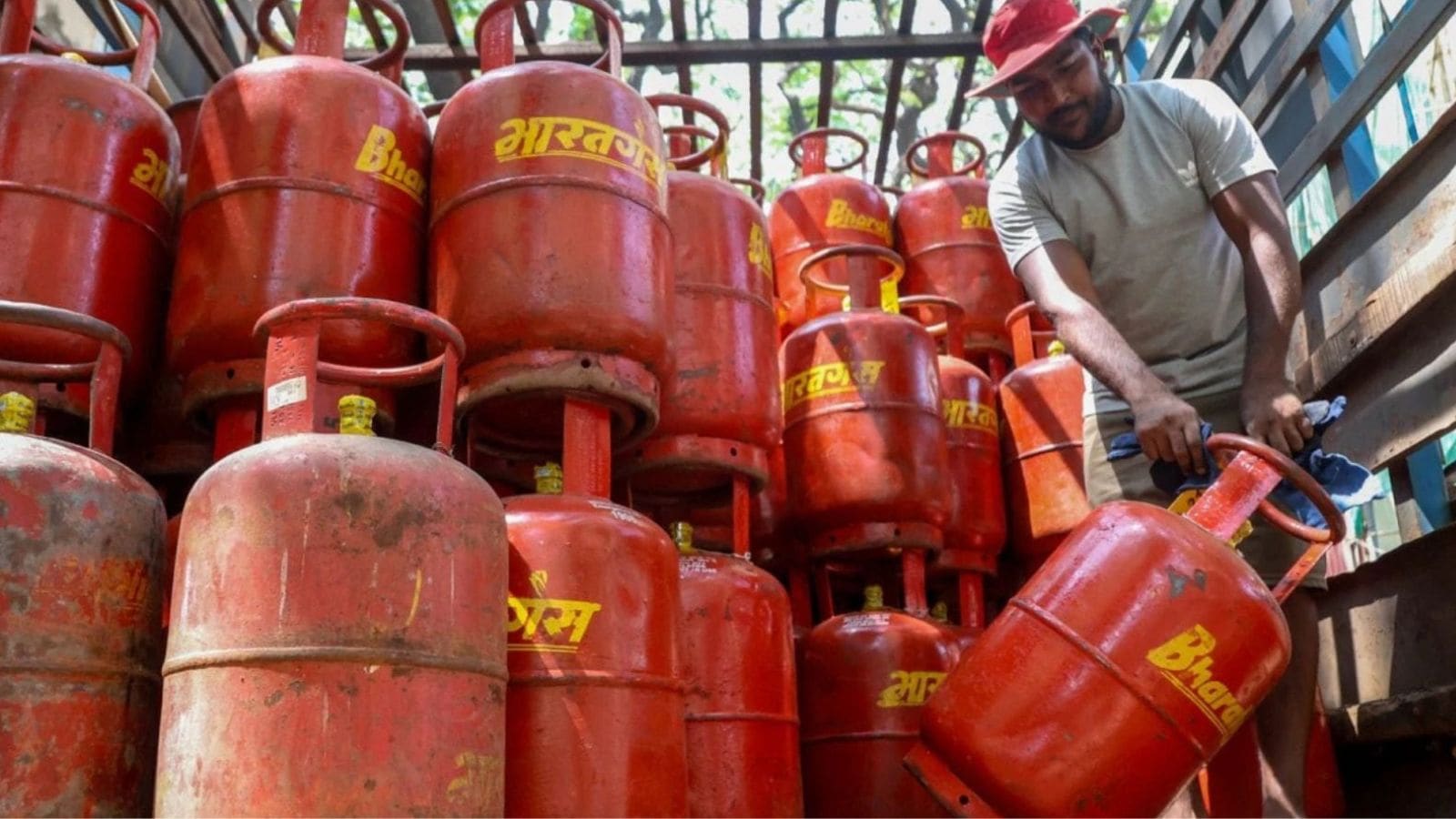
Commercial LPG Price Soars by ₹993 Amid Middle East Conflict, Domestic Rates Unchanged
Commercial LPG cylinder prices in India have seen a significant hike of ₹993, effective May 1, 2026, driven by escalating geopolitical tensions in the Middle East and their impact on global energy supplies. While businesses face increased operational costs, domestic cooking gas rates remain unchanged, insulating households from the surge.
Key Highlights
- Commercial LPG cylinder price hiked by ₹993 across India.
- New price for a 19kg commercial cylinder in Delhi is ₹3,071.50.
- Domestic LPG cylinder prices remain unchanged for households.
- Hike attributed to ongoing US-Iran-Israel conflict and Strait of Hormuz disruptions.
- Oil marketing companies revise prices monthly based on global benchmarks.
- Businesses like hotels and restaurants face increased operational costs.
Commercial Liquefied Petroleum Gas (LPG) cylinder prices in India have witnessed a substantial increase of ₹993, effective from May 1, 2026. This significant upward revision means that a 19-kg commercial LPG cylinder now costs ₹3,071.50 in Delhi. Other major metropolitan cities also experienced similar hikes, with Kolkata seeing an increase of ₹994 to ₹3,202, Mumbai's price rising by ₹993 to ₹3,024, and Chennai's rate climbing to ₹3,237. This marks a considerable financial burden for commercial establishments across the country.
Crucially, alongside the hike in commercial rates, oil marketing companies (OMCs) have confirmed that the prices of domestic 14.2-kg LPG cylinders remain unchanged on May 1, 2026. In Delhi, a domestic LPG cylinder continues to cost ₹913. This decision by the OMCs aims to shield household consumers from the volatility of international fuel prices, a policy that has been consistently maintained despite the rising global energy costs. The last revision for domestic LPG prices was an increase of ₹60 per cylinder on March 7, 2026, which was the first hike for domestic cylinders in a year.
The primary driver behind this sharp surge in commercial LPG prices is attributed to the escalating geopolitical tensions in the Middle East, often referred to as the 'US-Iran-Israel conflict' or the 'widening West Asia conflict'. These conflicts have led to disruptions in global energy supplies and a significant increase in crude oil prices. A critical factor cited by various reports is the closure or disruption around the Strait of Hormuz, a vital maritime chokepoint through which approximately 20% of the world's crude oil and natural gas passes. The uncertainty and reduced movement of ships through this strait have tightened global supply and driven up international LPG costs, directly impacting import-dependent nations like India. India imports nearly 60% of its LPG requirements, with a major share coming from the Middle East.
Oil marketing companies in India, including Indian Oil Corporation (IOCL), Bharat Petroleum (BPCL), and Hindustan Petroleum (HPCL), typically revise LPG prices on the first day of every month. These revisions are based on international benchmarks and prevailing exchange rates. The current hike is not an isolated event; commercial LPG prices had previously seen increases in both March and April 2026. On March 1, a hike of around ₹114.5 was implemented for 19-kg commercial cylinders. This was followed by another increase of approximately ₹195.5 (or ₹196) on April 1, 2026. The cumulative impact of these successive hikes, culminating in the massive ₹993 increase, reflects a challenging global energy market environment.
The repercussions of this substantial price hike are expected to be felt widely across India's business sector. Establishments such as hotels, restaurants, cafes, and other small and medium businesses that rely heavily on commercial LPG for their operations will face significantly higher operational costs. This could lead to an increase in prices for food and services, potentially impacting consumers indirectly. Some reports even suggest that small-scale vendors and eateries, already struggling with rising costs, might find it difficult to sustain their operations, with some potentially resorting to alternatives or facing reduced margins.
While the government and OMCs have absorbed the increased costs for domestic consumers, the continued segmentation of price impacts towards commercial and industrial users is a strategic move to balance economic stability with the need to cover rising international fuel costs. The government has also previously clarified that there is no shortage of LPG and urged the public to avoid panic buying amid the West Asia crisis. Amid these developments, the prices of petrol and diesel for retail consumers have remained stable, despite high global energy costs, with OMCs reportedly absorbing losses to insulate the general public. However, there have been discussions that OMCs might seek compensation from the Centre to absorb these under-recoveries, especially if global crude oil prices remain elevated. The overall situation underscores India's vulnerability to global energy market fluctuations and the delicate balancing act by the government and oil companies to manage prices for different consumer segments.
Frequently Asked Questions
By how much have commercial LPG cylinder prices increased in India?
Commercial LPG cylinder prices in India have been hiked by ₹993, effective May 1, 2026.
Have domestic LPG cylinder prices also increased?
No, domestic LPG cylinder prices remain unchanged for households as of May 1, 2026. The last hike for domestic cylinders was ₹60 on March 7, 2026.
What is the new price of a 19kg commercial LPG cylinder in Delhi?
A 19kg commercial LPG cylinder now costs ₹3,071.50 in Delhi, following the ₹993 hike.
What are the primary reasons cited for this LPG price hike?
The hike is primarily attributed to escalating geopolitical tensions, specifically the US-Iran-Israel conflict in the Middle East, and its impact on global crude oil prices, particularly disruptions to supply routes like the Strait of Hormuz.
How will this price increase affect businesses in India?
Businesses, particularly hotels, restaurants, and small eateries, will face significantly higher operational costs due to their heavy reliance on commercial LPG, potentially leading to increased prices for consumers.