Middle East Conflict Escalates: Israel Strikes Lebanon, Iran Targets Gulf, US Jets Downed in Kuwait
A major escalation in the Middle East conflict sees Israel extending airstrikes into Lebanon against Hezbollah, while Iran has retaliated with missile and drone attacks across several Gulf states. Critically, three US F-15E fighter jets were mistakenly shot down by Kuwaiti air defenses during an Iranian attack, with all crew members safely recovered.
Key Highlights
- Israel expands strikes into Lebanon, targeting Hezbollah.
- Iran launches missile and drone attacks across Gulf states.
- Three US F-15E fighter jets mistakenly downed by Kuwaiti air defenses.
- US and Israel initiated joint military campaign against Iran on Feb 28, 2026.
- Iranian Supreme Leader Ali Khamenei killed in recent US-Israeli strikes.
- Conflict leads to significant casualties and regional instability.
The Middle East is experiencing a severe escalation of conflict, primarily stemming from a joint US-Israeli military campaign against Iran that commenced on February 28, 2026. Codenamed 'Operation Roaring Lion' by Israel and 'Operation Epic Fury' by the United States, these initial strikes targeted key Iranian leadership, security forces, nuclear facilities, and missile sites, reportedly resulting in the death of Iran's Supreme Leader Ali Khamenei, its defense minister, and the chief of staff of the armed forces.
In retaliation for these extensive US-Israeli attacks, Iran has launched widespread missile and drone barrages across the region. These Iranian counter-strikes have targeted Israel, US military bases in the region (including in Jordan, Kuwait, Bahrain, Qatar, Saudi Arabia, and the United Arab Emirates), and various military and civilian locations in Gulf states. Civilian infrastructure, including international airports in Dubai, Abu Dhabi, and Kuwait, has been hit, leading to severe disruptions in global air travel and causing international concern. Reports indicate that hundreds of ballistic missiles and drones were fired, with many being intercepted by combined US and allied air defenses, though some caused casualties and damage.
A critical incident within this broader escalation involves Kuwaiti air defenses mistakenly shooting down three American F-15E Strike Eagle fighter jets. The US Central Command (CENTCOM) confirmed that this occurred on March 1, 2026 (ET time) during 'active combat' that included attacks from Iranian aircraft, ballistic missiles, and drones. All six aircrew members from the downed F-15E jets safely ejected and were recovered in stable condition. Kuwait has acknowledged the incident, which is currently under investigation. The Onmanorama article's headline accurately captures this event, although the clarification of "friendly fire" is crucial context provided by the article's body and numerous other sources. Notably, the Onmanorama article incorrectly identified the jets as F-16s, while other sources consistently refer to them as F-15E Strike Eagles.
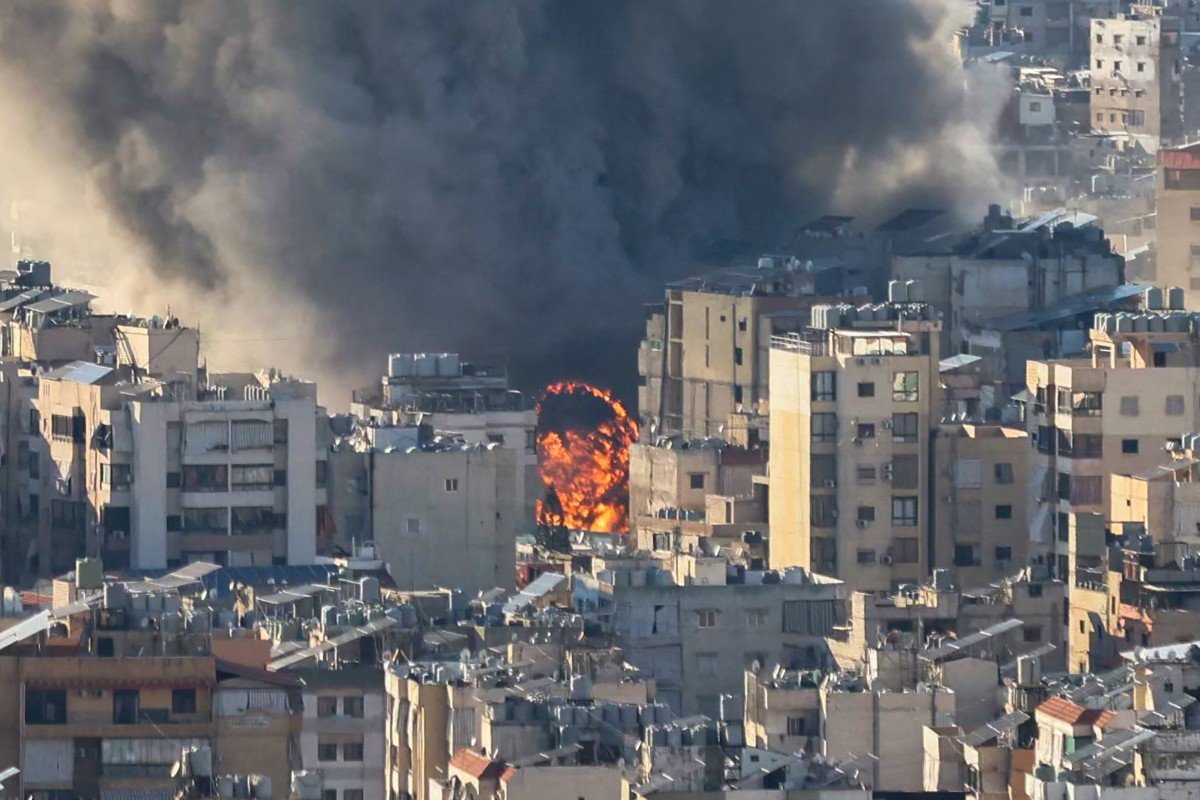
Concurrently, Israel has significantly extended its strikes into Lebanon, targeting the Iran-backed militant group Hezbollah. This new front opened on March 2, 2026, after Hezbollah launched missiles and drones towards northern Israel, claiming it as retaliation for the killing of Supreme Leader Khamenei and ongoing Israeli aggressions. Israeli airstrikes have hit Hezbollah leadership targets in Beirut's southern suburbs and military sites across Lebanon. Lebanon's Health Ministry reported that Israeli airstrikes in Beirut suburbs and southern Lebanon killed at least 31 people and injured 149 on March 2, 2026. The Lebanese government has condemned Hezbollah's actions, calling them irresponsible and outside state authority, and has demanded that the group hand over its weapons. Israel has also declared Hezbollah leader Naim Qassem a "target for elimination".
The ongoing conflict has led to a highly volatile situation across the Middle East, with warnings of rising energy costs and business disruption globally, particularly impacting shipping and air travel. The United States anticipates more casualties as its military campaign continues, while emphasizing that the objective is to degrade Iran's military capabilities and prevent it from developing nuclear weapons, rather than an "endless war". The conflict has highlighted deep divisions within Iran, with some mourning Khamenei's death and others celebrating it. Several Gulf states, including Bahrain, Jordan, Kuwait, Qatar, Saudi Arabia, and the UAE, have jointly condemned Iran's "indiscriminate and reckless" attacks, reaffirming their right to self-defense. The situation remains highly fluid, with ongoing military operations and significant humanitarian concerns.
Frequently Asked Questions
What is the current status of the conflict in the Middle East?
The Middle East is experiencing a significant escalation, with a joint US-Israeli military campaign targeting Iran, Iranian retaliatory strikes across the Gulf, and Israel extending its operations against Hezbollah in Lebanon. The conflict involves multiple nations and has resulted in casualties and widespread disruption.
Were US jets truly shot down in Kuwait, and how did it happen?
Yes, three US F-15E fighter jets were mistakenly shot down by Kuwaiti air defenses on March 1, 2026, during an Iranian attack on Kuwait. This was a 'friendly fire' incident, and all six crew members safely ejected and were recovered.
What led to the escalation of Israeli strikes in Lebanon?
Israeli strikes in Lebanon intensified after Hezbollah launched missiles and drones towards northern Israel on March 2, 2026. Hezbollah stated these actions were in retaliation for the killing of Iran's Supreme Leader Ali Khamenei and ongoing Israeli aggressions.
How has Iran responded to the US-Israeli attacks?
Iran has responded with extensive missile and drone attacks targeting Israel, US military bases in several Gulf countries (including Kuwait, Bahrain, UAE, Qatar, and Saudi Arabia), and civilian infrastructure like international airports.
What are the broader implications of this conflict for the global economy?
The conflict has significantly impacted global markets, leading to sharp increases in energy prices and severe disruptions to shipping traffic, particularly in the Gulf and the Strait of Hormuz. International air travel has also been heavily disrupted, with warnings of rising energy costs and business disruption worldwide.