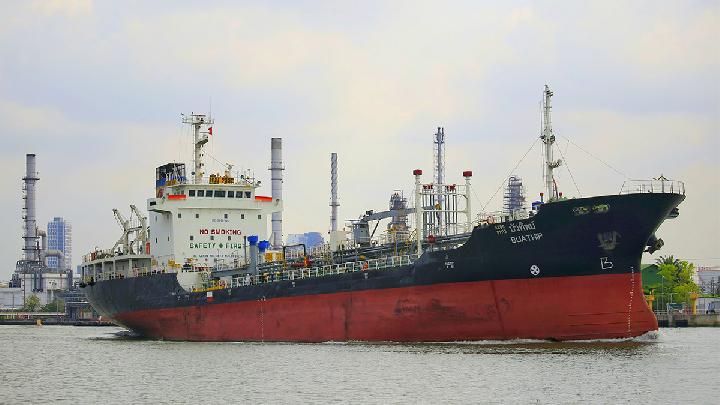
Trump Admin Waives Iran Oil Sanctions for 30 Days; Iran Denies Floating Crude
The Trump administration has issued a 30-day waiver for sanctions on Iranian oil at sea, aiming to ease global energy prices amid a West Asia conflict. Iran, however, denies having any floating crude or surplus available for international markets, contradicting US claims of unlocking 140 million barrels.
Key Highlights
- Trump admin issued 30-day waiver for Iranian oil at sea.
- Waiver aims to relieve global energy supply pressures.
- Iran denies having any floating crude or surplus oil.
- US Treasury Secretary cited 140 million barrels potentially unlocked.
- India is a key beneficiary, with renewed interest in Iranian crude.
- Move follows other recent waivers on Russian oil.
The Trump administration recently announced a temporary 30-day waiver of sanctions on Iranian crude oil and petroleum products already in floating storage, a move aimed at alleviating surging global energy prices amidst an ongoing US-Israeli conflict with Iran. This decision, conveyed by Treasury Secretary Scott Bessent, permits the sale and delivery of Iranian oil loaded on vessels as of March 20, 2026, with the authorization set to expire on April 19, 2026.
According to Secretary Bessent, the waiver is expected to release approximately 140 million barrels of oil into global markets, thereby expanding worldwide energy supply and helping to mitigate the temporary pressures on supply attributed to the conflict. He emphasized that this measure strategically uses 'Iranian barrels against Tehran' to stabilize prices as part of 'Operation Epic Fury'. Bessent also indicated that sanctioned Iranian oil has been previously hoarded by China at discounted rates. This marks the third instance in approximately two weeks that the US administration has temporarily eased sanctions on oil from what it considers adversaries, following a similar waiver for Russian oil.
In a direct contradiction to the US announcement, Iran's Oil Ministry, through its Consulate General in Mumbai, asserted that the country "essentially has no floating crude or surplus available for international markets." Iran suggested that the US Treasury Secretary's statements were primarily intended to reassure buyers and manage market sentiment rather than reflect an actual surplus of Iranian oil readily available for sale.
However, this Iranian denial stands in contrast to data from commodity analytics firms. Reports from Kpler, Vortexa, and OilX indicate significant volumes of Iranian crude in floating storage, particularly in international waters near Malaysia and off China's coast. For instance, some reports suggested at least 30 million barrels of Iranian crude were in floating storage near Malaysia, with another 40 million barrels in onshore storage in Shandong, China. Other analyses put the total amount of Iranian crude at sea, in storage and in transit, at 161 million barrels as of late 2025/early 2026. This discrepancy highlights a potential political motive behind Iran's statement, aimed at influencing market perceptions or negotiating positions.
The context for this waiver is the ongoing escalation of tensions and military actions in the West Asia region, described as a 'US-Israeli war on Iran', which has led to significant disruptions in global oil supply, including the effective closure of the Strait of Hormuz – a critical conduit for approximately 20% of the world's oil and liquefied natural gas. The resultant spike in oil prices, soaring by about 50% since late February 2026, has prompted the Trump administration to seek measures to stabilize the market and mitigate adverse economic impacts ahead of upcoming elections.
For India, a major oil importer and the world's third-largest consumer of crude, this development holds significant importance. Historically, India was a prominent buyer of Iranian oil before the full re-imposition of US sanctions in 2019. The temporary waiver now offers a window for Indian refiners to resume purchases of Iranian crude, potentially at discounted rates, to address its energy needs and counter the supply crunch from the Middle East. Indeed, Reliance Industries, India's largest public company, has reportedly already purchased 5 million barrels of Iranian crude following the waiver, marking India's first import of Iranian oil since May 2019. Discussions have also emerged regarding the possibility of making payments in Indian rupees, further facilitating trade. This strategic opportunity could help India diversify its oil sources and ensure energy security during volatile times. State-run Indian refiners are also evaluating potential purchases.
Frequently Asked Questions
Why did the Trump administration issue a 30-day waiver for Iranian oil sanctions?
The Trump administration issued a temporary 30-day waiver to ease global energy supply pressures and combat soaring oil prices, which have reportedly surged due to the ongoing US-Israeli conflict with Iran and disruptions in crucial shipping lanes like the Strait of Hormuz.
What was Iran's response to the US waiver?
Iran's Oil Ministry immediately contradicted the US announcement, stating that Iran has 'no floating crude or surplus available for international markets.' They suggested the US Treasury Secretary's remarks were aimed at market sentiment management rather than reflecting an actual oil surplus.
Is there actually Iranian oil in floating storage?
Despite Iran's denial, reports from commodity analytics firms like Kpler, Vortexa, and OilX indicate that significant amounts of Iranian crude are indeed in floating storage, particularly near China and Southeast Asia, with estimates suggesting around 140-161 million barrels.
How does this waiver affect India?
As a major oil importer, India stands to benefit significantly. The waiver allows Indian refiners to resume purchasing Iranian crude, potentially at discounted rates, after halting imports in 2019 due to US sanctions. Reliance Industries has already reportedly bought 5 million barrels, and other Indian refiners are evaluating purchases.
What is the broader context of this US policy shift?
This 30-day waiver is the third such temporary easing of sanctions on adversarial oil in about two weeks, following a similar move for Russian crude. It reflects the Trump administration's urgent attempts to stabilize global oil markets amid a severe energy crisis caused by the West Asia conflict and disruptions to vital oil transit routes.