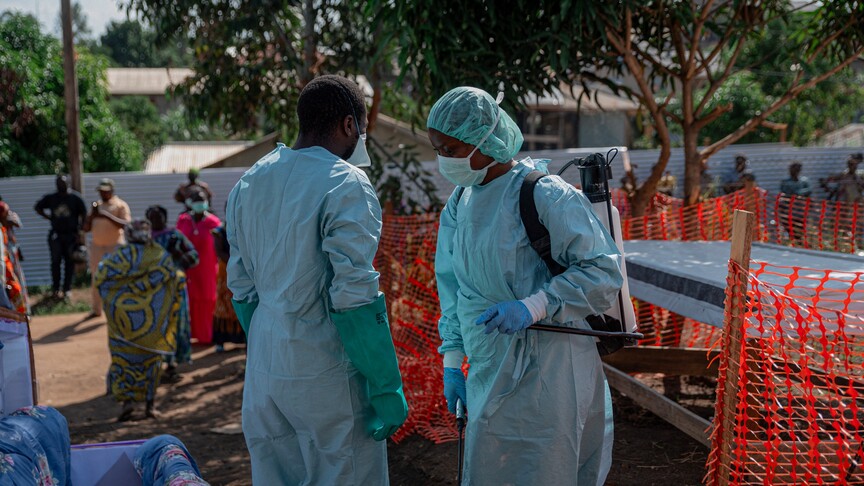
DR Congo Ebola Outbreak: Over 1,000 Cases Amidst Conflict
The Democratic Republic of Congo is grappling with a rapidly escalating Ebola outbreak, with confirmed cases surpassing 1,000 since its declaration on May 15, 2026. The crisis in the eastern Ituri province is severely compounded by ongoing violence and mass displacement, hindering critical containment efforts and raising fears of regional spread.
Key Highlights
- Confirmed Ebola cases in DR Congo exceeded 1,000 by late June 2026.
- Outbreak, declared May 15, 2026, is concentrated in Ituri province.
- Violence by armed groups and displacement critically impede containment efforts.
- The Bundibugyo strain of Ebola, lacking approved treatments, drives the outbreak.
- Concerns rise over undetected cases and potential regional spread to neighboring countries.
- International and national health bodies are intensifying response efforts amidst challenges.
The Democratic Republic of Congo (DRC) is currently battling a severe and rapidly expanding Ebola outbreak, with confirmed cases surpassing 1,000 by late June 2026. The country's Ministry of Health reported 1,003 confirmed infections and 254 deaths as of Sunday, June 2026, marking a significant escalation since the outbreak was initially declared on May 15, 2026. This epidemic is primarily concentrated in the northeastern Ituri province.
The severity of this health crisis is profoundly exacerbated by persistent armed conflict and widespread population displacement across eastern DRC. Efforts to contain the highly contagious virus are continuously undermined by violence, particularly from groups like the ISIL-linked Allied Democratic Forces (ADF) in Ituri. These attacks have cut off access to numerous villages and forced thousands of people to flee their homes, often seeking refuge in overcrowded displacement camps. Such volatile conditions create a 'perfect storm' for the virus to spread unchecked, making contact tracing and safe burial practices, which are crucial for Ebola containment, exceptionally difficult.
Health officials express grave concerns that the true scale of the epidemic might be far larger than reported figures suggest. The DRC's Ministry of Health indicated that contact tracing has only reached about 55% of potentially exposed individuals, leaving significant gaps in the response. Dr. Jean Kaseya, Director General of the Africa Centres for Disease Control and Prevention (Africa CDC), highlighted the challenge of not confidently identifying the index case, which is fundamental to controlling an outbreak.
Adding to the complexity is the strain of Ebola responsible for this outbreak: the rare Bundibugyo strain. Unlike other strains, there is currently no approved vaccine or specific treatment available for the Bundibugyo virus. This lack of targeted medical intervention makes early detection, isolation, and supportive care even more critical for patient survival and preventing further transmission.
The humanitarian impact of this dual crisis of disease and conflict is immense. The UN refugee agency (UNHCR) has stated that at least two million people are forcibly displaced in areas at risk of Ebola within the DRC. The agency expressed deep concern over the accelerating spread of the virus and the growing risks it poses to these vulnerable, displaced communities, where precarious living conditions could lead to catastrophic outbreaks if the virus infiltrates camps. The World Health Organization (WHO) and other UN agencies have ramped up their efforts, deploying health experts and delivering emergency supplies. WHO's chief, Tedros Adhanom Ghebreyesus, had previously called for a ceasefire in the region to allow safe delivery of lifesaving assistance.
Moreover, the outbreak presents a significant regional threat. Neighboring Uganda has already reported cases and consequently closed its border with the DRC to mitigate the risk of wider spread. The Africa CDC has warned that this current outbreak could potentially surpass the devastating 2014-2016 West African epidemic if transmission is not brought under control swiftly. Ten other countries, including Rwanda, Kenya, Tanzania, and Burundi, face a heightened risk of an Ebola outbreak, prompting them to intensify preventative measures, including travel restrictions from Congo.
Despite the challenges, response teams continue active investigations, epidemiological surveillance, and prevention actions. The Congolese authorities have suspended social activities in Ituri, the epicenter, to prevent further spread. The situation remains serious and continues to evolve, necessitating sustained international support and enhanced security to allow health workers to effectively combat the virus.
Frequently Asked Questions
What is the current status of the Ebola outbreak in DR Congo?
As of late June 2026, the Democratic Republic of Congo has reported over 1,000 confirmed Ebola cases and 254 deaths since the outbreak was declared on May 15, 2026. The outbreak is primarily in the eastern Ituri province.
How is violence impacting Ebola containment efforts in DR Congo?
Ongoing violence by armed groups, such as the ISIL-linked Allied Democratic Forces (ADF), and mass displacement are severely hindering Ebola containment. Attacks prevent health workers from accessing affected communities, disrupt contact tracing, and force populations into overcrowded camps, increasing transmission risks.
What strain of Ebola is causing this outbreak, and are there treatments available?
This particular outbreak is caused by the rare Bundibugyo strain of Ebola. Crucially, there is currently no approved vaccine or specific treatment for this strain, making containment through isolation and supportive care even more challenging.
Is the Ebola outbreak a risk to other countries?
Yes, the outbreak poses a significant regional risk. Neighboring Uganda has already reported cases and closed its border with the DRC. The Africa CDC warns that the outbreak could spread further, with ten other countries in the region facing a heightened risk.
What are international organizations doing to help?
International bodies like the World Health Organization (WHO), the UN refugee agency (UNHCR), and the Africa Centres for Disease Control and Prevention (Africa CDC) are providing support. This includes deploying health experts, delivering emergency supplies, intensifying surveillance, and advocating for an end to violence to facilitate humanitarian access.