Vijay's TVK Demands Complete NEET Scrapping Amid India Protests
Tamil Nadu Chief Minister Vijay's party, Tamilaga Vettri Kazhagam (TVK), has firmly demanded the complete abolition of the NEET examination, calling for education to be moved to the State List. This stand comes amid escalating nationwide protests against NEET irregularities, further intensifying the political debate in India.
Key Highlights
- TVK calls for complete abolition of NEET examination.
- Demands shifting education from Concurrent to State List.
- Statement issued amid widespread NEET protests across India.
- TVK criticizes DMK for past 'fraudulent politics' on NEET.
- Anitha's brother joins Delhi protests, highlighting TN's long opposition.
- Tamil Nadu CM Vijay condemns detention of Rahul Gandhi amid protests.
Tamil Nadu Chief Minister C. Joseph Vijay's political party, Tamilaga Vettri Kazhagam (TVK), has taken an 'uncompromising and firm stand' demanding the complete scrapping of the National Eligibility-cum-Entrance Test (NEET). This declaration was made on Tuesday, July 22, 2026, amidst widespread and escalating student protests across various parts of India, particularly in Delhi, over alleged irregularities in the NEET examination.
TVK's demand extends beyond merely addressing the irregularities; the party advocates for the fundamental abolition of the centralized medical entrance test. Further, the party has called for a significant constitutional reform, urging that education, including medical education, be shifted from the Concurrent List to the State List. This move, according to TVK, would grant state governments full authority over educational policy and admission processes, providing a long-term solution to the recurring issues surrounding NEET. Recognizing potential legal and procedural hurdles, TVK also proposed an interim measure: the creation of a 'Special Concurrent List' to temporarily empower state governments until a permanent solution can be implemented.
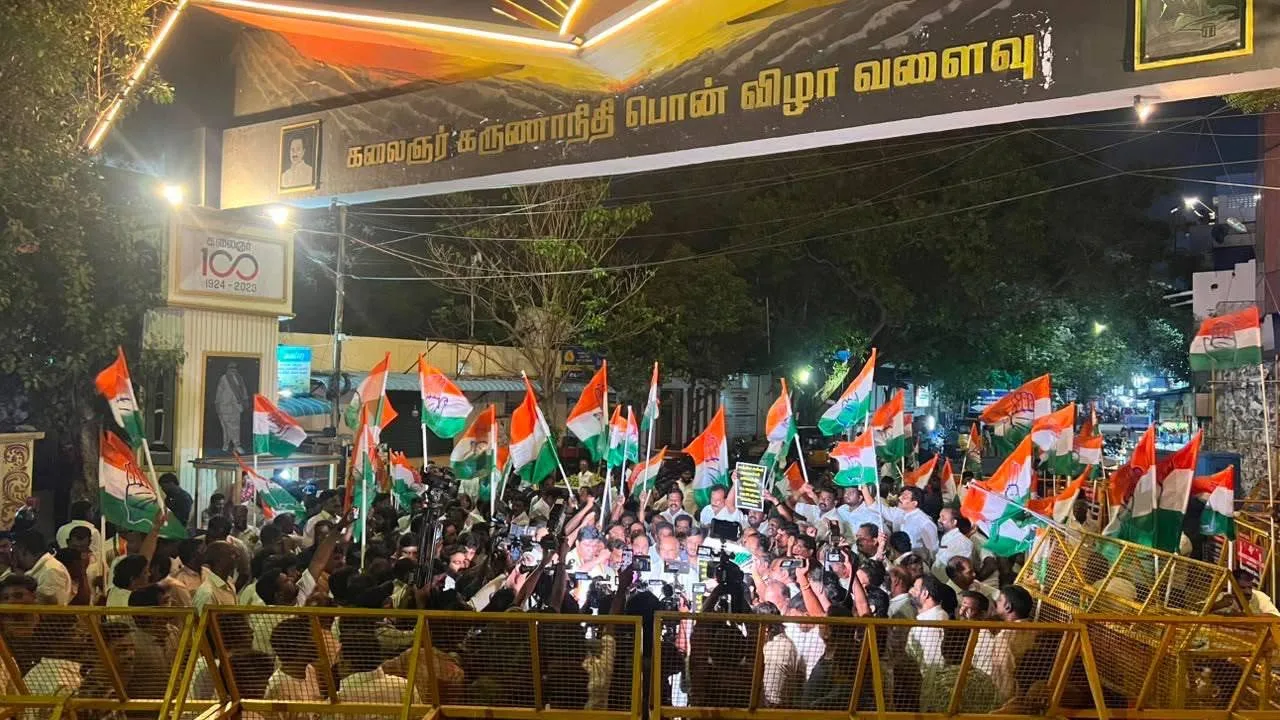
The timing of TVK's statement is particularly significant, as it coincides with intense student-led demonstrations in Delhi. These protests, spearheaded by groups like the Cockroach Janta Party (CJP), Students Federation of India (SFI), All India Students Association (AISA), and All India Students Federation (AISF), have seen thousands of students and activists taking to the streets, demanding accountability for examination paper leaks and calling for the resignation of Union Education Minister Dharmendra Pradhan. Reports indicate clashes with police, detentions, and a growing political confrontation over educational governance, transparency, and accountability. The demonstrations have also spread to other cities like Chennai and Mumbai, where numerous protesters have been detained.
Tamil Nadu has a long and consistent history of opposing NEET, dating back to its mandatory implementation in 2017. Successive governments in the state have passed resolutions and adopted political stances against the examination, perceiving it as a threat to the state's autonomy, healthcare system, social justice principles, and the quality of education for local students. This opposition is rooted in the belief that NEET disproportionately disadvantages students from rural and underprivileged backgrounds who may not have access to expensive coaching facilities, thereby undermining the state's merit-based admission systems that were previously in place.
Adding a poignant layer to the ongoing protests, Manirathnam, the brother of S. Anitha, a Tamil Nadu medical aspirant who tragically died by suicide in 2017 after failing to secure a medical seat due to NEET, has joined the CJP protests in Delhi. His presence highlights the deep-seated resentment and the human cost associated with the NEET system in Tamil Nadu. Anitha, a 17-year-old Dalit student, had scored exceptionally well in her Class 12 board exams but could not meet the NEET cut-off. She had even petitioned the Supreme Court for an exemption, which was ultimately rejected, leading to her suicide nine days after the verdict.
Politically, TVK's stance also includes a veiled critique of its political rivals, particularly the Dravida Munnetra Kazhagam (DMK), without explicitly naming them. TVK accused certain parties of engaging in 'fraudulent politics' by making false promises to abolish NEET solely for electoral gain. This appears to be a direct reference to the DMK's pledge ahead of the 2021 Tamil Nadu Assembly elections to scrap NEET if they came to power, a promise that TVK suggests has not been fully realized or was made without a concrete path to implementation. TVK maintains that its position is based on securing constitutional powers for the states rather than making unfulfillable promises.
C. Joseph Vijay, popularly known as 'Thalapathy' Vijay, is a prominent actor-turned-politician who founded the Tamilaga Vettri Kazhagam (TVK) in February 2024. His party emerged as the single largest party in the 2026 Tamil Nadu assembly elections, and he was sworn in as the Chief Minister of Tamil Nadu on May 10, 2026. His party's firm stand on NEET aligns with the historical sentiment of the state and leverages the current national discontent against the examination system. On Wednesday, July 22, 2026, CM Vijay also condemned the detention of Leader of the Opposition Rahul Gandhi and other opposition leaders who were protesting against the paper leaks and seeking educational reforms near the Prime Minister's residence in New Delhi. This broadens the political scope of the NEET debate, positioning it within a larger discussion about democratic rights and government accountability. The ongoing national protests reflect a widespread erosion of public confidence in the national entrance examination system, demanding not just administrative fixes but structural reforms in educational governance.
Frequently Asked Questions
What is TVK's core demand regarding NEET?
TVK demands the complete abolition of the NEET examination and the transfer of 'education' from the Constitution's Concurrent List to the State List, giving states full control over educational policy, including medical admissions. They also proposed a 'Special Concurrent List' as an interim measure.
Why does Tamil Nadu consistently oppose NEET?
Tamil Nadu's opposition to NEET stems from concerns that the exam undermines state autonomy, compromises social justice, and disadvantages students from rural and underprivileged backgrounds who lack access to expensive coaching, thereby affecting their ability to secure medical seats based on their board exam performance.
Who is Anitha, and what is her significance to the NEET protests?
S. Anitha was a Tamil Nadu medical aspirant who died by suicide in 2017 after failing to secure a medical seat due to NEET, despite excellent Class 12 board scores. Her death became a symbol of the perceived injustices of NEET, and her brother, Manirathnam, has recently joined the ongoing protests in Delhi, reigniting attention on the issue.
What are the current nationwide protests about NEET focusing on?
The current nationwide protests, primarily led by student organizations like the Cockroach Janta Party (CJP), focus on alleged irregularities and paper leaks in the NEET examination. Protesters are demanding accountability, the resignation of the Union Education Minister, and comprehensive reforms to the examination system.
What is the political context of TVK's demand?
TVK's demand aligns with Tamil Nadu's long-standing anti-NEET sentiment. It also positions the party, led by Chief Minister C. Joseph Vijay, as a strong advocate for state rights. The party has implicitly criticized rivals like the DMK for allegedly making unfulfilled promises about scrapping NEET, thereby seeking to distinguish its own 'uncompromising' stance.