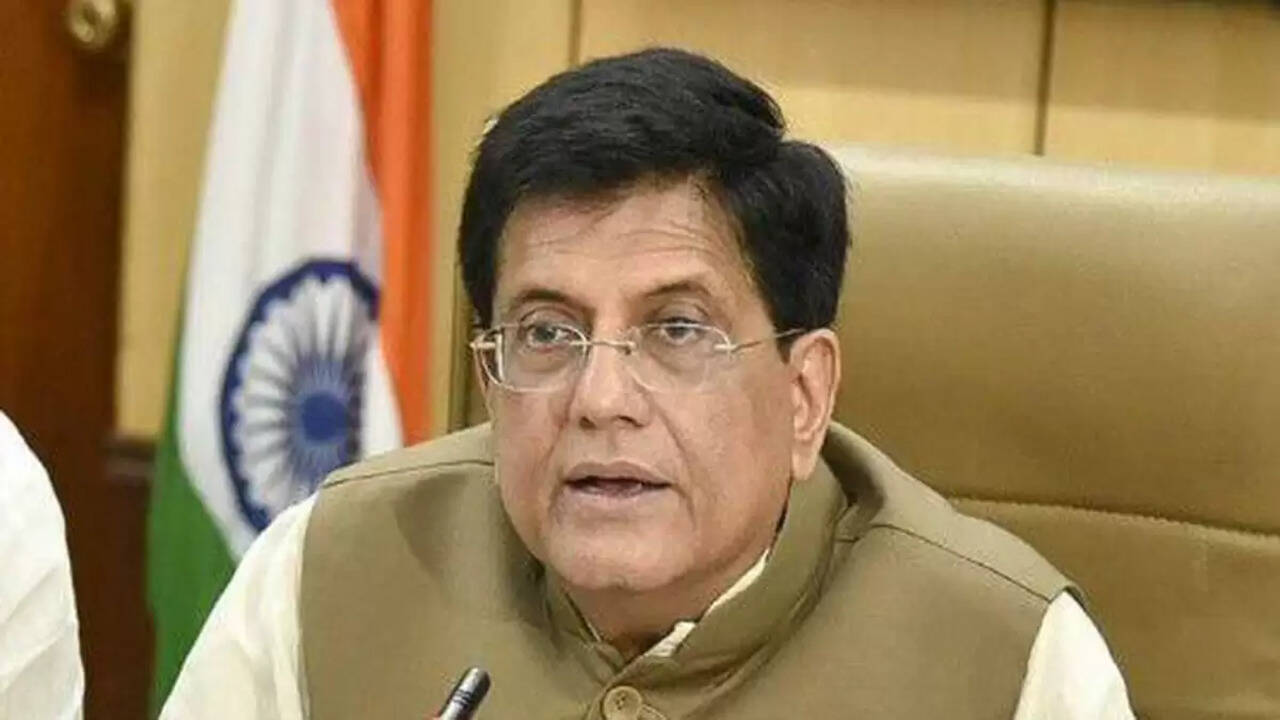
Piyush Goyal Debunks 'Baseless' Reports on India-US Trade Deal Stalemate
Commerce Minister Piyush Goyal has firmly refuted reports claiming India rejected a swift trade deal with the US, labeling them "completely false, baseless and misleading". He confirmed that India and the US remain actively engaged in negotiations for a balanced, mutually beneficial agreement, with the Commerce Secretary adding that a framework deal is ready.
Key Highlights
- Piyush Goyal dismissed reports of India rejecting a quick US trade deal as 'false'.
- Minister emphasized commitment to a balanced, commercially meaningful agreement.
- Commerce Secretary confirmed the trade deal framework is 'ready' for signing.
- Negotiations are progressing well without major challenges, officials stated.
- India seeks comparative advantage and tariff protection in the deal.
- Agriculture and market access remain key discussion points in negotiations.
Union Minister of Commerce and Industry Piyush Goyal has strongly dismissed recent media reports, including one from Reuters, suggesting that India had rejected a rapid trade agreement with the United States and was deliberately delaying the deal to secure more favorable terms. Goyal categorically labeled these reports as "completely false, baseless and misleading". His forceful rebuttal came after a report, citing unnamed officials and analysts, claimed that India was holding out for a better deal, buoyed by new trading alliances and strengthened domestic political standing, and was unwilling to compromise on sensitive sectors such as agriculture during recent talks.
In response, Minister Goyal took to social media and other platforms to assert that he had held "fantastic meetings" with US Trade Representative (USTR) Jamieson Greer during Greer's visit to New Delhi in June. He emphasized that both India and the United States remain steadfastly committed to achieving an agreement that is not only balanced and commercially meaningful but also delivers tangible benefits for businesses, farmers, workers, and consumers in both countries. Goyal confirmed that the negotiating teams from both nations are fully engaged and working diligently towards this shared objective.
Further corroborating the Commerce Minister's statements, India's Commerce Secretary Rajesh Agrawal provided a positive outlook on the ongoing trade negotiations. Addressing the media, Agrawal stated that the framework deal for the India-US trade agreement is essentially "ready" and will be signed at the "right time". He underscored that there are no significant challenges or dissension in the negotiations, indicating that discussions are progressing smoothly and in a positive direction. Agrawal also highlighted that both sides have a clear understanding of each other's expectations and the various aspects being negotiated within and beyond the framework deal.
The discussions for this bilateral trade agreement have been ongoing for several months, aiming to enhance trade and investment ties between the two largest democracies. A key point of negotiation revolves around ensuring a "comparative advantage" for India over its competitors, such as China, Vietnam, Thailand, the Philippines, Indonesia, Malaysia, Bangladesh, and Sri Lanka. India is also seeking assurances regarding preferential market access and protection from any new US levies after the agreement is signed.
Earlier in February 2026, a framework for an interim trade agreement was announced, which included India's commitment to eliminate or reduce tariffs on a wide array of US industrial and agricultural products, including dried distillers' grains, tree nuts, fruit, soybean oil, wine, and spirits. In reciprocity, the US was expected to lower its tariffs on Indian goods to 18%, from a previously imposed punitive tariff of 25%. This initial agreement was, however, complicated by a US Supreme Court decision that struck down sweeping global tariffs imposed by the then-President Donald Trump, leading to a temporary 10% tariff regime by the US, which was expected to lapse around July 24, 2026. India has also been subject to Section 301 investigations by the US regarding alleged forced labor and surplus capacity, which could lead to additional tariffs. Secretary Agrawal noted that the trade deal is expected to address these ongoing investigations and provide pathways for resolving such issues, ensuring that new tariffs are not imposed once the deal is formalized.
The consistent messaging from both Minister Goyal and Secretary Agrawal indicates that despite complex issues surrounding tariffs, market access, and comparative advantages, the negotiations are moving forward constructively with the aim of finalizing a mutually beneficial trade pact. This commitment aligns with the broader goal of deepening commercial relations between India and the United States.
Frequently Asked Questions
What report did Piyush Goyal dismiss regarding the India-US trade deal?
Piyush Goyal dismissed a Reuters report, and other similar media claims, suggesting that India had rejected a 'quick' trade agreement with the US and was holding out for better terms, especially concerning sensitive sectors like agriculture.
What is the current status of the India-US trade deal negotiations?
According to Minister Piyush Goyal and Commerce Secretary Rajesh Agrawal, negotiations are progressing well, and the framework for a bilateral trade deal is 'ready' for signing at the 'right time'. Both sides remain committed to a balanced and commercially meaningful agreement.
What are the main sticking points in the India-US trade negotiations?
Key issues being discussed include ensuring India a comparative advantage over other competing economies, addressing concerns over tariffs, and securing preferential market access. Sensitive sectors like agriculture are also central to the ongoing talks.
When was the original framework for the India-US interim trade agreement announced?
A framework for an interim trade agreement was announced in February 2026. It outlined tariff reductions by both countries, though subsequent legal and policy developments in the US have added complexity.
Are there any US tariffs currently affecting Indian goods in the context of these talks?
Yes, the US had imposed a temporary 10% tariff regime that was expected to lapse by July 24, 2026. India is also under Section 301 investigations by the US, which could potentially lead to additional tariffs, though the trade deal is intended to address such issues.