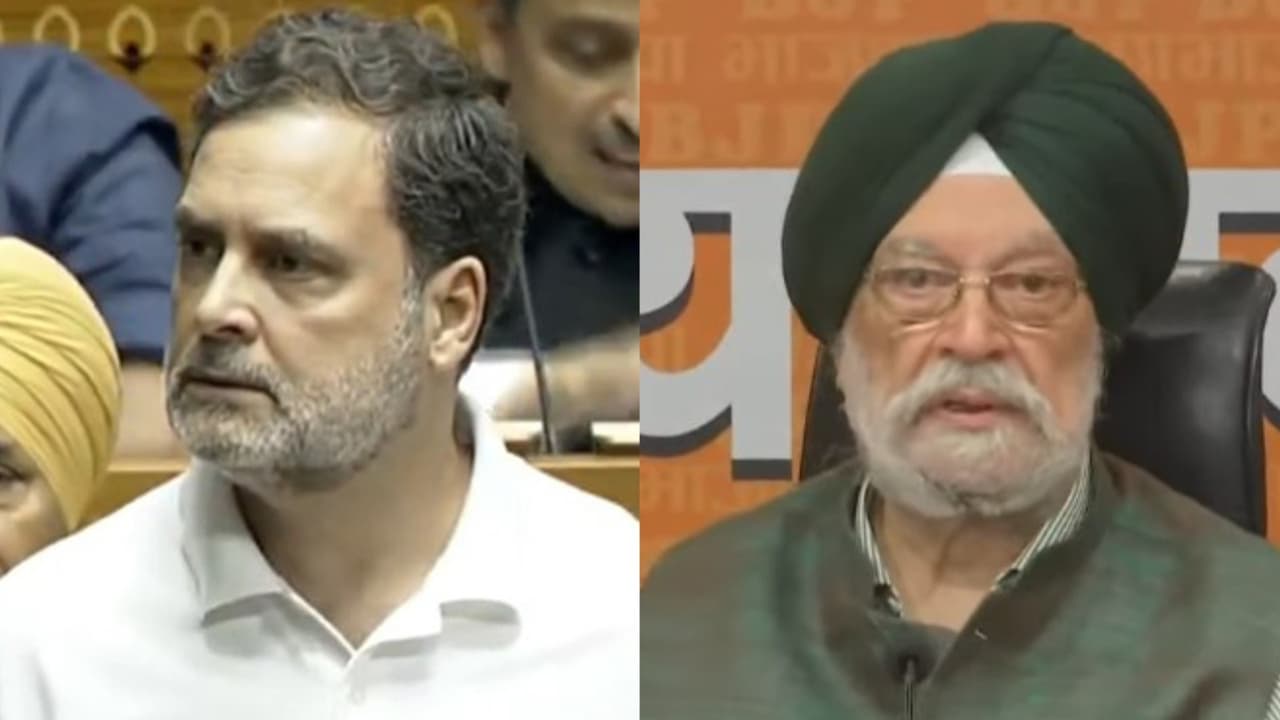
Rahul Gandhi Faces Substantive Motion Amid Budget Session Remarks Row
During the Parliament Budget Session 2026, BJP MP Nishikant Dubey moved a substantive motion against Congress leader Rahul Gandhi, seeking termination of his Lok Sabha membership. This action followed Gandhi's unauthenticated remarks on the India-US trade deal, the Adani group, and alleged links to anti-India forces, leading to significant political confrontation and calls for expunging parts of his speech.
Key Highlights
- BJP MP Nishikant Dubey moved substantive motion against Rahul Gandhi.
- Motion seeks termination of Gandhi's Lok Sabha membership.
- Allegations stem from Gandhi's remarks on India-US trade deal and Adani.
- Dubey accused Gandhi of misleading Parliament with unverified statements.
- Government sources clarified no privilege motion planned, but substantive motion moved.
- Parliamentary Affairs Minister initially indicated a privilege notice.
The Parliament Budget Session in February 2026 witnessed a significant political escalation as Bharatiya Janata Party (BJP) MP Nishikant Dubey initiated a 'substantive motion' against Congress leader Rahul Gandhi. This move, which aims to terminate Gandhi's membership from the Lok Sabha and debar him from contesting elections for life, stems from remarks made by Gandhi during the ongoing Budget Session.
The controversy ignited after Rahul Gandhi delivered a speech in the Lok Sabha, where he critically commented on the India-US interim trade deal. He controversially alleged that Prime Minister Narendra Modi had "sold the nation" through this agreement. Furthermore, Gandhi made several allegations connecting the government to the Adani group controversy and even referenced the 'Epstein files', asserting that such events reflected negatively on India's financial framework and national interests.
Union Parliamentary Affairs Minister Kiren Rijiju initially indicated that a privilege notice would be moved against Rahul Gandhi, accusing him of misleading the House and making baseless statements without providing prior notice or documentary evidence. Rijiju intervened during Gandhi's speech, demanding proof and urging him to substantiate his claims. Gandhi, in response, stated his readiness to authenticate his points and pledged to produce evidence promptly.
However, later developments clarified the nature of the parliamentary action. Government sources informed media outlets that there was no plan to move a traditional privilege motion against Rahul Gandhi. Instead, the focus was on seeking the removal of unauthenticated words and lines from his speech from the parliamentary records. BJP MP Nishikant Dubey, taking a more direct approach, submitted a 'substantive motion'. This motion is distinct from a privilege motion, as it directly calls for the termination of Gandhi's parliamentary membership based on his alleged actions.
In his communication to the Lok Sabha Speaker, Om Birla, Nishikant Dubey accused Rahul Gandhi of utilizing "unverified, incriminatory, and defamatory statements against PM Modi." Dubey's motion further alleged that Gandhi was engaging with "anti-India forces" and foreign foundations such as the Soros Foundation, Ford Foundation, and USAID, and that his travels to various countries like Thailand, Cambodia, Vietnam, and the US were linked to "anti-India activities." He contended that Gandhi's statements amounted to misleading the House due to the absence of authenticated documents to support his claims.
Parliamentary privileges are special rights and immunities granted to Members of Parliament to enable them to perform their duties effectively without undue interference. These privileges are governed by Rule 222 in Chapter 20 of the Lok Sabha Rule Book and Rule 187 in Chapter 16 of the Rajya Sabha Rulebook. A breach of privilege occurs when these rights are disregarded. The Speaker or Chairperson holds the initial power to scrutinize a privilege motion, deciding whether to address it directly or refer it to the Privileges Committee for investigation and recommendations.
A substantive motion, as moved by Dubey, typically involves a matter of public importance and can lead to a debate and a compulsory vote if accepted by the Speaker. This type of motion carries a graver implication, aiming for the termination of membership, as opposed to a privilege motion which primarily seeks to censure a minister or member for misleading the House or breaching parliamentary decorum.
The Budget Session 2026 commenced on January 31 and was scheduled to continue until April 6, with a recess period. The incident involving Rahul Gandhi's remarks and the subsequent motion occurred around Day 12 of the session, highlighting the intense political atmosphere and the deep divisions between the ruling party and the opposition. The ongoing confrontation has also seen Opposition MPs protesting against certain clauses in the Indo-US trade deal and concerns over not being allowed to speak on various issues, further escalating tensions within the Parliament.
The BJP's move against a prominent opposition figure like Rahul Gandhi signals a heightened level of political confrontation and underscores the seriousness with which the ruling party views his statements. The outcome of the substantive motion, if admitted and debated, could have significant ramifications for parliamentary precedents and the future political landscape in India.
Frequently Asked Questions
What is the difference between a Privilege Motion and a Substantive Motion?
A Privilege Motion is typically moved when a member or minister is believed to have breached the privileges of Parliament or its members, often by misleading the House or withholding facts. Its goal is generally to censure the individual. A Substantive Motion, however, is a more significant parliamentary device that can address matters of public importance and, in this context, has been used to seek the termination of a member's parliamentary membership, carrying graver implications.
Why was a motion moved against Rahul Gandhi?
A substantive motion was moved against Rahul Gandhi by BJP MP Nishikant Dubey due to Gandhi's remarks in the Lok Sabha during the Budget Session. These remarks included allegations that the Prime Minister had 'sold the nation' through the India-US trade deal, references to the Adani group, and claims of Gandhi's links to 'anti-India forces' and foreign foundations. Dubey accused Gandhi of misleading the House with unverified statements.
What are the potential consequences for Rahul Gandhi?
If the substantive motion moved by Nishikant Dubey is admitted and subsequently passed, it could lead to the termination of Rahul Gandhi's Lok Sabha membership and potentially bar him from contesting elections for life. The Speaker's decision and the Privileges Committee's recommendations (if referred) would be crucial steps in this process.
When did the Parliament Budget Session 2026 take place?
The Parliament Budget Session for 2026 commenced on January 31, 2026, and was scheduled to continue until April 6, 2026, with a recess period. The events concerning Rahul Gandhi's remarks and the subsequent motion occurred around Day 12 of this session, which falls around February 11-12, 2026.
What are parliamentary privileges in India?
Parliamentary privileges are special rights, immunities, and exemptions enjoyed by the Members of Parliament, individually and collectively, as well as by the Houses and their committees. These are enshrined in the Constitution (Article 105) and are essential for the effective functioning of Parliament. They grant members freedom of speech in Parliament and immunity from legal proceedings for their statements or votes in the House, among other things.