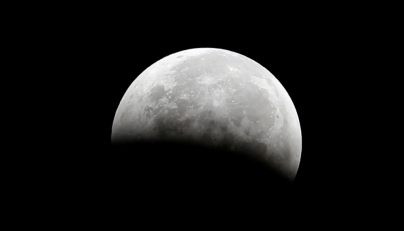
China's Chang'e-7 Mission Targets Moon's South Pole for Water Ice
China is preparing its ambitious Chang'e-7 lunar mission, aiming to explore the Moon's south pole for crucial water ice. Scheduled for launch in late 2026 or early 2027, this mission signifies a major step in China's comprehensive lunar exploration program and global space race for lunar resources.
Key Highlights
- Chang'e-7 mission to target Moon's south pole.
- Primary goal: search for water ice deposits.
- Mission includes orbiter, lander, rover, hopper, relay satellite.
- Launch anticipated in late 2026 or early 2027.
- South pole vital for future lunar bases and resource utilization.
- Part of China's broader plan for crewed landings and lunar station.
China's ambitious lunar exploration program is advancing with its upcoming Chang'e-7 mission, specifically designed to target the Moon's scientifically and strategically important south pole. The mission's primary objective is the search for and detection of water ice, a critical resource deemed essential for establishing future human settlements and facilitating deeper space exploration. This endeavor is a significant part of China's broader vision for lunar exploration, which includes plans for crewed landings and the establishment of an International Lunar Research Station (ILRS) in collaboration with other nations.
The Chang'e-7 mission is a sophisticated undertaking, comprising multiple components: an orbiter, a lander, a rover, a specially designed hopping probe, and a relay satellite. The hopping probe is particularly innovative, intended to explore Sun-deprived lunar shadow craters where water ice is most likely to be found. This multi-faceted approach aims to conduct comprehensive environmental and resource surveys of the lunar south pole, utilizing orbiting, landing, roving, and hopping capabilities. Advanced technologies, such as a deep-space "landmark image navigation" system for precision landing and active shock-absorption for the hopper, are being incorporated to tackle the challenging lunar terrain.
While the mission was initially slated for launch in the second half of 2026, potentially as early as late August, there have been reports of a possible delay into 2027 due to factors such as unfavorable weather conditions like Typhoon Narra at the Wenchang Space Launch Site. Despite potential minor delays, preparations are progressing steadily, with the Long March 5 Y14 rocket, assigned to launch Chang'e-7, having already arrived at the launch site for final assembly and testing.
The lunar south pole is of immense interest to space agencies worldwide, including NASA, due to the high probability of finding substantial reserves of water ice in its permanently shadowed regions. This water ice could be utilized for various purposes, including drinking water, oxygen production for life support, and even rocket fuel, making it invaluable for sustained human presence on the Moon and as a "springboard" for missions to Mars or beyond. China's focus on this region aligns with a global strategic shift towards lunar resource utilization.
From an Indian audience perspective, China's aggressive lunar ambitions carry significant relevance. India itself made history with its Chandrayaan-3 mission in August 2023, becoming the fourth country to successfully soft-land on the Moon and the first to do so near the lunar south pole. This achievement spurred discussions and some debate within the scientific community, with a top Chinese scientist, Ouyang Ziyuan, questioning the exact proximity of Chandrayaan-3's landing site to what he defined as the pole (88.5 to 90 degrees latitude). While such discussions highlight the competitive aspects of space exploration, there is also acknowledged potential for cooperation between India and China, particularly under mechanisms like BRICS and SCO, in areas such as data sharing and astronaut training.
The Chang'e-7 mission is a crucial precursor to China's more ambitious long-term plans, including a crewed lunar landing by 2030, utilizing the Mengzhou spacecraft and Lanyue lander. Following this, China aims to construct the International Lunar Research Station (ILRS) at the lunar south pole from 2031 onwards, in collaboration with partners such as Russia and other countries. The success of Chang'e-7 will not only expand humanity's understanding of the Moon's resources and geology but also solidify China's position as a leading power in space exploration, with profound implications for international collaboration and competition in the cosmos. The mission's focus on detailed surveys and in-situ resource utilization technologies demonstrates China's commitment to unlocking the Moon's potential for humanity's future in space.
Frequently Asked Questions
What is the primary goal of China's Chang'e-7 mission?
The Chang'e-7 mission's primary goal is to search for and detect water ice deposits at the Moon's south pole. This resource is considered crucial for future human presence and deep space exploration.
When is the Chang'e-7 mission expected to launch?
The Chang'e-7 mission is scheduled for launch in the second half of 2026, with some reports indicating a possible delay into 2027 due to factors like weather conditions.
Why is the Moon's south pole so important for lunar missions?
The Moon's south pole is considered highly important because its permanently shadowed regions are believed to harbor significant amounts of water ice. This water ice could be used for drinking, producing oxygen for life support, and generating rocket fuel, making it vital for establishing sustainable lunar bases and future space missions.
What components does the Chang'e-7 mission include?
The Chang'e-7 mission is a comprehensive endeavor that includes an orbiter, a lander, a rover, a unique hopping probe designed to explore shadowed craters, and a relay satellite to facilitate communication.
How does China's lunar exploration relate to India's recent Moon mission?
Both China and India have targeted the Moon's south pole, highlighting its strategic importance. India's Chandrayaan-3 made a historic landing near the lunar south pole in 2023. While there's a competitive aspect to these national endeavors, there's also potential for international cooperation in lunar exploration.