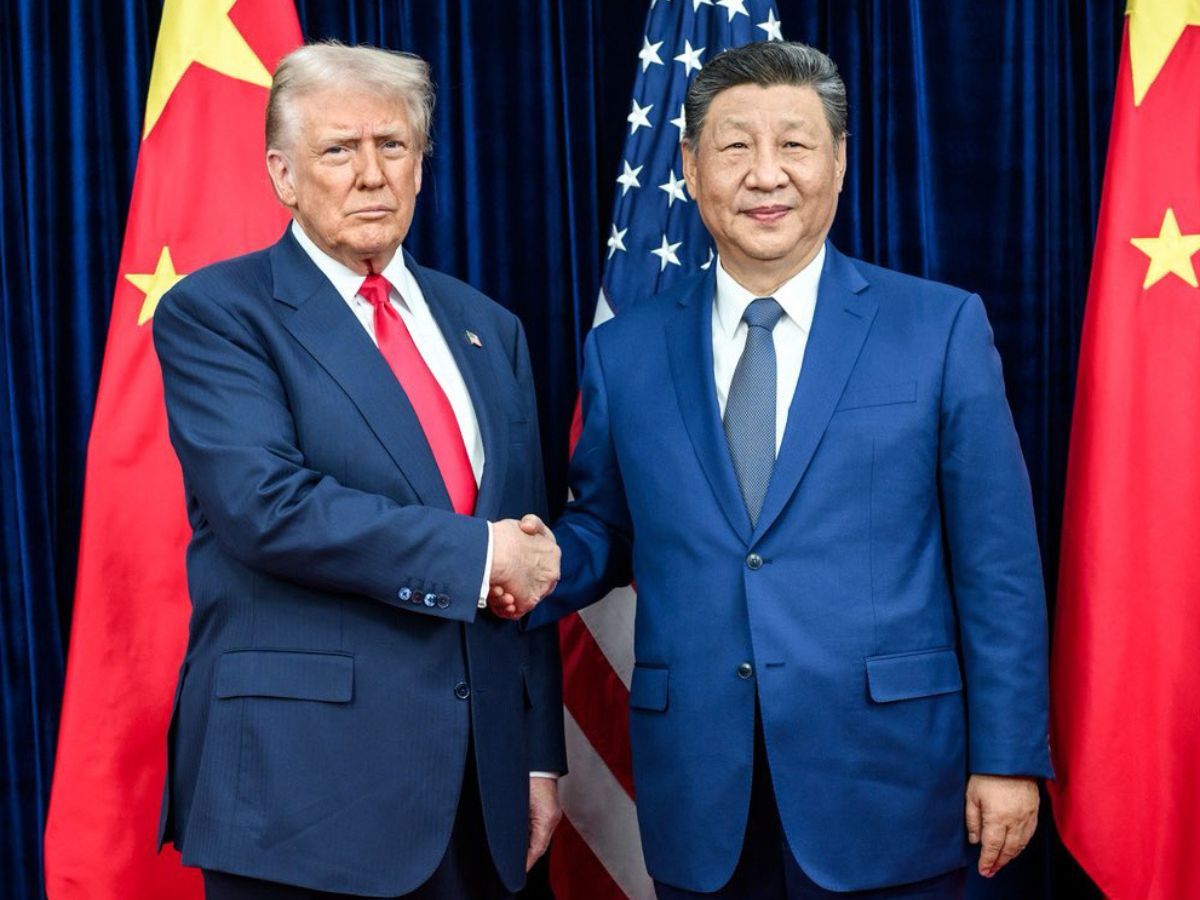
Xi Hosts Unpredictable Trump Amid Iran War, Global Tensions
Chinese President Xi Jinping is set to host an unpredictable U.S. President Donald Trump in Beijing this week, amidst an ongoing US-Iran war and heightened global tensions. The summit, delayed by the Middle East conflict, will address critical issues including the Iran crisis, trade, Taiwan, and technological competition.
Key Highlights
- President Trump visits China for summit May 13-15, 2026.
- Summit delayed by ongoing US-Iran war (Operation Epic Fury).
- Xi aims to project China as stable counterweight to US volatility.
- Key agenda: Iran conflict, trade, Taiwan, AI, rare earths.
- US-Iran war impacts global oil markets, Strait of Hormuz.
- Trump rejected Iran's latest peace proposal as 'unacceptable'.
Chinese President Xi Jinping is prepared to host U.S. President Donald Trump in Beijing this week for a high-stakes summit, scheduled from May 13 to May 15, 2026. The meeting takes place amidst a backdrop of escalating global tensions, most notably an active and impactful 'US war against Iran' which commenced on February 28, 2026. This summit marks Trump's first visit to China since 2017, underscoring the significantly altered geopolitical landscape under his second non-consecutive presidency, which began on January 20, 2025.
The Washington Post article, published on May 11, 2026, highlights Xi Jinping's perceived confidence in China's augmented power. Since Trump's initial presidency, China has solidified its global standing, with Xi securing an unprecedented third term in 2023 and heavily investing in advanced technologies like artificial intelligence, manufacturing, and green energy. This strategic growth has fostered a belief in Beijing that China is well-equipped to resist external pressures and project itself as a dependable alternative to perceived U.S. volatility on the world stage.
The ongoing US-Iran conflict, code-named 'Operation Epic Fury,' began on February 28, 2026, with joint US-Israeli military strikes across Iran. This war is a direct consequence of the breakdown in diplomatic efforts, including the U.S. withdrawal from the Joint Comprehensive Plan of Action (JCPOA) during Trump's first term in 2018, and subsequent failed negotiations in 2025 and 2026. The conflict has led to immense damage, thousands of casualties in Iran, Lebanon, Israel, and Gulf Arab states, and millions displaced. It has severely disrupted global energy markets, causing oil prices to spike and creating a stalemate in the critical Strait of Hormuz, a vital chokepoint for a fifth of global oil and gas flows.
Indeed, the highly anticipated Xi-Trump summit was originally planned for early April but was postponed due to the outbreak of the Iran war. The current diplomatic efforts between the U.S. and Iran are focused on a fragile ceasefire and peace proposals. However, President Trump recently rejected Iran's latest 14-point proposal, deeming it 'totally unacceptable' and casting doubt on the prospects of an imminent peace deal.
The agenda for the Beijing summit is extensive and complex. Beyond the immediate crisis in Iran, leaders are expected to tackle persistent trade imbalances and tariff disputes, the sensitive issue of Taiwan's sovereignty, advancements in artificial intelligence, and control over crucial rare earth minerals. U.S. officials anticipate that President Trump will exert pressure on Xi Jinping regarding China's stance on Iran and existing trade grievances. Notably, China, a major trading partner and the top buyer of Iranian oil in 2025, has publicly condemned US and Israeli strikes, urging an end to military operations, while privately advising its banks to suspend new loans to blacklisted Iranian refiners.
For an Indian audience, this news holds significant importance due to the global implications of the US-China dynamics and, more critically, the direct economic and energy security impacts of the Iran war. The Strait of Hormuz's disruption directly affects India's oil imports and trade routes. Furthermore, the broader US-China trade tensions, which have seen tariffs imposed on countries including India during Trump's second term, highlight the precarious nature of global commerce. The Hindustan Times has also reported on Iran's Foreign Minister potentially visiting India for a BRICS foreign ministers meeting, indicating India's direct engagement with the unfolding regional crisis.
In essence, the upcoming summit is not merely a bilateral meeting but a critical juncture in global geopolitics, where the intersection of a re-elected 'unpredictable' U.S. President, a 'confident' and powerful China, and an active Middle Eastern war will shape international relations, trade, and energy stability for years to come. The outcome will be closely watched by India and the rest of the world.
Frequently Asked Questions
When is the Xi-Trump summit taking place and what are its main objectives?
The summit between Chinese President Xi Jinping and U.S. President Donald Trump is scheduled for May 13-15, 2026, in Beijing. Key objectives include discussions on the ongoing US-Iran war, resolving trade disputes, addressing concerns over Taiwan, and navigating competition in artificial intelligence and rare earth minerals.
What is the status of the US-Iran war mentioned in the news?
The 'US war against Iran' or 'Iran war' began on February 28, 2026, with joint US-Israeli military operations. It has caused significant casualties and disruptions, particularly in the Strait of Hormuz. There's currently a fragile ceasefire and ongoing peace proposals, but President Trump has rejected Iran's latest offer as 'unacceptable.'
How does the ongoing Iran war impact global trade and the upcoming summit?
The Iran war has severely impacted global energy markets, leading to spikes in oil prices and disruptions in shipping through the Strait of Hormuz, a critical global chokepoint. The conflict notably caused the delay of the Xi-Trump summit and will be a central topic of discussion, with Trump expected to press Xi on China's role and influence regarding Iran.
What is China's stance in hosting an 'unpredictable Trump' amidst current global dynamics?
Chinese President Xi Jinping approaches the summit with confidence in China's enhanced power and global standing since Trump's last visit in 2017. Xi is keen to project China as a stable and reliable counterweight to perceived U.S. volatility, without illusions of achieving lasting deals, especially given China's growth in technology and global influence.
Why is this news particularly relevant for an audience in India?
This news is highly relevant to India due to the direct economic and energy security implications of the US-Iran war, which impacts global oil prices and crucial shipping routes like the Strait of Hormuz. India is also affected by broader US-China trade tensions, and the situation with Iran has diplomatic relevance, as seen by the potential visit of Iran's Foreign Minister to India.