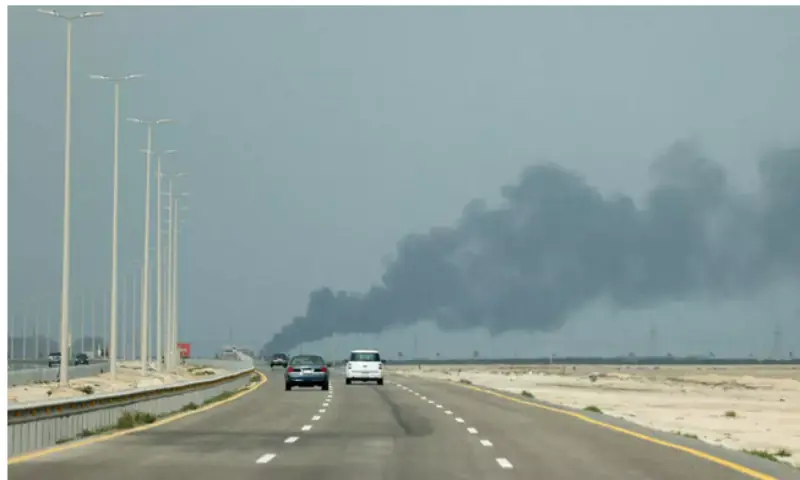
Iran's low-cost drones inflict Middle East havoc, straining air defenses
Iran is employing its "cheap drones" in a strategy of sustained pressure across the Middle East, aiming to deplete air defense inventories and destabilize the region. These drones, particularly the Shahed series, are significantly less expensive than traditional missiles and can overwhelm defenses through sheer numbers and saturation attacks. The tactic is forcing a costly response from Gulf states and allies, highlighting a shift towards attrition warfare.
Key Highlights
- Iran's drone strategy focuses on sustained pressure, not single attacks.
- Shahed drones are significantly cheaper than missiles, creating an economic imbalance.
- The tactic aims to exhaust air defense systems and deplete interceptor stockpiles.
- The widespread use of drones impacts regional stability and strains defense budgets.
- The US is also deploying similar low-cost drones based on Iranian designs.
- India is discussing its own air defense preparedness in light of these developments.
Iran has adopted a strategy of sustained pressure across the Middle East, leveraging its arsenal of "cheap drones" to inflict widespread damage and challenge regional air defenses. This shift from concentrated attacks to a more attritional approach utilizes drones, primarily the Shahed series, which are estimated to cost between $20,000 and $50,000 each. This makes them a fraction of the cost of traditional missiles, which can run into millions of dollars. The core of this strategy is to overwhelm sophisticated and expensive air defense systems through sheer volume and saturation attacks, forcing defenders to expend precious and costly interceptors.
The impact of this strategy is being felt across multiple nations. Reports indicate that Iran has unleashed hundreds of drones and missiles in waves, targeting Israel and US allies in the Gulf states, including the UAE, Bahrain, Kuwait, and Qatar, with attacks also extending to Saudi Arabia, Oman, and even a British Royal Air Force base in Akrotiri, Cyprus. The drones are capable of flying up to 2,000 km, making their reach extensive. While air defense systems have had success in intercepting a high percentage of these attacks, the economic cost is substantial. Analysts estimate that for every dollar Iran spends on a drone, the UAE spends between $20 and $28 to intercept it, creating a significant financial attrition strategy. This dynamic risks depleting advanced interceptor stockpiles, such as Patriot missiles, which are intended for more significant threats.
The proliferation and effective use of these drones have been observed in other conflicts as well. Iran's Shahed drones gained notoriety for their use by Russia in the war in Ukraine, where Russia later localized production. This success has prompted the US military to develop and deploy its own versions of these low-cost, one-way attack drones, modeled after Iranian designs, effectively turning Iran's own technology against it. These US-made drones, like the LUCAS system, are significantly cheaper than traditional missiles, such as the Tomahawk, costing around $35,000 compared to $1.3 million or more.
The implications of Iran's drone strategy extend beyond military engagements. The attacks have disrupted regional stability, impacted financial markets, and raised concerns about the security of critical infrastructure, including oil facilities. For India, this escalating conflict and the demonstrated effectiveness of drone warfare have prompted discussions within the country about its own air defense preparedness. Media reports highlight the need to augment capabilities and bridge existing gaps, drawing lessons from the successful defenses observed in the Iran-Israel conflict, particularly concerning India's vast geographical expanse.
In summary, Iran's strategic deployment of inexpensive Shahed drones represents a significant development in modern asymmetric warfare. This approach aims to achieve strategic objectives through economic attrition and saturation, challenging the conventional superiority of advanced air defense systems and forcing a re-evaluation of defense strategies across the Middle East and potentially beyond. The cost-effectiveness and mass production capabilities of these drones are fundamentally altering the dynamics of regional conflicts.
Frequently Asked Questions
What are Iran's 'cheap drones'?
Iran's 'cheap drones' primarily refer to the Shahed series of unmanned aerial vehicles (UAVs), often called "kamikaze" or "suicide" drones. They are characterized by their relatively low production cost, estimated between $20,000 and $50,000, making them significantly more affordable than traditional missiles.
How are these drones causing 'havoc' in the Middle East?
The drones are causing 'havoc' by being deployed in large numbers and waves, overwhelming sophisticated and expensive air defense systems. This saturation tactic aims to exhaust costly interceptors and deplete defense resources, while also causing damage to targets.
What is Iran's strategic objective in using these drones?
Iran's strategic objective is to implement a strategy of sustained pressure and attrition warfare. By using low-cost drones, Iran aims to drain the expensive interceptor stockpiles of its adversaries and destabilize the region, turning the conflict into a prolonged endurance test rather than a series of single retaliatory events.
How is the US responding to Iran's drone strategy?
The US is responding by deploying its own versions of low-cost, one-way attack drones, modeled after Iranian designs. These drones, such as the LUCAS system, are significantly cheaper than traditional US missiles and are being used in combat for the first time in the region.