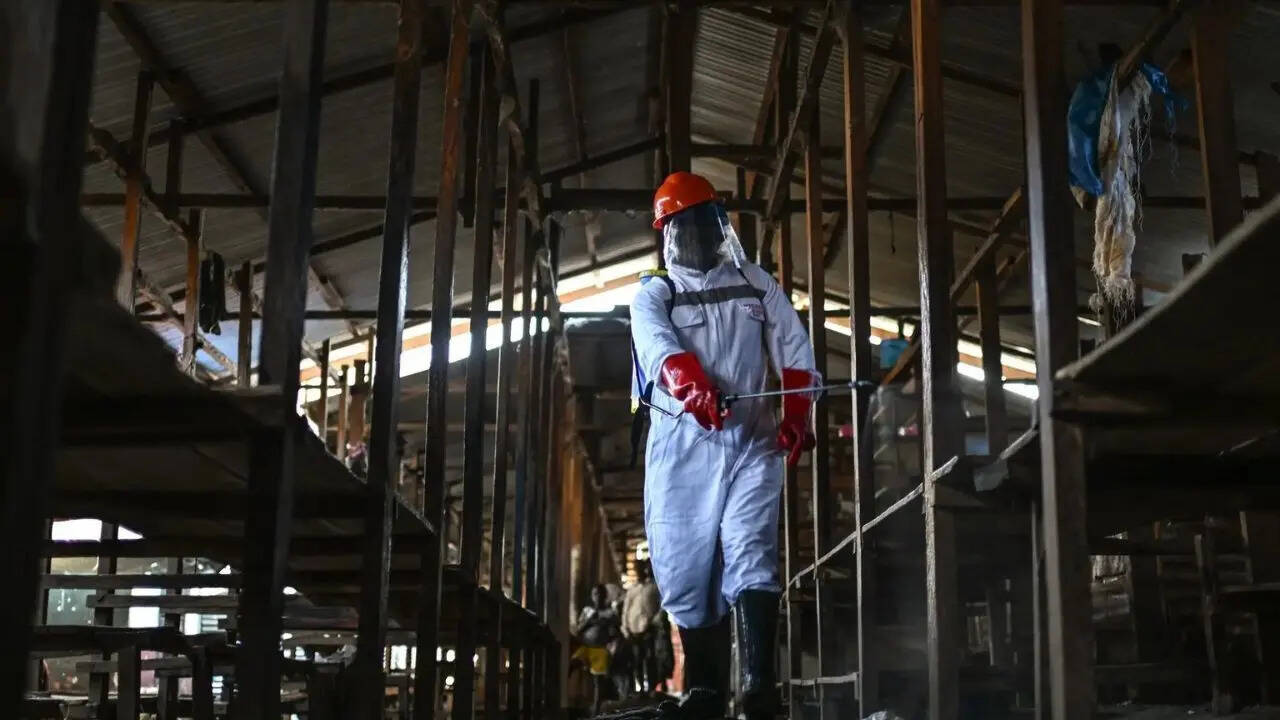
WHO Chief Visits Congo Amid Strained Ebola Outbreak Response
The WHO Director-General is in the Democratic Republic of Congo addressing a rapidly escalating Ebola outbreak. The response is reportedly strained by insecurity and community distrust, hindering containment efforts of the Bundibugyo strain.
Key Highlights
- WHO Director-General Tedros Adhanom Ghebreyesus travels to DRC.
- Ebola outbreak in DRC, 17th since 1976, declared public health emergency.
- Bundibugyo strain lacks vaccine or specific treatment.
- Response efforts hampered by insecurity and community resistance.
- Outbreak spread faster than the international response.
- WHO scaling up testing and called for immediate ceasefire.
The head of the World Health Organization (WHO), Dr. Tedros Adhanom Ghebreyesus, is currently in the Democratic Republic of Congo (DRC) to address a rapidly escalating Ebola outbreak that has strained global response efforts. The marketscreener.com article, published on May 28, 2026, accurately reports on this critical development, which has been corroborated by multiple credible sources including Reuters, the WHO itself, and the CDC.
The current Ebola epidemic, identified in May 2026, marks the DRC's 17th outbreak since the virus was first discovered in 1976 and follows just five months after the end of the previous one. It primarily affects the Ituri Province of the DRC, but confirmed cases have also been reported in Uganda's capital, Kampala, and other Congolese provinces like North Kivu and South Kivu, highlighting the risk of regional spread. On May 16, 2026, the WHO declared this outbreak a Public Health Emergency of International Concern (PHEIC), underscoring its severe public health implications globally.
A significant challenge in this particular outbreak is the involvement of the Bundibugyo ebolavirus strain, for which there is currently no approved vaccine or specific treatment, unlike the more common Zaire ebolavirus. This absence of targeted medical countermeasures complicates containment strategies, which heavily rely on identifying and isolating potential cases, rigorous contact tracing, and robust infection prevention and control measures.
The response to this outbreak has been described as being 'weeks, if not months behind the curve' and 'outpacing the world's response'. This delay is attributed to a confluence of factors. Eastern DRC is grappling with a severe humanitarian crisis, characterized by ongoing armed conflict and widespread insecurity. This environment makes it exceedingly difficult for health workers and aid organizations to access affected populations and implement critical interventions safely. Dr. Tedros himself has explicitly called for an immediate ceasefire in eastern DRC, stating that 'We cannot build community trust or isolate the sick while bombs are falling,' emphasizing the direct link between conflict and the exacerbation of the health crisis.
Compounding the security challenges is widespread community denial of the disease and distrust towards external health interventions, leading to attacks on health facilities and personnel. Furthermore, operational hurdles, such as restrictions on flights in and out of Bunia, the capital of Ituri province, have hampered the timely delivery of vital medical supplies and personnel. The United Nations peacekeeping mission in Congo (MONUSCO) has been involved in transporting medical cargo, but challenges persist.
As of May 27, 2026, the situation remains dire, with 1,205 suspected and confirmed cases and at least 264 deaths reported, though health experts warn that the true figures are likely much higher due to the difficulties in surveillance and reporting in conflict-affected, remote, and densely populated areas. In response, the WHO is intensifying its support to the governments of DRC and Uganda, scaling up testing capacities in partnership with the DRC's national medical research organization, strengthening surveillance, contact tracing, clinical preparedness, and community engagement. This collaborative effort aims to improve the laboratory network, facilitate real-time data collection, and ensure rapid identification and management of confirmed cases.
The current situation represents a 'catastrophic collision of disease and conflict,' threatening to destabilize the region further and posing a continuous global health threat, particularly with the movement of displaced populations. The focus remains on engaging communities to build trust and implementing comprehensive strategies to bring the outbreak under control despite the formidable obstacles.
Frequently Asked Questions
What is the current status of the Ebola outbreak in the Democratic Republic of Congo?
As of late May 2026, the Democratic Republic of Congo (DRC) is experiencing its 17th Ebola outbreak, declared a Public Health Emergency of International Concern (PHEIC) by the WHO. The outbreak, caused by the Bundibugyo strain of the virus, has led to over a thousand suspected cases and hundreds of deaths, with fears the true figures are higher due to reporting challenges in conflict zones.
Why is the current Ebola outbreak in DRC particularly concerning?
This outbreak is especially concerning because it is caused by the Bundibugyo ebolavirus strain, for which there is currently no approved vaccine or specific treatment. Furthermore, the response is severely hampered by ongoing armed conflict, insecurity, community distrust, and attacks on health facilities, preventing effective containment efforts.
What is the WHO doing to address the Ebola crisis in Congo?
The WHO Director-General, Dr. Tedros Adhanom Ghebreyesus, is in the DRC to oversee the response. The WHO has declared a PHEIC, released emergency funds, and is actively scaling up testing capacities in partnership with local organizations, strengthening surveillance, contact tracing, clinical preparedness, and community engagement. Dr. Tedros has also called for an immediate ceasefire to allow aid efforts to proceed effectively.
How is the conflict in eastern DRC impacting the Ebola response?
The ongoing armed conflict in eastern DRC is severely impeding the Ebola response. Insecurity and violence prevent health workers from safely accessing affected areas, conducting contact tracing, and delivering medical supplies. Community distrust, fueled by the conflict, also leads to attacks on healthcare facilities, further exacerbating the crisis.
Has this Ebola outbreak spread to other countries?
Yes, while primarily centered in the Democratic Republic of Congo, cases related to this outbreak have also been confirmed in Uganda's capital, Kampala. The WHO has declared it a Public Health Emergency of International Concern due to its potential for international spread.