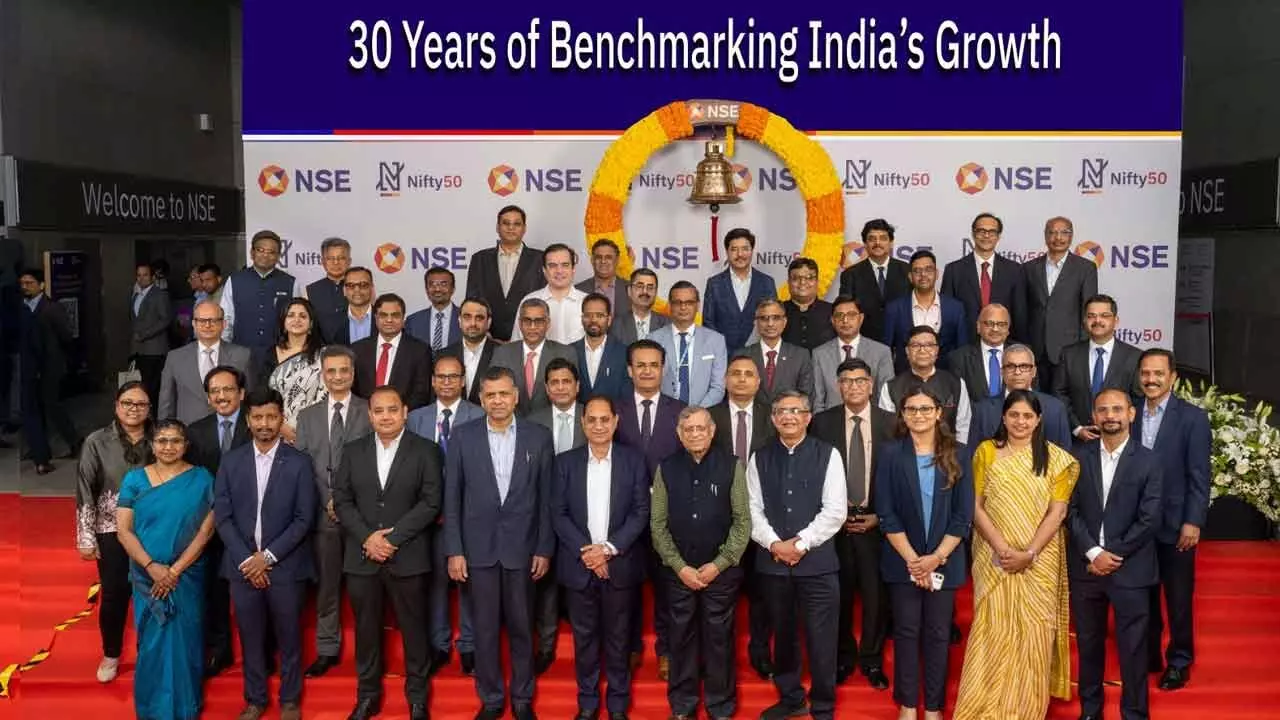
NSE Advances Mega IPO with Appointment of 20 Merchant Bankers
The National Stock Exchange (NSE) has moved closer to its long-awaited initial public offering (IPO) by shortlisting approximately 20 investment banks. This significant development follows regulatory approval from SEBI in January 2026, ending a decade-long delay, and positions the IPO as a potential $2.5 billion offer-for-sale by existing shareholders.
Key Highlights
- NSE shortlists around 20 investment banks for its upcoming IPO.
- SEBI granted No-Objection Certificate in January 2026 after a decade of delays.
- The IPO will primarily be an offer-for-sale (OFS) by existing shareholders.
- Rothschild & Co. is advising on the selection process for intermediaries.
- The mega IPO could potentially raise approximately $2.5 billion (₹23,000 crore).
- Draft Red Herring Prospectus (DRHP) expected to be filed around April 2026.
The National Stock Exchange of India (NSE), the country's largest stock exchange and the world's busiest derivatives market by number of contracts traded, has taken significant strides towards its long-awaited initial public offering (IPO). The exchange has reportedly shortlisted around 20 leading investment banks and engaged several law firms to manage this mega issue, marking a crucial milestone after years of regulatory and legal challenges.
This renewed momentum for the NSE IPO comes after the Securities and Exchange Board of India (SEBI) issued the much-anticipated no-objection certificate (NOC) in January 2026, effectively ending a decade-long regulatory impasse that had stalled the listing. Following this clearance, the NSE board approved the IPO plan and constituted a six-member committee, led by Tablesh Pandey, to oversee the entire process. This committee also includes public interest directors Srinivas Injeti, Prof. Mamata Biswal, Abhilasha Kumari, Prof. G Sivakumar, and NSE's MD and CEO, Ashishkumar Chauhan.
As part of its preparations, the NSE issued a Request for Proposals (RFP) to investment banks, inviting them to pitch for various advisory roles, including book-running lead managers. Prominent global and domestic financial institutions such as JPMorgan Chase, Kotak Mahindra Capital Company, JM Financial, Axis Capital, and ICICI Securities are among those expected to be involved in the bidding process. The selection of these advisors is anticipated to be finalized by mid-March 2026, with the exchange aiming to file its Draft Red Herring Prospectus (DRHP) with SEBI around April 2026.
To ensure a fair, structured, and transparent selection process for its IPO intermediaries and advisors, NSE appointed Rothschild & Co India as an independent process advisor. Rothschild's role has been pivotal in guiding the selection of lead bankers, legal counsel, and other crucial intermediaries, which concluded around March 12, 2026.
The upcoming IPO is projected to be an offer-for-sale (OFS) by existing shareholders, meaning the exchange itself will not issue new shares or raise fresh capital. Instead, a portion of the stakes held by current investors will be diluted. Reports suggest that existing shareholders are expected to offload approximately 4% to 4.5% of the exchange's total equity.
In the unlisted market, the National Stock Exchange is currently valued at a substantial ₹5 lakh crore. Based on these unlisted market prices, the IPO could potentially raise approximately $2.5 billion, or over ₹23,000 crore. This valuation underscores the significant interest and strategic importance of NSE within India's capital markets, making it one of the largest potential listings in the country's history.
The NSE's shareholder base includes several major institutional investors. Life Insurance Corporation of India (LIC) remains the single largest investor, holding roughly a 10.72% stake. Other notable shareholders include Aranda Investments Mauritius Pte (4.54%), Stock Holding Corporation of India Ltd (4.44%), SBI Capital Markets Ltd (4.33%), and Veracity Investments Ltd (3.93%). While the exact sellers participating in the OFS are yet to be definitively ascertained, these prominent investors are expected to provide liquidity through the public listing.
This development is significant for India's financial ecosystem, providing an exit route for long-term investors and potentially enhancing transparency and corporate governance through public scrutiny. Market participants anticipate strong investor interest due to NSE's dominant market share, robust cash flows, and its critical infrastructure status within the Indian economy. The timing of the IPO will, however, be influenced by prevailing market conditions, further regulatory clearances, and overall investor sentiment. The successful listing of NSE could also pave the way for other market infrastructure institutions to explore public listings, thereby deepening retail and institutional participation in the Indian capital markets.
Frequently Asked Questions
What is the current status of the National Stock Exchange (NSE) IPO?
The NSE is actively progressing with its long-awaited IPO. It has shortlisted around 20 investment banks and appointed Rothschild & Co. as an independent advisor. The move follows regulatory approval from SEBI in January 2026.
How much money is the NSE IPO expected to raise?
Based on current valuations in the unlisted market, the NSE IPO is expected to be a 'mega issue' that could raise approximately $2.5 billion (over ₹23,000 crore).
Will the NSE IPO involve new share issuance?
No, the NSE IPO is primarily structured as an 'Offer For Sale' (OFS). This means existing shareholders will divest a portion of their stakes, and the exchange itself will not raise fresh capital through the issue.
Why was the NSE IPO delayed for so long?
The NSE IPO faced delays for nearly a decade due to various regulatory, legal, and governance challenges. The recent grant of a no-objection certificate by SEBI in January 2026 has cleared the path for its public listing.
When is the NSE expected to file its IPO documents?
The NSE is anticipated to file its Draft Red Herring Prospectus (DRHP) with SEBI around April 2026, with the selection of lead bankers expected to be finalized by mid-March 2026.