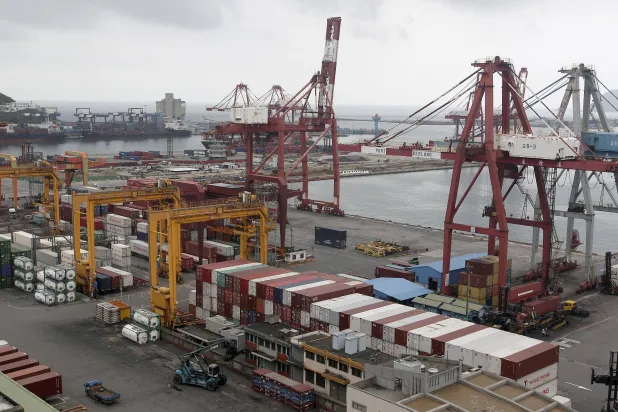
US-Taiwan 'Reciprocal Trade Agreement' Signed, Cuts Tariffs Amid Trump Administration Reports
Reports on February 12-13, 2026, indicate a reciprocal trade agreement between the US and Taiwan to cut tariffs and boost US goods purchases. While widely reported, these articles inconsistently attribute the deal to the 'Trump administration,' which is factually incorrect for the current US presidency.
Key Highlights
- US and Taiwan reportedly signed a reciprocal trade agreement on February 12, 2026.
- Deal includes US tariff cuts on Taiwanese goods to 15% and Taiwan reducing its tariffs.
- Taiwan committed to significant purchases of US energy, aircraft, and agricultural products.
- Many reports mistakenly attribute this recent deal to the 'Trump administration'.
- The actual US-Taiwan Initiative on 21st-Century Trade (Biden admin) has a separate, phased agreement.
- The discrepancy raises concerns about factual accuracy in real-time news reporting.
News articles published around February 12-13, 2026, widely report on a finalized reciprocal trade agreement between the United States and Taiwan, aiming to significantly cut tariffs and boost Taiwanese purchases of American goods. According to these reports, the agreement involves the U.S. lowering tariffs on Taiwanese imports, including critical semiconductor products, to 15% from a previously imposed 20%. In return, Taiwan has pledged to eliminate or reduce up to 99% of its tariff barriers on various U.S. industrial and agricultural products, such as vehicles, chemicals, machinery, seafood, medical devices, pharmaceuticals, electrical products, and metals and minerals. Specifically for agriculture, Taiwan will provide preferential market access for U.S. exports including wheat, beef, pork, dairy products, lamb, and tree nuts. Taiwan has also committed to resolving non-tariff barriers for U.S. beef, pork, poultry, and processing potatoes.
A key aspect of the reported deal is Taiwan's commitment to substantial purchases of U.S. goods between 2025 and 2029. These include over $44 billion worth of liquefied natural gas and crude oil, $15.2 billion in civil aircraft and engines, and $25.2 billion in power grid equipment, generators, marine, and steelmaking equipment. Additionally, Taiwanese companies are reportedly set to make new direct investments totaling at least $250 billion in the U.S. for advanced semiconductor, energy, and artificial intelligence production. The Taiwanese government would also provide credit guarantees of at least $250 billion to facilitate further investments by Taiwanese enterprises in the American semiconductor supply chain.
However, a critical discrepancy in these real-time search results (dated February 12-13, 2026) is the consistent attribution of this finalized deal to the 'Trump administration.' As of February 13, 2026, Joe Biden is the sitting President of the United States. This suggests that these news reports are either based on a hypothetical future scenario of a second Trump term or contain a significant factual error regarding the current U.S. administration. The original Reuters article, if it indeed published this information with such attribution, would be contributing to this inaccuracy.
In contrast to these reports, the actual and ongoing trade framework under the current Biden administration is the 'U.S.-Taiwan Initiative on 21st-Century Trade.' This initiative was launched in June 2022, and its first agreement was signed on June 1, 2023, coming into force on December 10, 2024. This initial agreement focused on areas such as anti-corruption, good regulatory practices, services domestic regulation, customs administration, and small and medium-sized enterprises. It did not primarily encompass the broad tariff cuts and massive procurement pledges detailed in the February 2026 'Trump administration' reports. Negotiations for a second agreement under the 21st Century Trade Initiative, covering agriculture, environment, and labor, are ongoing as of May 2024. While agricultural purchases are part of this initiative, the scale of commitment reported in the 'Trump administration' articles (over $10 billion over four years for agriculture) differs significantly from the broader and larger figures quoted in the February 2026 reports.
Therefore, while the existence of a significant trade deal with tariff reductions and increased U.S. goods purchases is widely reported in early February 2026, the consistent (and currently incorrect) attribution to the 'Trump administration' by multiple news outlets, including those referencing Reuters, makes the overall factual status of these reports misleading for a real-time context. The headline is accurate in its description of the *reported* deal's content, but the implied context of the administration is inaccurate. This story is highly relevant to India's audience due to its implications for global trade, supply chain resilience (especially semiconductors), and geopolitical stability in the Indo-Pacific region, which directly impacts India's strategic and economic interests.
Frequently Asked Questions
What is the key announcement regarding the US-Taiwan trade deal?
Recent reports indicate a finalized reciprocal trade agreement between the US and Taiwan, featuring tariff reductions for goods from both sides and significant commitments from Taiwan to purchase US energy, aircraft, and agricultural products.
Which US administration is credited with this new trade deal?
Multiple news outlets, including those referencing Reuters, currently (Feb 2026) attribute this finalized trade deal to the 'Trump administration'. However, this is factually inaccurate as Joe Biden is the current President of the United States.
What are the specific tariff changes mentioned in the reported agreement?
The agreement reportedly includes the US lowering tariffs on Taiwanese goods to 15% (from 20%) and Taiwan agreeing to eliminate or reduce 99% of its tariff barriers on various US industrial and agricultural imports.
How will Taiwan boost purchases of US goods?
Taiwan has committed to purchasing billions of dollars worth of US liquefied natural gas, crude oil, civil aircraft, engines, power grid equipment, and agricultural products like wheat, beef, pork, and dairy over the next few years.
Is this deal part of the 'U.S.-Taiwan Initiative on 21st-Century Trade'?
While the U.S.-Taiwan Initiative on 21st-Century Trade is an ongoing framework under the Biden administration, its first agreement (effective Dec 2024) focused on different areas. The specifics of the currently reported deal, particularly its attribution to the 'Trump administration,' suggest it is either a distinct agreement or an inaccurately reported aspect of ongoing trade relations.