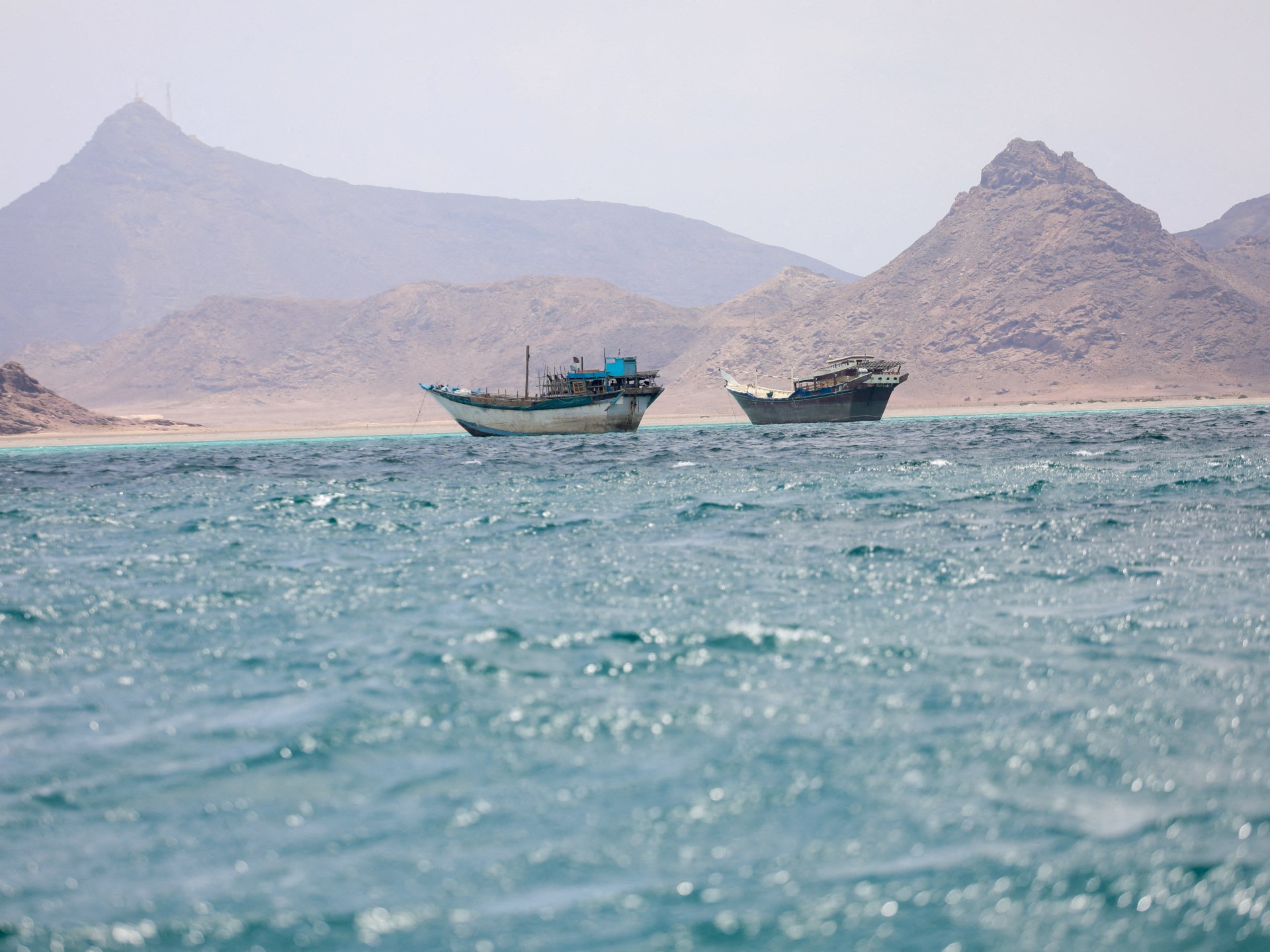
Red Sea Shipping Dips Amid Houthi Attacks on Saudi Arabia
Shipping traffic through the Bab el-Mandeb Strait has significantly decreased following Houthi attacks on Saudi oil installations. Data shows the lowest daily transit levels in months, prompting concerns about global supply chains and energy markets. The disruptions are part of an escalating conflict involving Yemen's Houthis, Saudi Arabia, and broader regional tensions.
Key Highlights
- Houthi attacks on Saudi oil sites have reduced Red Sea shipping.
- Bab el-Mandeb Strait traffic hit multi-month low on Sunday.
- Global supply chains and energy markets face increased risk.
- Yemen's Houthis are escalating their actions against shipping.
- Regional tensions are intensifying with Saudi Arabia and Iran.
- India's trade with Europe is significantly impacted by rerouting.
Shipping traffic through the vital Bab el-Mandeb Strait, a key chokepoint connecting the Red Sea to the Gulf of Aden, has seen a significant decline following recent attacks by Yemen's Houthi rebels on Saudi oil installations. Data from Kpler indicated that only eleven commodity vessels transited the strait on Sunday, July 26, 2026, marking the lowest daily traffic recorded in several months [3, 4, 5, 9, 11, 13]. These attacks, claimed by the Houthis and targeting facilities in cities like Jizan and Yanbu, have escalated regional tensions and raised concerns about the security of global maritime trade and energy supplies [4, 13].
The disruptions come amid a complex geopolitical landscape, with the Houthis, aligned with Iran, expanding their actions against shipping in response to the ongoing Iran war and regional conflicts [3, 4, 9, 17, 23, 29]. The Houthi attacks aim to disrupt Saudi exports and exert pressure on the United States and its allies [4, 9, 20, 21, 22]. In response to the escalating threat, Saudi Arabia is reportedly seeking to build an international coalition to protect shipping in the Red Sea from Houthi attacks [24, 25].
The impact of these disruptions extends beyond the immediate region, affecting global supply chains and energy markets. The rerouting of vessels around the Cape of Good Hope is leading to longer transit times, increased freight costs, and higher insurance premiums [6, 10, 19]. For India, which relies heavily on the Red Sea for approximately 80% of its exports to Europe, these disruptions pose significant challenges. Trade with Europe, the U.S. East Coast, and North Africa is experiencing extended cycles, with delays of 14-20 days and a substantial increase in freight costs, which could lead to higher prices for imported goods [6, 10, 15]. The global trade gauge has already indicated a decline, reflecting the turbulent nature of international trade [6].
Furthermore, the Houthi rebels are reportedly considering imposing fees on commercial ships transiting the southern Red Sea. This potential move, discussed with Iranian counterparts, aims to normalize the practice of levying tolls on international waterways and increase pressure on the United States [21, 22, 26, 28]. While China is reportedly negotiating fee-exemptions, Western diplomats have expressed concerns about the capacity of international forces to police the Red Sea [21, 26].
The security situation in the Red Sea has been a growing concern since late 2023, with Houthi attacks intensifying and leading to significant declines in port calls and Suez Canal traffic [7]. The strategic importance of the Red Sea cannot be overstated, as it serves as a critical conduit for approximately 12% to 15% of global trade and a significant portion of the world's oil and LNG supply [18]. The current situation highlights the fragility of these vital trade routes and the potential for regional instability to have far-reaching global economic consequences.
Reuters reported these developments on July 27, 2026 [4, 5, 11, 13, 14]. The news is of high importance due to its potential impact on global trade, energy prices, and geopolitical stability. The urgency is also high given the immediate threat to shipping and the potential for further escalation. The news is global in scope, affecting multiple countries and international trade routes. The primary news category is Geopolitics and Economy, with subcategories related to Shipping and Middle East conflicts. The events are current and trending.
Frequently Asked Questions
What led to the slowdown in Red Sea shipping?
The slowdown in Red Sea shipping is a direct result of recent attacks by Yemen's Houthi rebels on Saudi oil installations. These attacks have created security concerns, prompting shipowners to reduce traffic through the Bab el-Mandeb Strait, a critical maritime chokepoint.
What is the significance of the Bab el-Mandeb Strait?
The Bab el-Mandeb Strait is a narrow maritime passage that connects the Red Sea to the Gulf of Aden. It is a crucial chokepoint for global trade, with approximately 12% to 15% of global trade passing through it, making it vital for the movement of goods and energy resources between Asia and Europe.
How does the Red Sea crisis impact India?
India is significantly impacted as about 80% of its exports to Europe pass through the Red Sea. The disruptions lead to rerouting of ships, causing delays of 14-20 days, increased freight and insurance costs, which can raise the prices of imported goods and affect India's export competitiveness.