Iran Open to Nuclear Deal Compromises if US Lifts Sanctions
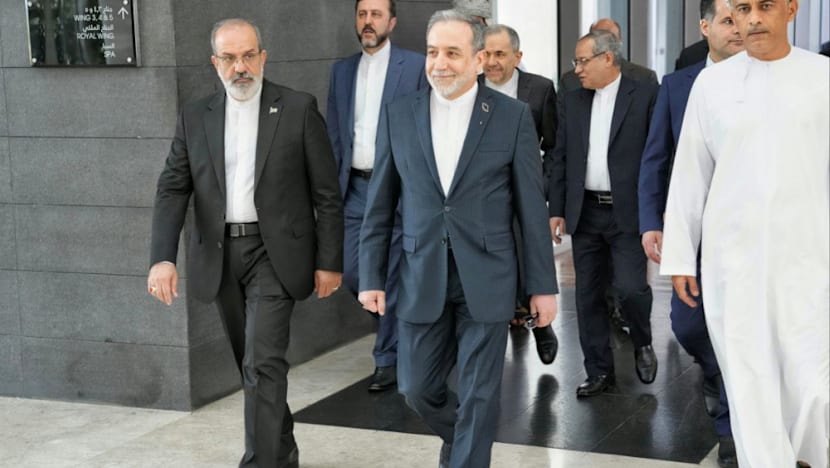
Iran's Deputy Foreign Minister Majid Takht-Ravanchi stated that Tehran is prepared to make compromises on a nuclear deal with the United States, provided Washington is willing to discuss lifting sanctions. This statement, made in a recent BBC interview, comes ahead of a second round of nuclear talks scheduled in Geneva.
Key Highlights
- Iran's Deputy Foreign Minister confirmed readiness for nuclear deal compromises.
- Compromises contingent on US willingness to discuss lifting sanctions.
- Iran refuses to link nuclear talks to its ballistic missile program.
- Second round of US-Iran nuclear talks set for Geneva this Tuesday.
- Initial talks in Oman described as 'more or less positive'.
- US envoys expected to participate, with Omani mediation in talks.
Iran has publicly declared its readiness to consider compromises aimed at reaching a nuclear deal with the United States, on the condition that Washington demonstrates a willingness to discuss the lifting of sanctions. This significant development was announced by Iran's Deputy Foreign Minister Majid Takht-Ravanchi during an interview with the BBC, which was broadcast on Sunday, February 15, 2026. The statement underlines a critical juncture in the long-standing diplomatic efforts to revive a nuclear agreement between the two nations.
According to Takht-Ravanchi, Iran is prepared to engage in discussions regarding limitations on its nuclear program. However, he emphatically reiterated Tehran's firm stance that any such negotiations must not be linked to other contentious issues, most notably its ballistic missile program. This insistence on decoupling the nuclear issue from its missile capabilities remains a significant red line for Iran, a point it has repeatedly asserted throughout past diplomatic exchanges. The Deputy Foreign Minister underscored that the 'ball is in America's court' to demonstrate its sincerity and commitment to forging a deal.
The announcement comes ahead of a crucial second round of nuclear talks scheduled to take place in Geneva on Tuesday, February 17, 2026. These forthcoming discussions follow initial engagements between Tehran and Washington, which were mediated by Omani representatives in Muscat earlier in February. Takht-Ravanchi described the initial talks in Oman as having proceeded 'more or less in a positive direction,' though he cautioned that it was 'too early to judge' their ultimate outcome.
Further demonstrating Iran's perceived flexibility, its atomic chief reportedly indicated a willingness to dilute the country's highly enriched uranium stockpile, provided that all financial sanctions imposed on Iran are lifted. However, Takht-Ravanchi also stressed that Iran would not agree to a 'zero enrichment' policy, which was a significant point of contention in previous negotiations and is viewed by the United States as a potential pathway to nuclear weapons development. Iran consistently denies any ambition to acquire nuclear weapons.
The US delegation for the upcoming Geneva talks is expected to include special envoys Steve Witkoff and Jared Kushner, with Oman continuing its mediating role in the indirect contacts between the two nations. The context of these diplomatic overtures is shadowed by ongoing tensions. US Secretary of State Marco Rubio, under President Donald Trump's administration, has reiterated Washington's firm stance that Iran will 'never be allowed to have a nuclear weapon.' Meanwhile, President Trump himself has issued warnings of 'very traumatic' consequences for Iran if a deal is not reached, hinting at possible military action and reaffirming a policy of 'maximum economic pressure' on Tehran.
In response to these mixed signals from the US, Iran's Deputy Foreign Minister criticized what he termed 'conflicting' American messages. He also issued a stark warning that American bases in the region could become targets if Iran faces an 'existential threat.' This intricate dance of diplomacy, conditional offers, and veiled threats highlights the volatile nature of the US-Iran relationship and the critical importance of these ongoing talks for regional and global stability. The potential revival of a nuclear deal, originally known as the Joint Comprehensive Plan of Action (JCPOA), which was abandoned by the Trump administration in 2018, remains a complex and high-stakes endeavor with far-reaching implications for international security, energy markets, and the geopolitical landscape. For an Indian audience, this story is particularly relevant due to India's strategic interests in the Middle East, its energy security concerns, and its historical diplomatic ties with both Iran and the United States. The stability of the region and the trajectory of global nuclear non-proliferation efforts directly impact India's foreign policy and economic interests.
Frequently Asked Questions
Who made the statement about Iran's willingness to compromise on a nuclear deal?
Iran's Deputy Foreign Minister Majid Takht-Ravanchi made the statement during an interview with the BBC on February 15, 2026.
What is Iran's main condition for compromising on the nuclear deal?
Iran's main condition for compromising is that the United States must be willing to discuss and lift sanctions imposed on Tehran.
Are Iran's ballistic missiles part of the nuclear deal negotiations?
No, Iran has repeatedly stated that it will not link its ballistic missile program to the nuclear deal negotiations.
When and where are the next rounds of nuclear talks expected to take place?
A second round of nuclear talks is scheduled for Tuesday, February 17, 2026, in Geneva, following initial discussions held in Oman earlier in February.
What is the US stance on Iran's nuclear ambitions?
The US, under President Donald Trump, has reiterated that Iran will 'never be allowed to have a nuclear weapon' and has warned of 'very traumatic' consequences if a deal is not reached.