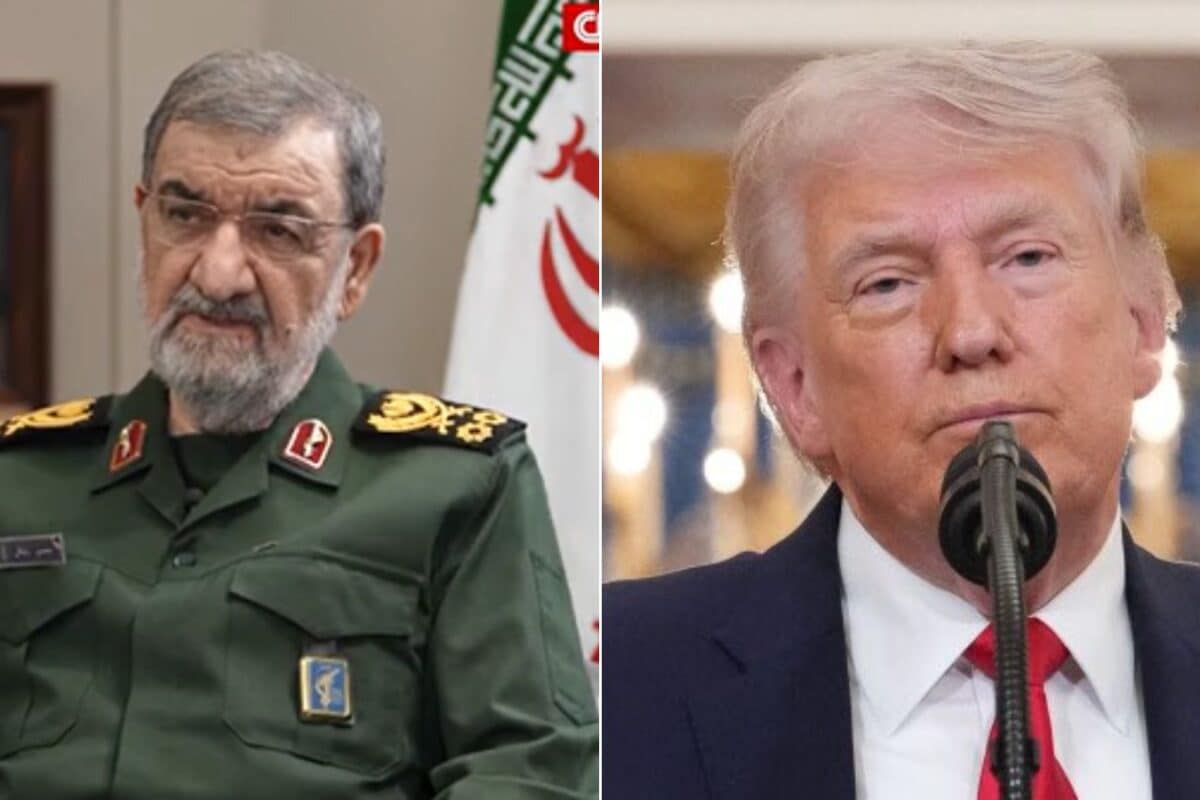
Iran Demands $24 Billion Asset Release as 'Trust Test' for Trump Deal
Iran's Supreme Leader's military advisor, Mohsen Rezaei, stated that a potential peace deal with the US hinges on the release of $24 billion in frozen Iranian assets, calling it a 'test of trust' for the Trump administration. He warned that renewed conflict could escalate beyond the Persian Gulf.
Key Highlights
- Iran demands $24 billion in frozen assets for US peace deal.
- Mohsen Rezaei, aide to Supreme Leader Mojtaba Khamenei, issued the demand.
- Rezaei called the asset release a 'test of trust' for Trump.
- Warning issued that renewed war could take 'another dimension'.
- Negotiations between US and Iran are currently at a deadlock.
- Iran reportedly seeks $12 billion initially, another $12 billion later.
A potential peace agreement between the United States and Iran is currently deadlocked over Tehran's insistence on the immediate release of $24 billion in frozen Iranian assets, according to Mohsen Rezaei, a military advisor to Iran's Supreme Leader Ayatollah Mojtaba Khamenei. In an exclusive interview with CNN, Rezaei characterized this demand as a "test of trust" for the Trump administration, emphasizing that the ball is now in Washington's court to break the impasse.
The negotiations come amid escalating tensions and a fragile ceasefire in the Middle East, following months of military confrontations involving Iran, Israel, and the United States. While both sides have expressed a desire to avoid a broader regional conflict, significant disagreements persist regarding the terms of any potential agreement.
Rezaei elaborated on Iran's proposal, stating that Tehran is seeking the release of $12 billion in frozen assets immediately upon the signing of an interim agreement, with an additional $12 billion to follow at a later stage. He firmly stated that these funds are Iran's own money and should not be viewed as concessions from the United States. This demand has become a central sticking point in the ongoing discussions, which have been facilitated by regional mediators like Qatar.
US officials, however, have expressed concerns that releasing such a significant amount of funds at this early stage could diminish their leverage in negotiations. Washington's stance generally favors a phased approach, where sanctions relief and financial concessions would be directly tied to verifiable actions and concessions from Iran, particularly concerning its nuclear program and regional security. Secretary of State Marco Rubio, for instance, indicated that sanctions relief would be "condition-based" and tied to Iran's nuclear activities.
Beyond the financial demands, Rezaei issued a stark warning against any resumption of military hostilities. He cautioned that if the US were to restart the conflict, Iran would "drag the war" beyond the Persian Gulf, potentially expanding operations to strategically vital waterways such as the Indian Ocean, the Bab al-Mandab Strait, the Red Sea, and the Mediterranean Sea. This warning underscores Iran's willingness to escalate the geographical scope of any future conflict, despite Rezaei's assessment that the current possibility of war is low.
The broader context of these negotiations includes the recent ascension of Ayatollah Mojtaba Khamenei as Iran's Supreme Leader in March 2026, following the death of his father, Ali Khamenei. Mojtaba Khamenei's increasing involvement in the country's decision-making process has been noted by US officials, even though he has largely remained out of public view due to security considerations. President Trump had previously expressed openness to meeting Mojtaba Khamenei, but Rezaei dismissed this possibility, stating that such a meeting "will not happen" given the current diplomatic deadlock.
The issue of frozen assets is not new; Iran has long demanded the return of its funds, which have been blocked by various international sanctions since 1979. Estimates of Iran's total frozen assets globally range from $100 billion to $120 billion. A portion of these, approximately $6 billion, was previously unfrozen in South Korea and transferred to Qatar as part of a prisoner exchange deal in 2023. However, the current demand for $24 billion highlights the ongoing financial leverage the US holds and Iran's persistent efforts to regain access to these resources to bolster its economy, which has been significantly impacted by sanctions.
The negotiations also touch upon other critical issues, including Iran's nuclear program and the reopening of the Strait of Hormuz, a vital shipping lane for global oil supplies. The current situation reflects a delicate diplomatic dance where financial demands are intertwined with strategic security concerns, influencing the path toward de-escalation or potential further conflict in the region.
Frequently Asked Questions
What is Iran's main demand for a peace deal with the US?
Iran is demanding the release of $24 billion in frozen Iranian assets as a prerequisite for a peace deal with the United States.
Who made these demands on behalf of Iran?
Mohsen Rezaei, a military advisor to Iran's Supreme Leader Ayatollah Mojtaba Khamenei, made these statements during an interview with CNN.
What does Iran mean by a 'test of trust' for Trump?
Iran views the release of the $24 billion in frozen assets as a 'test of trust' for the Trump administration, indicating whether the US is serious about reaching an agreement and fostering a new phase in relations.
What are the potential consequences if a deal is not reached and conflict resumes?
Mohsen Rezaei warned that if the US resumes conflict, Iran would expand the war beyond the Persian Gulf to strategic waterways like the Indian Ocean, the Red Sea, the Bab al-Mandab Strait, and the Mediterranean Sea.
What is the US stance on unfreezing the assets?
US officials are concerned that releasing the funds at this stage could reduce their negotiating leverage. They generally prefer a phased approach where sanctions relief is tied to verifiable Iranian actions, especially concerning its nuclear program.