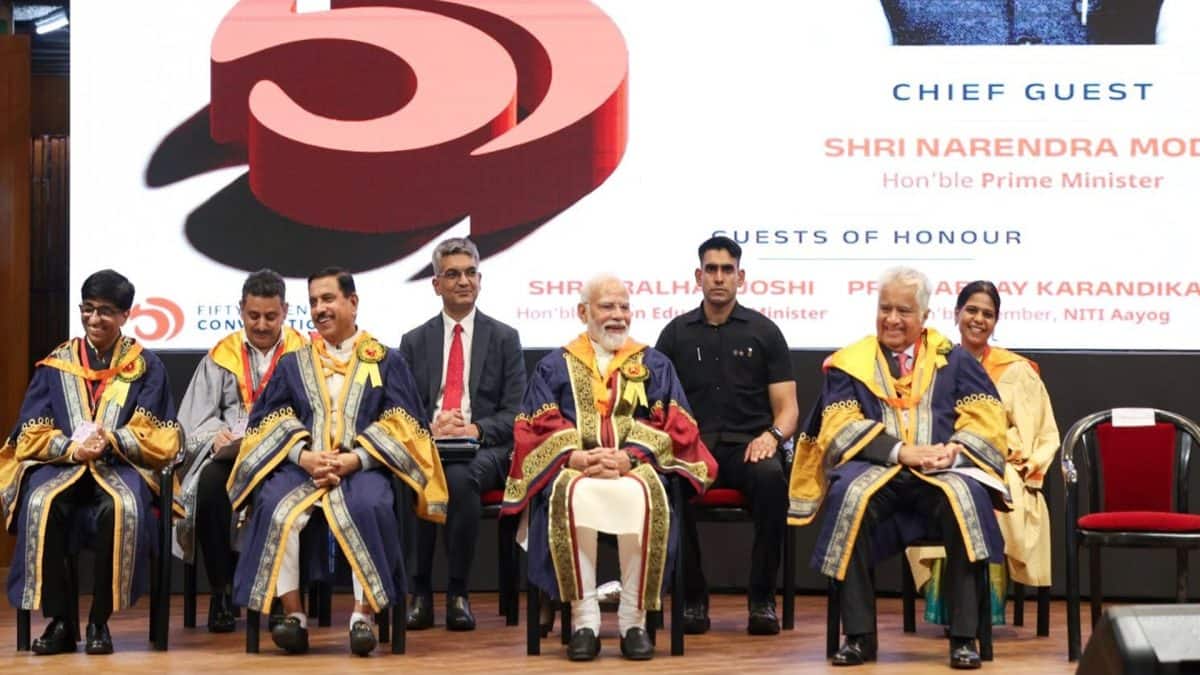
PM Modi's IIT Delhi Convocation: Security, Protocol Concerns Emerge
Prime Minister Narendra Modi's visit to IIT Delhi for its 57th convocation on August 8, 2026, was marked by stringent security measures and unusual protocol instructions for students. Reports indicate widespread campus restrictions and directives on how students should bow when receiving medals, sparking criticism and highlighting concerns about academic freedom and student convenience. The event aimed at Gen Z outreach was overshadowed by these elaborate arrangements.
Key Highlights
- PM Modi attended IIT Delhi's 57th convocation on August 8, 2026.
- Extensive security arrangements caused significant disruption on campus.
- Students were reportedly instructed on bowing protocol for medal reception.
- Campus facilities were closed, and movement was restricted for students.
- The heightened security measures drew criticism from students and faculty.
- The event raised questions regarding VVIP security impact on educational institutions.
Prime Minister Narendra Modi attended the 57th Convocation Ceremony of the Indian Institute of Technology (IIT) Delhi on August 8, 2026, as the Chief Guest, addressing over 3,000 graduating students. While the visit was framed as an outreach to 'Gen Z' and a significant event where the Prime Minister would present prestigious honors and inaugurate an AI supercomputing facility, it garnered considerable attention due to stringent security measures and unusual protocol directives issued to students.
Numerous reports from various news outlets, including the National Herald and The Siasat Daily, corroborated the Telegraph India's claims regarding the extensive security arrangements and student instructions. According to these accounts, the IIT Delhi campus was subjected to a sweeping security clampdown. Police and paramilitary personnel, dressed in khaki and camouflage fatigues, were deployed across the institute, leading to a visible and pervasive security presence.
Metal detectors were installed in buildings, and barricades were erected along campus roads, significantly altering the usual free movement within the educational institution. Several campus facilities, including the Central Library, MSB Computer Centre, and laboratories, were temporarily closed from the evening before the convocation until its conclusion. Even retail outlets on campus and the nearby Neelkanth Market were directed to remain shut.
Students reported that the heightened security translated into intrusive and disruptive experiences. They complained of repeated identity checks and thorough searches of their belongings, even when moving within the campus or returning to their hostels without having stepped outside. One student recounted an incident where individuals returning to campus at night were questioned about their whereabouts and activities despite presenting digital identity cards.
Beyond the physical security, specific instructions were allegedly given to students regarding their conduct during the ceremony. Multiple sources reported that graduating students scheduled to receive medals from Prime Minister Modi were instructed on 'how low to bow their heads.' Furthermore, students were reportedly told to stand during Vedic chants that were part of the convocation program, occurring three times, including once in the Prime Minister's presence.
The security protocols also impacted the traditional structure of the convocation. While over 3,000 students were slated to receive their degrees, the majority were scheduled to do so in the second half of the program, after PM Modi had departed the campus. The Prime Minister personally presented gold medals to only nine meritorious students. These arrangements created uncertainty for visiting parents, who were prohibited from carrying bags, water bottles, and umbrellas into the venue, and were left without clear instructions on where to wait during the Prime Minister's segment of the event.
The context of this visit is noteworthy, as it marked PM Modi's first direct interaction with a large gathering of young people following recent student-led protests, such as those related to the National Eligibility cum Entrance Test (NEET) paper leak. A faculty member suggested that the extensive precautions might have been taken to prevent any potential disruptions or slogans. Some students perceived the event as an attempt to improve the government's image among the youth.
Security for the Prime Minister, a VVIP in India, is governed by elaborate protocols outlined in the 'Blue Book' by the Special Protection Group (SPG). These procedures involve mandatory Advance Security Liaison (ASL) meetings with state police and intelligence officials to meticulously plan every detail of a visit, including route clearance, venue sanitization, and crowd management. While robust security is standard for the Prime Minister, the perceived intrusiveness and specific ceremonial directives at IIT Delhi sparked a debate about the balance between security needs and maintaining an open, academic environment.
In essence, while PM Modi's convocation address focused on inspiring graduates to contribute to a 'Viksit Bharat' (Developed India) and emphasized learning in a rapidly changing world, the event itself became a point of contention due to the exceptional security measures and the instructions given to students, drawing criticism and discussions on academic freedom and the impact of VVIP visits on public institutions.
Frequently Asked Questions
When did Prime Minister Modi visit IIT Delhi for its convocation?
Prime Minister Narendra Modi attended the 57th Convocation Ceremony of IIT Delhi on August 8, 2026.
What were the main concerns raised about PM Modi's visit to IIT Delhi?
The main concerns revolved around stringent security measures, including widespread deployment of police and paramilitary forces, temporary closure of campus facilities, and intrusive checks on students. Additionally, reports highlighted unusual protocol instructions given to students, such as how to bow when receiving medals and standing during Vedic chants.
Did the security arrangements affect students and academic activities?
Yes, students reported significant inconvenience, restricted movement, and disruption to academic work due to the heightened security. Facilities like the library and computer centers were closed, and the convocation schedule was altered, with most students receiving degrees after the PM's departure.
What is the 'Blue Book' in the context of PM's security?
The 'Blue Book' refers to a set of broad guidelines issued by the Special Protection Group (SPG) that lays down the detailed security protocols for the Prime Minister's visits. It involves meticulous planning and coordination with state police and intelligence agencies.
Why did the visit draw criticism, especially regarding student directives?
The visit drew criticism because the specific instructions on bowing and standing during religious chants, coupled with the extensive security clampdown, were perceived by some as impinging on academic freedom and creating an overly ceremonial atmosphere that overshadowed the academic achievements of the graduating students.