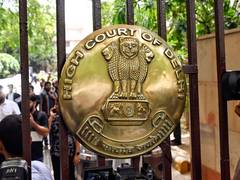
Justice Sharma Transfers Kejriwal's Excise Case, Initiates Contempt
Delhi High Court Justice Swarana Kanta Sharma has initiated criminal contempt proceedings against Arvind Kejriwal and other AAP leaders for allegedly vilifying her on social media. Following this, she transferred the CBI's revision plea challenging Kejriwal's discharge in the excise policy case to another bench, citing judicial discipline.
Key Highlights
- Justice Swarana Kanta Sharma initiated contempt against Kejriwal and AAP leaders.
- Contempt action follows alleged vilification on social media.
- CBI's excise policy case against Kejriwal transferred to another bench.
- Transfer due to initiation of contempt proceedings, not recusal.
- Justice Sharma stated she refuses to be intimidated.
In a significant development concerning the Delhi excise policy case, Justice Swarana Kanta Sharma of the Delhi High Court initiated criminal contempt proceedings against Aam Aadmi Party (AAP) supremo Arvind Kejriwal and several other party leaders, including Manish Sisodia, Durgesh Pathak, Sanjay Singh, Vinay Mishra, and Saurabh Bharadwaj. The judge announced this decision on May 14, 2026, citing allegations that these leaders had engaged in a campaign of vilification and posted defamatory and contemptuous material against her on social media platforms. Justice Sharma stated that her decision to initiate contempt was in response to 'extremely vilifying, extremely contemptuous, and defamatory material' being circulated, which she believed was orchestrated to ridicule the judiciary and intimidate judges. She specifically noted that Arvind Kejriwal had 'orchestrated a calculated campaign of vilification' against her on social media, rather than pursuing his legal remedies, and that edited videos and misleading narratives were used to tarnish her reputation and lower the court's authority [1, 2, 4, 8, 13, 19].
Following the initiation of these contempt proceedings, Justice Sharma announced that she would no longer hear the Central Bureau of Investigation's (CBI) revision petition challenging the trial court's order that had discharged Arvind Kejriwal and 22 other accused in the excise policy case. She clarified that this transfer was not an acceptance of the earlier recusal applications filed by Kejriwal and others, which she had previously dismissed on April 20, 2026 [2, 12]. Instead, Justice Sharma explained that initiating contempt proceedings created a situation where it would be inappropriate for her to continue hearing the main case, citing principles of judicial discipline. She emphasized that a judge drawing contempt proceedings cannot simultaneously hear the main case, and therefore, the matter would be placed before the Chief Justice of the Delhi High Court for assignment to another bench [3, 5, 8, 12]. The judge firmly stated, 'I refuse to be intimidated' and asserted that the judiciary cannot be cowed down by organized campaigns on social media, nor is it seeking sympathy or immunity from criticism [1, 2, 4].
The background to these events lies in the ongoing excise policy scam investigation. The CBI had filed a revision petition challenging a trial court's order dated February 27, 2026, which had discharged all 23 accused, including Kejriwal and Sisodia, finding the case unable to withstand judicial scrutiny [2, 14, 15]. Justice Sharma had initially been assigned to hear this CBI appeal. However, before this, Arvind Kejriwal and other AAP leaders had filed applications seeking Justice Sharma's recusal from the case. Their grounds for recusal included apprehension of bias, citing that her children were Central government panel counsel and that she had allegedly attended events linked to the RSS [3, 9, 12, 15, 17]. Justice Sharma had robustly rejected these recusal applications, stating that a politician 'cannot be allowed to sow seeds of mistrust' and that such applications amounted to 'putting the judiciary on trial' [2, 12]. She asserted that her impartiality was unquestionable and that the allegations against her family and judicial integrity were unfounded [5, 12].
Despite the rejection of the recusal plea, the alleged social media campaign intensified, leading to the contempt proceedings. The AAP leaders, in turn, reacted to the transfer of the case, with some terming it a 'big victory' for Kejriwal, asserting that truth and patience had triumphed, and that Mahatma Gandhi's Satyagraha had proven victorious once again [18]. However, Justice Sharma's clarification that this was not a recusal but a necessary step due to the initiation of contempt proceedings underscores the judicial perspective. The case's transfer to another bench signifies the court's commitment to maintaining judicial integrity and ensuring that proceedings are free from any perceived or actual prejudice, especially when judicial officers themselves are targeted [3, 5, 12]. The contempt proceedings, however, will continue separately. This entire sequence of events highlights the complex interplay between political litigation, allegations of bias, and the judiciary's role in upholding the rule of law and its own dignity.
Frequently Asked Questions
Why was the excise policy case transferred from Justice Swarana Kanta Sharma?
Justice Swarana Kanta Sharma transferred the CBI's revision petition in the excise policy case to another bench because she had initiated criminal contempt proceedings against Arvind Kejriwal and other AAP leaders. She stated that a judge initiating contempt proceedings against parties involved in a case cannot continue to hear that main case, citing judicial discipline.
What are the contempt proceedings against Arvind Kejriwal and AAP leaders?
Criminal contempt proceedings have been initiated against Arvind Kejriwal, Manish Sisodia, and other AAP leaders for allegedly posting defamatory, contemptuous, and vilifying material against Justice Swarana Kanta Sharma on social media. Justice Sharma stated this was an orchestrated campaign to undermine the judiciary and intimidate judges.
What is the Delhi excise policy case?
The Delhi excise policy case involves allegations of corruption and irregularities in the formulation and implementation of the Delhi government's 2021-22 liquor policy. The CBI and ED have investigated alleged kickbacks and money laundering in connection with these policy changes. A trial court had previously discharged Arvind Kejriwal and others, a decision the CBI has challenged in the Delhi High Court.
Did Justice Sharma recuse herself from the excise policy case?
No, Justice Swarana Kanta Sharma explicitly stated that she was not recusing herself from the case due to bias. She clarified that her earlier recusal application, filed by Kejriwal and others, had been rejected. The transfer of the case was a separate action taken due to her initiating contempt proceedings against the parties involved.
What is the significance of this development for Arvind Kejriwal?
This development adds another layer of legal complexity to the ongoing excise policy case for Arvind Kejriwal. While the AAP has portrayed the transfer as a victory, it comes alongside serious contempt charges, which could have their own legal ramifications. The main case will now be heard by a new bench.