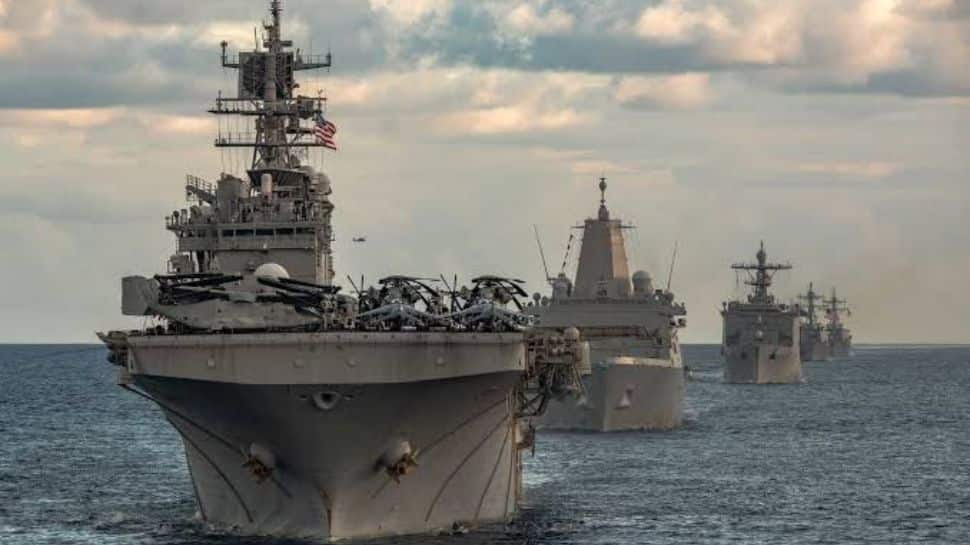
Iran Fortifies Sites, Holds Naval Drills Amid Heightened US Tensions
Iran is undertaking significant military preparations, including fortifying nuclear and military sites and conducting naval drills, amidst escalating tensions with the United States. The appointment of Ali Shamkhani to head a new Defense Council signals a strategic focus on readiness for a larger conflict.
Key Highlights
- Iran is fortifying key military and nuclear facilities with concrete shields and buried tunnel entrances.
- Naval drills are being conducted in strategic waterways like the Strait of Hormuz.
- Ali Shamkhani appointed head of Iran's new Defense Council, bolstering strategic command.
- Tensions are heightened due to stalled US-Iran nuclear talks and a US military build-up.
- India faces risks of rising oil prices and energy insecurity due to potential Strait of Hormuz disruptions.
- The situation carries global implications for energy markets and regional stability.
Recent intelligence and satellite imagery indicate that Iran is engaged in substantial military preparations, signaling a heightened state of readiness for a potential larger conflict with the United States. These efforts include extensive fortification of sensitive military and nuclear sites, the execution of significant naval drills in critical strategic waterways, and a key leadership appointment within its defense apparatus. The developments occur against a backdrop of stalled nuclear negotiations between Tehran and Washington and a considerable military build-up by the U.S. in the Middle East.
Satellite images have revealed a concerted effort by Iran to reinforce its strategic infrastructure. At the Parchin military complex, approximately 30 kilometers southeast of Tehran, a new facility has been covered with a concrete shield and soil, a move seen as hardening it against potential aerial strikes. This complex has been a focus of Western intelligence, with past reports suggesting it may have been used for nuclear weapons-related tests. Similar defensive measures are evident at nuclear sites, such as the Isfahan complex, where tunnel entrances have been progressively buried with soil. Reports also indicate fortification of tunnel entrances near the Natanz nuclear facility, which houses Iran's other uranium enrichment plants. Furthermore, missile bases that sustained damage during the 12-day war with Israel in June 2025 have undergone extensive repairs and strengthening, including restored runways and taxiways at air bases like Tabriz and repairs to facilities at the Qom missile base. The Institute for Science and International Security (ISIS) has noted the construction of a 'concrete sarcophagus' and a 'long, cylindrical chamber' at the Parchin site, which could be a high-explosives containment vessel, crucial for nuclear weapon development or other advanced conventional weapons.
In parallel with these fortification efforts, Iran has been actively conducting naval exercises in key maritime regions. These drills, often taking place in the Persian Gulf, the Strait of Hormuz, and the Sea of Oman, are designed to showcase military capabilities and deter potential adversaries. Recent exercises have involved the firing of ballistic and cruise missiles, drone operations, electronic warfare, and responses to simulated aerial threats. The IRGC Navy has named some of these exercises after fallen commanders, underscoring their significance. These naval demonstrations are particularly pointed given the strategic importance of the Strait of Hormuz, through which a significant portion of global oil trade passes, and where Iran has at times threatened to restrict traffic during periods of heightened tension.
A significant development in Iran's strategic leadership is the appointment of Rear Admiral Ali Shamkhani as the Secretary of the newly formed Defense Council on February 5, 2026. Shamkhani, a senior advisor to Iran's Supreme Leader Ayatollah Ali Khamenei, brings extensive experience from his previous role as the Secretary of Iran's Supreme National Security Council. The Defense Council is a new strategic body established to centralize and coordinate Iran's defense policy and response mechanisms, particularly in anticipation of or during conflict scenarios. His appointment is seen as a move to consolidate decision-making and leverage his deep strategic understanding in the current volatile geopolitical climate.
The underlying cause for these preparations is the escalating tension between Iran and the United States, fueled by stalled indirect nuclear negotiations in Geneva. Despite diplomatic efforts, progress has been limited, with the US emphasizing the need for Iran to acknowledge "red lines" set by President Donald Trump. In response, the US has undertaken a significant military build-up in the Middle East, deploying multiple aircraft carrier strike groups and a substantial number of naval and air assets. This deployment suggests a readiness for potential military operations, with some reports indicating a shift from planning for short, limited strikes to a more sustained campaign aimed at weakening Iran's regime and its military capabilities.
The geopolitical situation has direct implications for India, a nation heavily reliant on energy imports. The Strait of Hormuz is a critical chokepoint for global oil supplies, and any disruption due to a conflict between the US and Iran could lead to a sharp surge in international crude prices. This would significantly increase India's import bill, exacerbating existing inflationary pressures and potentially impacting economic growth. India also has strategic interests in Iran, notably its involvement in the development of the Chabahar Port, which adds another layer of complexity to its foreign policy considerations in the region.
The current situation presents a dual strategy from Tehran: safeguarding strategic assets through fortification and demonstrating military resolve through drills, while also keeping diplomatic channels open. However, the increased military signaling from both sides, coupled with the unresolved nuclear issue, maintains a high level of tension and uncertainty, underscoring the delicate balance in the region.
Frequently Asked Questions
What fortifications has Iran undertaken in response to US tensions?
Iran has been fortifying its military and nuclear sites, including building concrete shields over new facilities at sensitive locations like the Parchin military complex, burying tunnel entrances at nuclear sites (such as Isfahan and Natanz), and repairing missile bases that were damaged in previous conflicts. These efforts aim to harden key infrastructure against potential aerial strikes.
What is the significance of Ali Shamkhani's appointment?
Ali Shamkhani, a senior advisor to Iran's Supreme Leader, was appointed as the Secretary of the newly formed Defense Council on February 5, 2026. This appointment is significant due to Shamkhani's extensive experience in defense and security, having previously served as the Secretary of Iran's Supreme National Security Council. The Defense Council is a strategic body tasked with coordinating and directing Iran's defense policy, particularly in times of conflict.
Why are Iran-US tensions relevant to India?
Escalating tensions between Iran and the US pose significant risks to India's energy security and economy. India is a major importer of crude oil, and a substantial portion of these imports pass through the Strait of Hormuz. Any disruption to shipping in this vital waterway due to conflict could lead to a sharp increase in global oil prices, thereby raising India's import costs, fueling inflation, and impacting its economic growth. Additionally, India has strategic interests in Iran, such as the Chabahar Port.
What kind of naval drills has Iran been conducting?
Iran has been conducting various naval drills in strategic waterways like the Persian Gulf, Strait of Hormuz, and the Sea of Oman. These exercises often involve the testing of missile capabilities (ballistic and cruise missiles), drone operations, electronic warfare, and responses to simulated aerial threats. These drills are seen as a demonstration of Iran's military readiness and a deterrent message to potential adversaries.
What is the US military's current posture in the region?
The US has significantly increased its military presence in the Middle East, deploying multiple aircraft carrier strike groups, destroyers, and other naval assets. This build-up suggests preparations for potential military operations, possibly a sustained campaign rather than a short, limited strike, aimed at weakening Iran's strategic posture, dismantling its missile and nuclear capabilities, and protecting US and Israeli assets.