DR Congo Ebola Outbreak Worsens Amid Conflict, Distrust
The Democratic Republic of Congo is battling a severe Ebola outbreak, exacerbated by ongoing armed conflict, widespread distrust, and misinformation. The rare Bundibugyo strain of the virus has led to hundreds of suspected cases and deaths, with cross-border spread to Uganda. International health organizations are mobilizing resources, but challenges like insecurity, limited access, and community skepticism hinder containment efforts. The World Health Organization has declared it a Public Health Emergency of International Concern.
Key Highlights
- Ebola outbreak in eastern DRC is spreading rapidly, with hundreds of suspected cases and deaths.
- Armed conflict and insecurity in the region significantly complicate containment efforts.
- Distrust among the population and misinformation hinder public health responses.
- The rare Bundibugyo virus strain lacks approved vaccines or treatments.
- Cross-border transmission to Uganda has been confirmed, raising regional concerns.
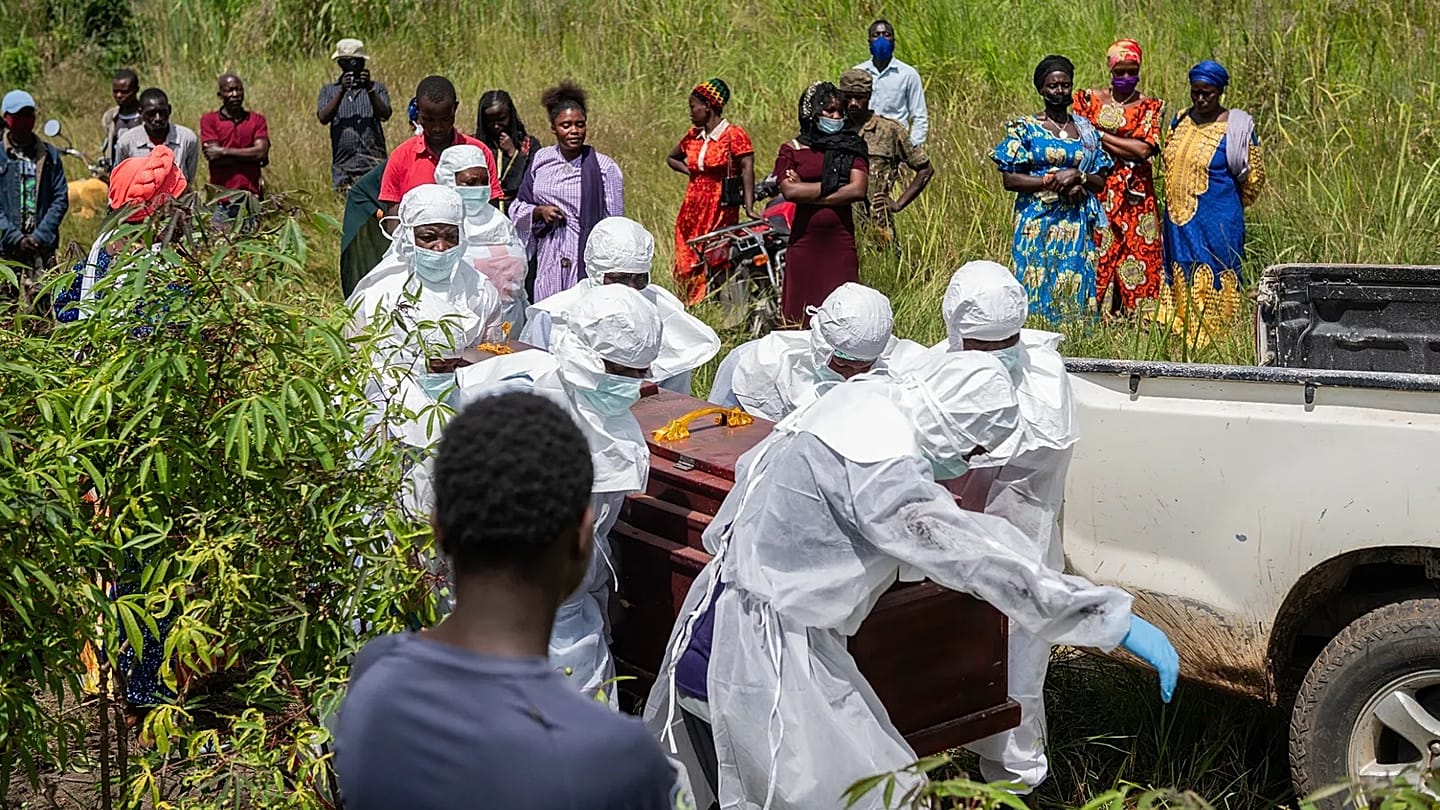
The Democratic Republic of Congo (DRC) is currently facing a significant and rapidly escalating Ebola outbreak, primarily driven by the rare Bundibugyo virus strain. As of late May 2026, hundreds of suspected cases and deaths have been reported, with the World Health Organization (WHO) designating the situation as a Public Health Emergency of International Concern and upgrading the national risk assessment to "very high." The outbreak, which began in Ituri Province in northeastern DRC, has spread to other provinces within the country and has also crossed borders into neighboring Uganda, where several cases have been confirmed. The Bundibugyo virus is particularly concerning as there are currently no approved vaccines or specific treatments available for it, unlike the more common Zaire strain of Ebola for which a vaccine exists. This lack of readily available countermeasures means that response strategies heavily rely on comprehensive public health measures, including early case detection, infection prevention and control, contact tracing, and safe burial practices.
The containment of this Ebola outbreak is severely hampered by a complex interplay of factors, most notably ongoing armed conflict and widespread insecurity in eastern DRC. The regions affected by the outbreak, such as Ituri and North Kivu provinces, have been long-standing hotspots for rebel activity, including groups like the M23 movement and the Allied Democratic Forces (ADF). This persistent conflict leads to population displacement, disrupts humanitarian access, and creates an environment where disease surveillance and response efforts are extremely challenging. Aid workers have reported difficulties in reaching affected communities due to insecurity and access restrictions.
Compounding the security challenges is a deep-seated distrust among the local population towards authorities and external aid organizations. This distrust is fueled by a history of complex local dynamics, misinformation, and sometimes, a perception of insufficient or biased external involvement. Incidents of hostility, such as the torching of a hospital in Ituri province after authorities refused to release the body of a local figure, highlight the extent of this mistrust and its dangerous consequences for public health efforts. Fear among communities, exacerbated by rumors and a lack of understanding about the virus, further impedes efforts to encourage testing, isolation, and safe practices.
The international community, including the WHO, UNICEF, and the US Centers for Disease Control and Prevention (CDC), is actively involved in supporting the response. Significant financial resources have been pledged and mobilized, with the UN allocating $60 million and the US pledging $23 million to bolster the response efforts in DRC and Uganda. UNICEF has classified the outbreak as a Level 3 emergency, its highest classification, to accelerate personnel deployment and operational procedures, and has mobilized substantial quantities of infection prevention and control supplies. However, reports indicate that US aid cuts may be complicating the response efforts, as stated by Congo's Health Minister Roger Kamba.
The outbreak's spread to Uganda, with confirmed cases in travelers from DRC, underscores the regional threat. Uganda has implemented measures such as halting flights to and from DRC and restricting border crossings to prevent further spread. The rapid transmission, emergence in urban areas, and the deaths of healthcare workers are all factors that have contributed to the WHO's elevated concern and declaration of a public health emergency.
Historically, the DRC has experienced numerous Ebola outbreaks, with this being the 17th since the virus was first identified in 1976. The Bundibugyo virus itself has caused previous outbreaks in Uganda (2007) and DRC (2012), with significant historical fatality rates. The current outbreak began to gain significant traction around May 15, 2026, when it was officially declared, but evidence suggests the virus had been circulating undetected for weeks, if not months, prior. The remote nature of some affected areas, coupled with challenges in sample transportation to laboratories in Kinshasa, further complicates timely diagnosis and response.
The prolonged and complex nature of armed conflict in eastern DRC, involving various armed groups and sometimes international interference, creates a fertile ground for disease outbreaks to take hold and spread rapidly. The humanitarian crisis in the region is already severe, with millions displaced and facing food insecurity, making the population even more vulnerable to the impacts of the Ebola virus.
Overall, the situation in the DRC is critical, characterized by a relentless virus, challenging security conditions, and a significant barrier of mistrust and misinformation, all of which demand a coordinated and sustained international response.
Frequently Asked Questions
What is the current situation with the Ebola outbreak in the Democratic Republic of Congo?
As of late May 2026, the Democratic Republic of Congo (DRC) is facing a severe Ebola outbreak caused by the Bundibugyo virus. There are hundreds of suspected cases and deaths, and the outbreak has spread to Uganda. The World Health Organization has declared it a Public Health Emergency of International Concern due to its rapid spread and high risk.
Why is the Bundibugyo strain of Ebola particularly concerning?
The Bundibugyo strain of Ebola is concerning because there are currently no approved vaccines or specific treatments available for it, unlike the more common Zaire strain. This means response efforts rely heavily on public health measures like isolation, contact tracing, and infection control.
How does armed conflict affect the Ebola response?
Ongoing armed conflict and insecurity in eastern DRC create significant challenges for containing the Ebola outbreak. These conditions lead to population displacement, hinder humanitarian access, disrupt disease surveillance, and make it difficult for health workers to reach affected communities safely.
What role does distrust and misinformation play in the outbreak?
Distrust among the population towards authorities and aid organizations, coupled with the spread of misinformation, is a major barrier to effective Ebola containment. This can lead to people avoiding treatment, refusing isolation, and even attacking health facilities, as has been reported.
What is the international response to the Ebola outbreak?
International organizations like the WHO, UNICEF, and the CDC are actively involved in supporting the response by providing technical expertise, mobilizing resources, and deploying personnel. However, challenges such as funding gaps and complex security situations continue to impede efforts.