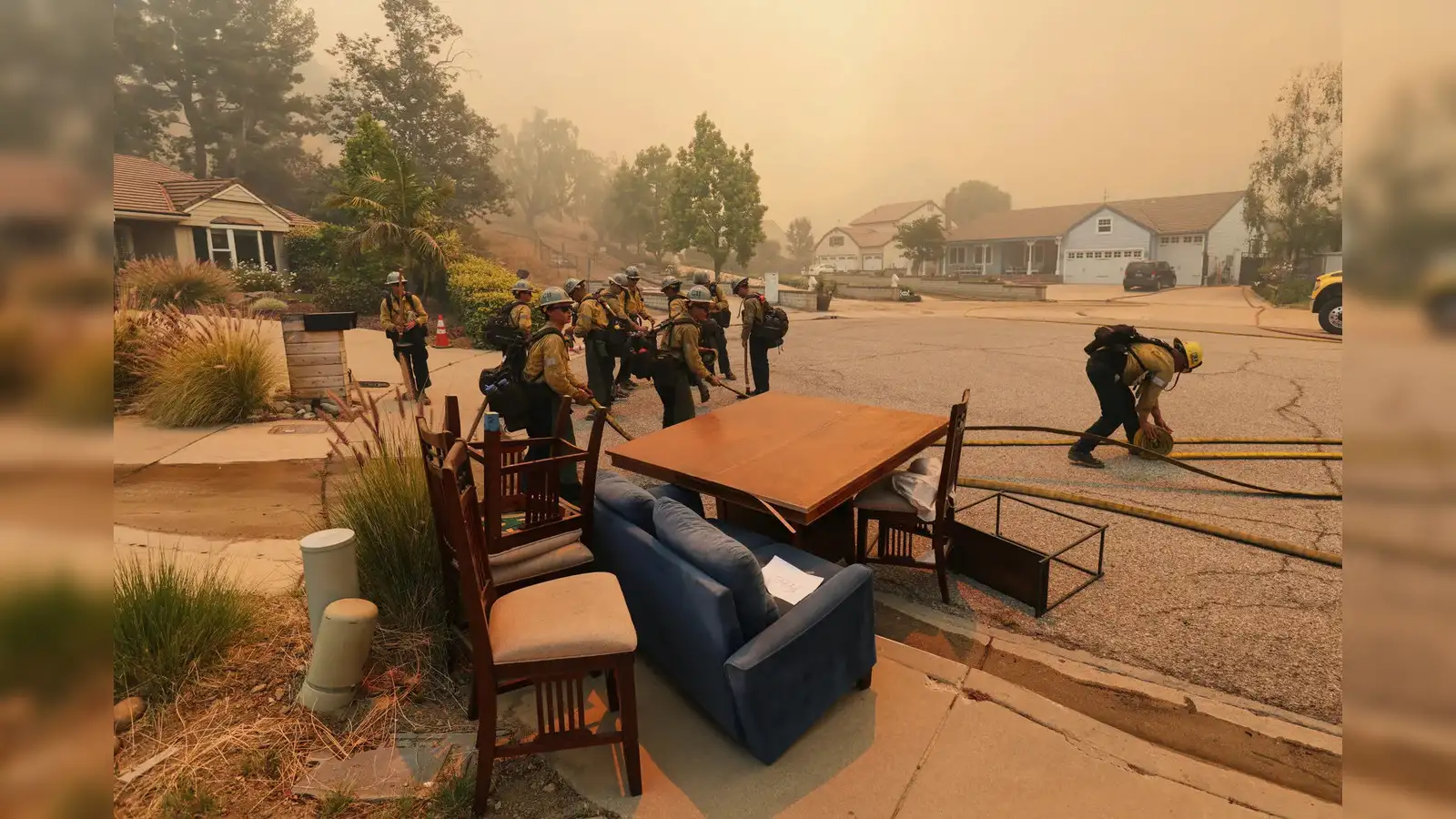
Southern California Chemical Tank Crisis Forces 40,000 Evacuations
A hazardous chemical leak from a tank at an aerospace facility in Garden Grove, Southern California, has forced the evacuation of over 40,000 residents. The tank, containing highly flammable and toxic methyl methacrylate, is at risk of explosion or catastrophic spill, prompting a state of emergency.
Key Highlights
- Over 40,000 residents evacuated in Orange County, Southern California.
- Chemical tank at GKN Aerospace leaking toxic methyl methacrylate.
- Officials warn of imminent tank failure, potential explosion or massive spill.
- California Governor declares a state of emergency.
- Emergency crews are working to stabilize the tank and find solutions.
- No injuries reported, air quality monitored outside evacuation zone.
A critical hazardous materials incident in Garden Grove, Orange County, Southern California, has led to the evacuation of tens of thousands of residents due to an unstable chemical tank at an aerospace manufacturing facility. The incident began on Thursday, May 21, 2026, when a storage tank at the GKN Aerospace plant, located in the 12000 block of Western Avenue, overheated and started venting vapors into the air.
The tank contains between 6,000 and 7,000 gallons (approximately 22,700 to 26,500 liters) of methyl methacrylate, a highly volatile, flammable, and toxic liquid chemical primarily used in the production of acrylic plastics.
Initial hazardous materials calls were received just before 3:40 p.m. on Thursday. While the chemical initially maintained its temperature, it began to rise about four hours after firefighters arrived, activating a relief valve and sprinkler system designed to cool the tank. However, despite these efforts, the situation escalated. On Friday morning, May 22, 2026, officials determined that a faulty or inoperable valve on the tank prevented complete mitigation, leading to an increased risk of a catastrophic event.
Orange County Fire Authority (OCFA) Division Chief Craig Covey issued stark warnings, stating that the tank was in an "actively in crisis" condition and would "inevitably fail" or "explode." He emphasized that there were essentially two grim possibilities: either the tank would fail and spill its contents onto the ground, or it would undergo a "thermal runaway" and explode, potentially endangering nearby chemical storage tanks.
In response to the escalating danger, authorities swiftly implemented and expanded evacuation orders. Initially, residents in Garden Grove were instructed to leave their homes. By Friday, the evacuation zone was broadened to include parts of five neighboring Orange County cities: Cypress, Stanton, Anaheim, Buena Park, and Westminster. The total number of residents under evacuation orders grew to approximately 40,000 people, with some reports indicating numbers exceeding 44,000 or even 50,000 by Saturday.
California Governor Gavin Newsom officially declared a state of emergency for Orange County on Saturday, May 23, 2026. This proclamation mobilizes state resources to support local responders and allows for the use of state-owned properties and fairgrounds as emergency shelters for evacuees. Numerous evacuation centers have been established, including at the Garden Grove Sports & Recreation Center, Cypress Community Center, Savannah High School in Anaheim, and other locations.
Emergency crews are working around the clock to address the perilous situation. Firefighters have been continuously dousing the compromised tank with water using mechanical devices, aiming to stabilize its temperature and buy critical time. Despite initial reports of success in cooling the tank, later assessments on Saturday revealed that internal temperatures were, in fact, still rising, increasing by about one degree per hour. A team of experts from across the state and country has been assembled to brainstorm and implement a solution to prevent the tank from failing or exploding.
Officials have also taken precautionary measures for a potential spill, creating containment barriers with sandbags to prevent the toxic chemical from entering storm drains, river channels, and ultimately the ocean. So far, air quality monitors outside the evacuation zone have not detected any toxic vapors, and readings remain within healthy limits. There have been no reports of injuries or fatalities related to the incident.
The GKN Aerospace facility, where the incident occurred, is involved in manufacturing components for commercial and military aircraft, utilizing methyl methacrylate to create acrylic plastics. The prolonged evacuation has caused significant disruption and anxiety among residents, with some expressing frustration over the presence of such dangerous chemicals in a residential area.
The situation remains dynamic and highly dangerous, with authorities committed to finding a resolution to protect the community and the environment. The incident highlights the inherent risks associated with industrial chemical storage, particularly in densely populated areas.
Frequently Asked Questions
What chemical is involved in the Southern California leak and why is it dangerous?
The chemical involved is methyl methacrylate, a highly volatile, flammable, and toxic liquid used in making acrylic plastics. It is dangerous because it can generate its own heat, potentially leading to a 'thermal runaway' and explosion, or a catastrophic spill that could release toxic vapors, causing respiratory, skin, and eye irritation.
How many people have been evacuated due to the chemical tank crisis?
Over 40,000 residents have been ordered to evacuate from Garden Grove and several other nearby cities in Orange County, Southern California, due to the imminent danger posed by the failing chemical tank. Some reports indicate numbers exceeding 44,000 or 50,000.
Where exactly is the chemical leak occurring?
The chemical leak is occurring at the GKN Aerospace facility in Garden Grove, Orange County, Southern California. Garden Grove is located about 30-38 miles south of downtown Los Angeles.
What actions are authorities taking to resolve the crisis?
Authorities are continuously dousing the tank with water to stabilize its temperature, establishing containment barriers with sandbags for a potential spill, and a team of experts from across the country is working to devise a permanent solution. California Governor Gavin Newsom has also declared a state of emergency.
Has there been any impact on air quality or any reported injuries?
As of the latest reports, air quality monitors outside the evacuation zone have not detected any toxic vapors, and readings remain within 'healthy limits.' Crucially, no injuries or fatalities have been reported in connection with the incident.